Hamilton Revelle
Actor
Born: 1873 in England Died: 1958 Active: 1890s-1950s (primarily stage), 1920 (film)
Films
2 films
About Hamilton Revelle
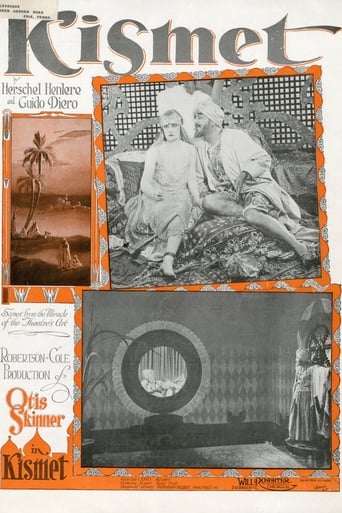
Made a brief but memorable appearance in silent cinema during the early 1920s. Born in 1873, he spent the majority of his career honing his craft on the theatrical stage, becoming a respected performer in legitimate theater productions. His transition to film came relatively late in his career when he was cast in the 1920 silent film adaptation of the popular play Kismet, which became his most significant screen work. Despite his commanding stage presence and acting prowess, Revelle's film career was extremely limited, with Kismet representing his primary contribution to cinema history. Following this brief foray into motion pictures, he returned to his true passion of live theater, where he continued to perform and establish his legacy as a respected stage actor. His the transition from the Victorian era through the golden age of silent film, though he remained primarily committed to theatrical performance throughout his professional life. He passed away in 1958, having witnessed the complete evolution of modern entertainment while maintaining his roots in classical stage performance.
The Craft
On Screen
Classically trained stage actor with commanding presence and dramatic delivery, typical of the Victorian theatrical tradition, adapted his grand gestures and expressive style for the silent film medium in Kismet
Milestones
- stage career spanning over 50 years
- Starred in the 1920 silent film Kismet
- Performed in numerous theatrical productions in both England and America
- Successfully transitioned between Victorian and modern theatrical styles
Best Known For
Iconic Roles
Must-See Films
Accolades
Special Recognition
- Recognized for contributions to classical theater
Working Relationships
Worked Often With
Studios
Why They Matter
Impact on Culture
Hamilton Revelle represents the archetype of the classically trained stage actor who briefly ventured into silent cinema during its early years. His appearance in Kismet (1920) exemplifies the trend of theatrical productions being adapted for the burgeoning film industry, with established stage actors being recruited to lend legitimacy to the new medium. His career trajectory demonstrates how many serious actors of the era viewed film as a temporary diversion rather than a primary artistic medium, preferring the immediacy and tradition of live theater.
Lasting Legacy
Hamilton Revelle's legacy lies primarily in his contribution to classical theater and his role as an example of the stage-to-screen transition during the early film era. While his filmography is minimal, his appearance in the 1920 version of Kismet serves as an important historical document of how theatrical acting styles were adapted for silent cinema. He represents the countless skilled stage actors who formed the backbone of early film production, bringing legitimacy and technical skill to the new art form before returning to their theatrical roots.
Who They Inspired
As a product of classical theatrical training, Revelle's influence would have been primarily on stage actors and theatrical students rather than film performers. His brief film appearance demonstrates the acting techniques that were being adapted for silent cinema, showing how the grand, expressive style of Victorian theater was modified for the camera. His career choice to return to theater after his film experience influenced other actors who were hesitant to fully commit to the uncertain future of motion pictures in the early 1920s.
Off Screen
Hamilton Revelle maintained a relatively private personal life, with most public attention focused on his professional theatrical career. He was part of the generation of actors who bridged the gap between 19th-century Victorian theater and 20th-century modern performance. His dedication to the craft of acting remained consistent throughout his long career, earning him respect among theatrical circles.
Education
Classical theatrical training, likely through apprenticeship in the traditional British theater system of the late 19th century
Did You Know?
- Kismet (1920) was his only significant film appearance, making him a one-film actor in cinema history
- He was already in his late 40s when he made his film debut, relatively old for a film debut even in that era
- The role of The Caliph in Kismet was one he had likely performed on stage before bringing it to film
- His active years covered from the Victorian era through the golden age of Hollywood, though he remained primarily in theater
- He represents the many classically trained British actors who were recruited by American film studios in the early 1920s
- His acting style in Kismet shows the transition from theatrical to film acting techniques
- He lived to see the complete transition from silent films to television, though he never returned to screen acting
- The 1920 version of Kismet he appeared in is now considered a lost film, with no known surviving copies
- His stage career likely began in the 1890s during the height of Victorian theater
- He was part of the generation that saw theater transform from the primary entertainment medium to one competing with cinema
Frequently Asked Questions
Who was Hamilton Revelle?
British stage with credits in this catalog.
What films is Hamilton Revelle best known for?
Titles linked here include Kismet (1920).
When was Hamilton Revelle born and when did he die?
Born 1873; died 1958.
What awards did Hamilton Revelle win?
There are no recorded major awards or nominations for Hamilton Revelle, as his recognition came primarily from theatrical circles rather than film industry honors.
What was Hamilton Revelle's acting style?
Revelle employed a classical theatrical acting style with commanding presence and dramatic delivery, typical of Victorian-era stage training, which he adapted for the silent film medium.
Why did Hamilton Revelle have such a short film career?
Revelle was primarily a dedicated stage actor who viewed film as a temporary diversion; after his appearance in Kismet, he returned to his main passion of live theater where he continued his career.
Is Hamilton Revelle's film work still available to view?
Unfortunately, the 1920 version of Kismet featuring Hamilton Revelle is considered a lost film, with no known surviving copies in existence.
How did Hamilton Revelle influence cinema?
Revelle's influence was primarily as an example of how classically trained stage actors brought legitimacy and technical skill to early silent films, demonstrating the adaptation of theatrical techniques for the camera.