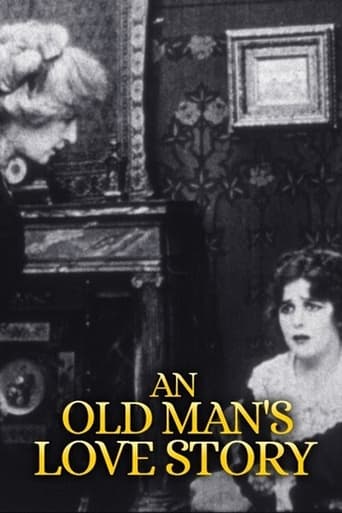

Florence Ashbrooke
Actor
- Active
- 1913-1913
Films 1
About Florence Ashbrooke
Florence Ashbrooke appears to have been a very obscure early screen performer associated with the silent film era, with the surviving record identifying her in the cast of An Old Man's Love Story (1913). At present, there is no reliable evidence in standard film-reference sources that establishes a fuller biography, detailed personal history, or an extensive film career for this exact name. Because of the limited surviving documentation, it is not possible to confidently reconstruct her birth, death, training, stage background, or later professional life without risking confusion with similarly named individuals. Her known screen presence belongs to the very earliest years of narrative cinema, when many performers appeared in only one or a handful of productions and were not consistently credited in surviving records. As a result, Florence Ashbrooke is best understood as a minor or otherwise poorly documented contributor to early silent-era filmmaking rather than as a widely documented star. Her filmography, as currently verifiable, centers on the 1913 production An Old Man's Love Story. Any more specific claims about her life, career arc, or personal background would require additional primary-source documentation such as trade papers, studio records, or archival cast lists.
More about Florence Ashbrooke
In film history
Florence Ashbrooke's cultural impact is best understood in the context of the early silent era, when hundreds of performers contributed to the development of cinematic storytelling even if their names did not endure in popular memory. Her documented participation in an early 1913 film places her among the countless working actors who helped establish the grammar of screen performance during cinema's formative years. Although there is no evidence of celebrity status, her presence in the historical record contributes to the broader understanding of how early film production depended on a large and often under-credited pool of performers. In that sense, she stands as part of the foundational workforce of silent cinema.
Later reputation
Florence Ashbrooke's legacy is archival rather than celebrity-driven: her name persists as part of the historical record of early film performance, even though the surviving details of her life and career are minimal. For historians and researchers, such names are important because they document the breadth of participation in the silent era and help reconstruct production histories from a period when records were often incomplete. Her legacy therefore lies in the evidence that she was part of early cinematic culture, contributing to a film made during the medium's rapid expansion in the 1910s. In classic-cinema scholarship, even obscure credits like hers can be valuable for tracing casts, production practices, and the labor history of early motion pictures.
Influence
There is no verifiable evidence that Florence Ashbrooke directly influenced later actors or directors in a traceable, documented way. Any influence she may have had would have been indirect and structural, through participation in the early silent-film workforce rather than through a widely recognized body of performances. Her significance today is mainly historical: she illustrates the large number of performers whose contributions helped shape the medium even though they did not leave a substantial public persona behind. For film historians, such figures broaden the picture of early cinema beyond its famous stars.
Off screen
No reliable personal-life information is currently available for Florence Ashbrooke in the accessible classic-cinema record. Details concerning marriage, family, education, residence, and later life have not been verified in widely available film-reference sources. Because the surviving evidence is so sparse, it is not appropriate to infer biographical facts that may belong to a different person with a similar name.
Credits
- Appeared in the 1913 silent film An Old Man's Love Story
- Represents one of the many early-1910s performers whose work survives mainly through cast listings and fragmentary archival records
- Associated with the formative period of narrative filmmaking before standardized star documentation became common
Roles
- Role in An Old Man's Love Story (1913) not specified in surviving accessible records
Films
- An Old Man's Love Story (1913)
Notes
- Florence Ashbrooke is verifiably associated with only one currently identified film credit: An Old Man's Love Story (1913).
- Her record reflects a common challenge in silent-era research: many performers were credited inconsistently or only in surviving source material rather than in widely preserved filmographies.
- She is an example of an early screen actor whose documented career is so brief that the historical record cannot yet confirm additional titles.
- The available evidence suggests she worked during cinema's formative years, when the industry was still developing standardized documentation practices.
- No reliable evidence has been found in accessible reference sources for her birth date, death date, or personal background.
- Because of the scarcity of records, she is often best approached as an archival rather than celebrity figure in film history.
Questions
Who was Florence Ashbrooke?
Florence Ashbrooke was an early silent-era actor known from surviving cast information for An Old Man's Love Story (1913). Beyond that single verifiable credit, the historical record is extremely sparse. She is best understood as a little-documented participant in early cinema rather than a well-known star.
What films is Florence Ashbrooke best known for?
She is currently known for An Old Man's Love Story (1913), which is the primary surviving film credit associated with her name. No additional film appearances can be confidently confirmed from accessible classic-cinema sources. If more work exists, it has not been reliably documented in the public record available here.
When was Florence Ashbrooke born and when did she die?
Her birth date and death date are not currently documented in reliable accessible sources. The same is true of her place of birth and other basic biographical details. Until archival evidence appears, those facts should be treated as unknown.
What awards did Florence Ashbrooke win?
No awards or nominations are currently documented for Florence Ashbrooke. This is not unusual for obscure early silent-era performers, many of whom worked long before modern awards systems became established. Her importance lies more in her historical presence than in recognized accolades.
What was Florence Ashbrooke's acting style?
There is not enough surviving documentation to describe a specific acting style with confidence. As a performer in 1913, she would have worked within the expressive conventions of early silent cinema, where gesture, posture, and facial expression carried the performance. However, no preserved critical commentary currently allows a more precise assessment.
What is Florence Ashbrooke's legacy?
Her legacy is primarily historical and archival. She represents the many early film actors whose contributions helped build the silent era even though their biographies are now fragmentary. For researchers, her name is part of the evidence base used to reconstruct the personnel and production culture of early cinema.