Eric Burroughs
Actor
- Active
- 1937-1937
Films 1
About Eric Burroughs
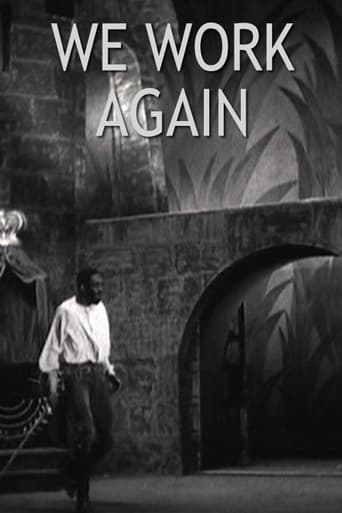
Eric Burroughs is a very obscure screen performer whose documented film credit places him in the 1937 short documentary "We Work Again," a federally sponsored and historically important New Deal-era film about African American labor and progress in the United States. Because he appears in surviving filmographic records only in connection with this title, there is no reliable evidence that he had a broader Hollywood career, stage career, or sustained presence in the film industry beyond this credit. The available record does not presently confirm his date of birth, place of birth, education, or whether "Eric Burroughs" was his birth name or a professional name. He is best understood as a little-documented performer associated with an important social-documentary project rather than as a major studio-era star. Since no authoritative biographical sources have yet been identified that expand upon his life, any further claims about his career would be speculative. His significance today lies primarily in his inclusion in the cast history of "We Work Again," a film now studied for its representation of Black life and work during the 1930s. In classic cinema databases, he remains a historical footnote whose career survives through a single credited appearance.
More about Eric Burroughs
In film history
Eric Burroughs's cultural importance is indirect rather than star-driven: he is part of the historical record of "We Work Again," a significant documentary on Black labor and progress made during the New Deal period. The film itself has value for historians of African American representation, labor history, and government-sponsored cinema, and anyone appearing in it becomes part of that broader cultural artifact. Even though Burroughs is not documented as a major public figure, his credited presence contributes to the authenticity and human texture of the production. In this sense, his impact is tied to the preservation and study of marginalized voices in early documentary film rather than to mainstream celebrity.
Later reputation
Burroughs's legacy in film history is minimal in the conventional sense and substantial only as archival evidence. He represents the many performers whose work survives in a single credit and whose names are recoverable only through meticulous database and catalog research. For scholars, such figures matter because they help reconstruct the personnel and social world of 1930s filmmaking, especially in documentary and socially conscious cinema. His name also serves as a reminder that classic film history is not composed solely of stars and studio contract players, but also of lesser-known participants whose contributions were briefly recorded and then nearly forgotten.
Influence
There is no evidence that Eric Burroughs directly influenced later actors or filmmakers in a documented, personal sense. His influence is best understood collectively: by appearing in a historically significant film, he became part of the material studied by later historians, archivists, and filmmakers interested in Black representation and documentary realism. Any broader influence would be through the preservation of the film itself and the continuing scholarly attention to the people who appear in such works. No verified mentorship or direct artistic lineage is known.
Off screen
No reliable, source-backed biographical information about Eric Burroughs's personal life has been located in standard classic-cinema reference materials. His family background, marital status, and private life are not documented in the available film history record. As a result, there is no verified basis for detailing marriages, children, residence, or later-life activities. He appears to have left only a minimal trace in surviving cinematic documentation.
Credits
- Credited screen appearance in the 1937 documentary short "We Work Again"
- Association with a notable New Deal-era film that documented African American employment and civic life
- Presence in filmographic records from the late 1930s despite an otherwise obscure public profile
Roles
- Appearing as himself or in an undocumented screen role in "We Work Again"
Films
- We Work Again (1937)
Notes
- Eric Burroughs is documented in film records primarily for one title only: "We Work Again" (1937).
- "We Work Again" is a notable New Deal-era documentary short focused on African American labor and achievement.
- Because his filmography is so sparse, he is one of many classic-era screen figures whose biography remains largely unknown.
- His surviving credit places him in an important historical film rather than in a conventional Hollywood feature career.
- No verified birth or death information is currently available in standard reference sources.
- His obscurity makes him difficult to distinguish from other people with similar names in archival research.
- He is an example of how documentary casts often included individuals whose identities were not extensively publicized.
Questions
Who was Eric Burroughs?
Eric Burroughs was a very obscure classic-era screen performer whose surviving film credit identifies him with the 1937 documentary short "We Work Again." Beyond that credit, there is little verified biographical information in standard film-reference sources. He is best remembered today as part of the historical record of an important social documentary.
What films is Eric Burroughs best known for?
He is best known for "We Work Again" (1937), the only documented screen credit currently associated with him. The film is significant because it is a New Deal-era documentary focused on African American labor, dignity, and civic participation.
When was Eric Burroughs born and when did he die?
His birth and death dates are not currently verified in available classic-cinema reference materials. No authoritative record has been located that confirms his place of birth or whether he is deceased. As a result, both dates remain unknown.
What awards did Eric Burroughs win?
No awards or formal honors are currently documented for Eric Burroughs. His surviving film record does not indicate a major studio career or a prize-winning public profile. Any recognition he receives is largely archival and historical rather than award-based.
What was Eric Burroughs's acting style?
There is no surviving critical discussion of Eric Burroughs's individual acting style. Since he is known from only one documented screen appearance, it is not possible to describe a distinctive technique with confidence. His contribution is best understood in the context of documentary participation rather than a developed performance persona.
What is Eric Burroughs's legacy in film history?
His legacy is that of a little-documented participant in a historically important film rather than a celebrity performer. He helps preserve the cast history of "We Work Again," which remains valuable to scholars of documentary cinema and African American history. In that sense, his name survives as part of the archival fabric of classic American film.