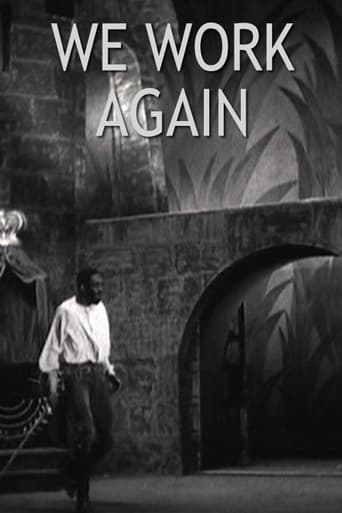
Alma Dickson
Actor
- Active
- 1937-1937
Films 1
About Alma Dickson
Alma Dickson is a little-documented screen performer associated with the 1937 short film "We Work Again," a Depression-era New Deal documentary that highlighted Black labor, training, and economic participation. Available film records suggest that she worked as an actor during a very brief period, with her known screen activity concentrated in 1937. Because surviving reference sources provide very limited personal data, her broader life story, training, stage background, and later career are not firmly established in standard classic-cinema reference works. Her credit in "We Work Again" places her within the important tradition of African American performers appearing in socially significant documentary and educational films of the 1930s. The film itself is notable for its affirmative presentation of Black workers and for documenting federal efforts to expand opportunity during the New Deal era. Beyond this credit, there is no widely verified filmography or biographical record available in mainstream archival sources, which makes her one of the many performers whose contributions survive primarily through a single extant screen appearance. As a result, Alma Dickson is best understood as a historic but obscure screen figure whose preserved work participates in the broader story of Black representation in early sound-era cinema.
More about Alma Dickson
In film history
Alma Dickson's cultural importance lies less in celebrity than in preservation: her known screen appearance survives in a film that forms part of the documentary record of African American life during the New Deal. "We Work Again" is significant because it presents Black labor and federal employment programs in a positive, forward-looking light at a time when mainstream Hollywood often marginalized or stereotyped Black Americans. Dickson's presence in the film connects her to that larger historical moment, making her part of the visual evidence of Black participation in early documentary filmmaking and public-information cinema. Even with sparse biographical documentation, her credit has value for historians studying representation, employment, and the visibility of Black performers in 1930s media. Her contribution also underscores how many important screen participants, especially women and African American performers, remain under-archived despite their role in culturally meaningful productions.
Later reputation
Alma Dickson's legacy is tied to historical preservation and the study of underrecognized performers in classic cinema. While she did not leave behind a large filmography or a widely celebrated star persona, her preserved credit in "We Work Again" gives researchers a concrete name and face within the broader history of African American screen representation. In film history, figures like Dickson matter because they reveal that classic cinema was shaped not only by major stars but also by brief, often undocumented appearances that helped build the era's visual record. Her legacy is therefore archival as much as artistic: she is part of the surviving evidence that allows scholars to reconstruct Black participation in 1930s documentary and educational filmmaking. For modern databases, she represents the importance of recovering and accurately identifying lesser-known performers whose contributions might otherwise be lost.
Influence
There is no evidence that Alma Dickson directly mentored other performers or that she exerted a documented personal influence on later actors or directors. Her influence is instead indirect and historical, residing in the continued study of "We Work Again" and similar films that shaped how Black workers and communities were depicted on screen. By appearing in a socially significant documentary, she contributed to a body of work that later scholars use to examine racial representation, labor imagery, and New Deal visual culture. In that sense, her presence helps illuminate a path for later generations of historians and filmmakers interested in recovering marginalized screen histories.
Off screen
No reliable public biographical information about Alma Dickson's personal life has been firmly established in standard reference sources. Details such as family background, marriages, children, residence, education, and post-film career are not readily documented in the surviving mainstream film record. For that reason, any assertion beyond her credited appearance in "We Work Again" would be speculative. She remains a figure known primarily through the historical trace of her screen credit rather than through a well-preserved personal archive.
Credits
- Appeared in the 1937 New Deal-era short documentary "We Work Again," her only confirmed screen credit in available film records
- Participated in a significant film that documented African American employment, training, and participation in federal relief efforts during the 1930s
- Contributed to a historically important early sound-era production now studied for its representation of Black life and labor
Films
- We Work Again (1937)
Notes
- Alma Dickson is chiefly known from a single verified screen credit, making her one of the more obscure classic-era performers with a surviving film presence.
- Her known film, "We Work Again," is a short documentary associated with New Deal-era public information and African American labor history.
- Because her filmography is so limited in surviving records, she is often discussed more by archivists and historians than by general film fans.
- Her appearance links her to an important tradition of Black participation in educational, documentary, and government-sponsored cinema of the 1930s.
- No widely accepted birth date, birthplace, or death date is readily documented in common film-reference sources.
- Her surviving credit is valuable to researchers because it helps identify performers who otherwise might be omitted from discussions of early Black screen history.
- "We Work Again" is frequently cited for its positive portrayal of Black employment and training, making Dickson's credit historically noteworthy even in the absence of extensive biography.
- She does not appear to have a large known body of surviving publicity material, which is common for many short-subject performers of the period.
Questions
Who was Alma Dickson?
Alma Dickson was a screen actor known from the 1937 short film "We Work Again." She is a historically important but sparsely documented classic-cinema figure, with her surviving screen record concentrated in that single known credit.
What films is Alma Dickson best known for?
She is best known for "We Work Again" (1937), the only confirmed film credit available in the surviving record used here. The film is notable as a New Deal-era documentary focused on African American labor and opportunity.
When was Alma Dickson born and when did she die?
Her birth and death dates are not reliably documented in the commonly available classic-film reference record. At present, no verified birthplace or death information can be confidently supplied.
What awards did Alma Dickson win?
No awards or formal honors are known for Alma Dickson from the available historical record. Her significance comes primarily from her preserved screen appearance in an important documentary rather than from a decorated acting career.
What was Alma Dickson's acting style?
There is not enough surviving documentation to describe a distinct acting style with confidence. Since her known work is in a short documentary context, her performance history is too limited to support a detailed stylistic assessment.
What is Alma Dickson's legacy in film history?
Her legacy is archival and historical: she is part of the surviving record of Black participation in 1930s documentary and educational filmmaking. Even with limited biographical data, her credit helps historians reconstruct the broader landscape of classic cinema and representation.