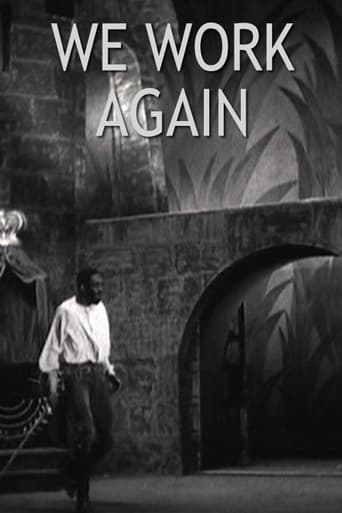
Maurice Ellis
Actor
- Active
- 1937-1937
Films 1
About Maurice Ellis
Maurice Ellis is a little-documented screen performer best known for appearing in the 1937 short documentary We Work Again, a New Deal-era film associated with African American labor, employment, and public-information filmmaking. Available historical records suggest that he was active in film only in 1937, and no reliable evidence has surfaced tying him to a broader screen career beyond that period. Because of the scarcity of surviving documentation, details of his birth, death, education, and personal life remain unverified in standard reference sources. His name is preserved primarily through cast or credit listings connected with We Work Again, which makes him part of the often under-credited body of performers who appear in socially significant short subjects and documentary productions of the 1930s. The limited record means he is not widely known as a star or studio contract player, but rather as one of many historically important minor screen figures whose work is still valuable to film historians. In classic cinema databases, Maurice Ellis stands as an example of the many performers whose surviving legacy depends on a single extant credit. Further archival research would be needed to establish whether this is the full extent of his career or simply the portion that has survived in accessible film records.
More about Maurice Ellis
On screen
No reliable contemporary reviews or production notes describing Maurice Ellis's acting style have been located in standard reference sources. Because his known screen presence is limited to a documentary or short-subject context, any assessment of technique would be speculative. In such productions, performers were often selected for authenticity or representative presence rather than for highly stylized star performance. Accordingly, his screen work should be understood as part of an ensemble or documentary mode rather than a distinctive star persona.
In film history
Maurice Ellis's cultural significance lies less in celebrity status than in the historical importance of the film in which he appeared. We Work Again belongs to a body of 1930s documentary and educational filmmaking that addressed labor, employment, and the lives of African Americans during the New Deal era, making even small on-screen contributors part of a larger social record. Performers like Ellis helped give physical presence and immediacy to such films, which were designed to communicate policy, social conditions, and civic messages to broad audiences. His recorded participation also underscores how many early and mid-20th-century Black screen contributors remain under-documented despite appearing in historically meaningful films.
Later reputation
Maurice Ellis's legacy is essentially archival: he survives in the film record as a credited participant in We Work Again and as a reminder of how incomplete the surviving histories of classic cinema can be. While he did not leave behind a large body of widely circulated feature work, his presence in a significant 1937 production makes him relevant to scholars studying African American representation, documentary filmmaking, and New Deal-era screen culture. His career illustrates how film history often preserves the names of some minor performers while leaving their biographies largely obscured. For researchers and database users, Ellis represents a category of early film figure whose importance is magnified by the historical value of the film itself.
Influence
There is no documented evidence that Maurice Ellis directly influenced other actors or filmmakers in a traceable way. However, his appearance in a socially conscious documentary places him within the broader tradition of performers whose work supported the development of nonfiction film as a vehicle for education and social commentary. In that sense, his contribution is part of the larger foundation upon which later documentary and historical film practices were built. His influence is therefore indirect and historical rather than personal or stylistic.
Off screen
No reliable biographical information about Maurice Ellis's personal life has been verified in accessible classic-cinema reference sources. His marital status, family background, and private life are currently undocumented in the available record. Likewise, there is no confirmed information about residences, occupations outside film, or later-life activities. Any fuller portrait of his life would likely require archival research in studio files, census records, trade publications, or local historical sources.
Credits
- Appeared in the 1937 short documentary We Work Again, the only confirmed screen credit associated with his name in available filmographic records
- Represents the type of lesser-documented performer whose work survives through socially conscious documentary and short-subject production
- His credit places him in the context of 1930s American cinema, particularly films concerned with labor, public welfare, and African American experience
Roles
- Participant in We Work Again (1937)
Films
- We Work Again (1937)
Notes
- Maurice Ellis is known from a very small surviving filmography, with 1937 as both his first and last confirmed active year.
- His only confirmed screen credit in accessible sources is We Work Again (1937).
- Because of the limited record, he is sometimes better described as a documented screen participant than as a widely profiled actor.
- His name appears in the context of an important New Deal-era documentary concerned with employment and African American life.
- No reliable birth or death information has been established for him in standard public film references.
- No confirmed spouse, children, or education details have been found in mainstream reference sources.
- He is an example of the many under-credited performers whose names survive even when their full biographies do not.
- His surviving credit is of particular interest to historians researching African American representation in 1930s nonfiction film.
Questions
Who was Maurice Ellis?
Maurice Ellis was a little-documented classic-era screen performer known for appearing in the 1937 film We Work Again. Available records identify him as an actor, but very little else about his life or career has survived in standard reference sources.
What films is Maurice Ellis best known for?
He is best known for We Work Again (1937), the only confirmed screen credit currently associated with his name in accessible film records. No additional feature-film or short-subject credits have been reliably established from standard sources.
When was Maurice Ellis born and when did he die?
His birth and death dates are not currently documented in reliable public film references. Likewise, his birthplace and later-life details remain unverified at this time.
What awards did Maurice Ellis win?
No awards or nominations have been found for Maurice Ellis in the available record. His historical significance comes from his participation in an important 1937 documentary rather than from documented award recognition.
What was Maurice Ellis's acting style?
No contemporary descriptions of his acting style have been found, and his known work is too limited for a secure stylistic profile. Because We Work Again is a documentary or short-subject production, his screen presence is best understood as part of an authentic, representative performance context rather than a star persona.
What is Maurice Ellis's legacy in film history?
His legacy is primarily archival and historical. He is remembered as one of the performers connected with We Work Again, a film significant to studies of African American life and 1930s social-documentary cinema.