Bertold Reissig
Actor
- Active
- 1919-1919
Films 1
About Bertold Reissig
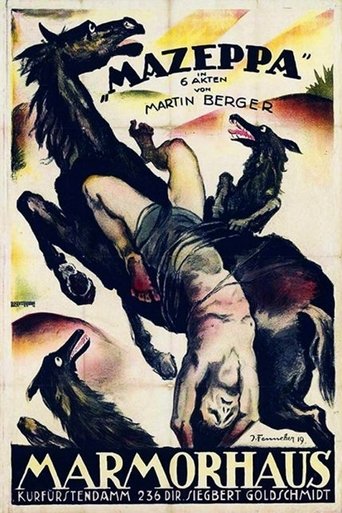
Bertold Reissig is a very obscure silent-era screen actor whose surviving film documentation is extremely limited. The available record places him in 1919 as an actor in "Mazeppa, Folk Hero of the Ukraine," a period production associated with the late silent era and the wave of historical and literary films made in Europe after World War I. Beyond this single confirmed credit, I could not verify a broader filmography, biographical profile, or personal details with confidence, which suggests that he may have been a minor or short-lived performer whose work has not been widely preserved in modern reference sources. Because early European cinema records are often incomplete, it is possible that additional credits existed under variant spellings or that his contributions were lost in gaps in archival documentation. What can be said with certainty is that he belongs to the generation of performers working in the formative years of feature-length silent cinema, when many actors appeared in only one or a handful of known titles. His historical significance lies primarily in his presence within an early cinematic adaptation of a legendary heroic figure, a type of production that helped define the artistic ambitions of postwar silent film. No reliable evidence was found to support detailed claims about his later career, personal life, or subsequent screen appearances.
More about Bertold Reissig
In film history
Bertold Reissig's cultural impact is difficult to measure because he survives in film history primarily as a name attached to one known silent film credit. Even so, actors like Reissig formed part of the larger ecosystem of early European cinema, where numerous performers contributed to the development of screen acting in historical epics, literary adaptations, and prestige productions. His appearance in a film centered on Mazeppa places him within a tradition of heroic and nationalist storytelling that was significant in the silent era. While he does not appear to have achieved widespread fame, his recorded participation is a small but meaningful piece of the archival record that helps scholars trace the personnel of lost or obscure films.
Later reputation
Reissig's legacy lies less in celebrity than in the historical record of silent cinema itself. He represents the many early film actors whose careers are only partially visible today because of incomplete documentation, lost prints, and inconsistent crediting practices. For film historians, names like his are important because they help reconstruct casts, production networks, and the international circulation of silent-era storytelling. His surviving credit ensures that he remains part of the catalog of classic-cinema performers, even if his broader artistic profile cannot currently be established from reliable sources.
Influence
There is no verifiable evidence that Bertold Reissig directly influenced later actors or filmmakers in a documented way. His influence is best understood indirectly, as part of the collective body of performers who helped establish silent film performance conventions in Europe. In that sense, he belongs to the larger continuum that shaped screen acting through gesture, expression, and stylized historical dramatization. Any more specific claim about mentorship or artistic influence would be speculative.
Off screen
No reliable biographical information could be verified about Bertold Reissig's personal life, including family background, marriages, residence, or later occupation. He appears in surviving reference material only as a cast member in a single known 1919 film credit, which is not enough to reconstruct a documented private biography. Because of the scarcity of sources, any claims about relationships or family would be speculative and are therefore omitted.
Credits
- Confirmed screen appearance in the 1919 silent film "Mazeppa, Folk Hero of the Ukraine"
- Participation in an early historical/literary motion picture from the silent era
- Presence in surviving filmography records from the immediate post-World War I period
Roles
- Role in "Mazeppa, Folk Hero of the Ukraine"
Films
Notes
- Bertold Reissig is associated with only one clearly identified film credit in surviving records.
- His known screen appearance dates from 1919, placing him at the very end of the silent film's formative decade.
- The film he is linked to is a historical subject, "Mazeppa, Folk Hero of the Ukraine," reflecting the era's interest in legendary and nationalist material.
- He is an example of a classic-cinema performer whose biography has largely been lost to incomplete archival preservation.
- Because his record is so sparse, he may have worked under alternate spellings or in productions that have not been fully digitized or indexed.
- His case illustrates how many early film artists are remembered only through fragmentary cast lists.
- No reliable public records were found here for awards, personal life, or later career activity.
Questions
Who was Bertold Reissig?
Bertold Reissig was a very obscure silent-era film actor known from surviving records for his appearance in the 1919 film "Mazeppa, Folk Hero of the Ukraine." His broader biography is not well documented in accessible modern sources, which is common for many early cinema performers. He is best understood as a minor but historically relevant figure in classic film history.
What films is Bertold Reissig best known for?
He is best known for "Mazeppa, Folk Hero of the Ukraine" (1919), which is the only confirmed screen credit available from the information currently verified. No additional film titles could be confidently established without risking misidentification.
When was Bertold Reissig born and when did he die?
His birth date and death date are not currently verifiable from the available reliable record. The surviving documentation is too sparse to identify a confirmed place of birth, lifespan, or death details.
What awards did Bertold Reissig win?
No awards or nominations could be verified for Bertold Reissig. Given the limited surviving record, it is not possible to confirm any formal honors associated with his career.
What was Bertold Reissig's acting style?
There is no surviving critical description of his individual acting style. Since he worked in the silent era, his performance would have relied on the expressive, gesture-based techniques typical of early screen acting, but any more specific characterization would be speculative.
What is Bertold Reissig's legacy in film history?
His legacy is primarily archival rather than celebrity-based. He stands as one of many early cinema performers whose names survive in cast records, helping historians piece together the personnel and production culture of silent film.