
Films
1 film
About Eiko Minami
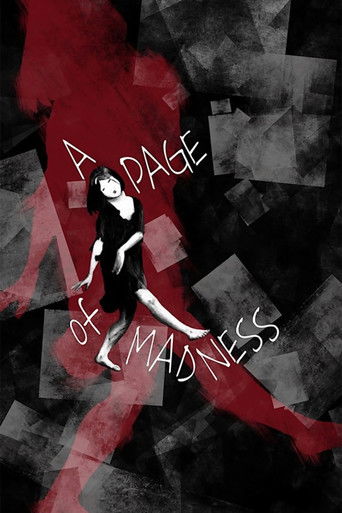
Japanese silent film actress active during the mid-1920s, best known for her appearance in the avant-garde film 'A Page of Madness' (1926). Her career appears to have been extremely brief, with this single film representing her entire known filmography. The film, directed by Teinosuke Kinugasa, was a revolutionary work in Japanese cinema that employed innovative techniques such as superimposition, rapid editing, and subjective camera work to explore themes of mental illness. Minami's role in this experimental masterpiece places her within a significant moment in film history, though little is documented about her subsequent career or life beyond this contribution. Like many actors from Japan's silent era, particularly those who appeared in only a handful of films, detailed biographical information about Eiko Minami has become scarce over the decades, making her a somewhat mysterious figure in cinema history.
The Craft
Milestones
- Appeared in the avant-garde masterpiece 'A Page of Madness' (1926)
- Participated in
Best Known For
Iconic Roles
Must-See Films
Working Relationships
Worked Often With
Why They Matter
Impact on Culture
Eiko Minami's contribution to cinema, while limited to a single film, places her within a significant moment in Japanese film history. 'A Page of Madness' was revolutionary for its time, employing techniques that were decades ahead of mainstream cinema. The film's rediscovery in the 1970s brought renewed attention to its cast and crew, making Minami part of a work that influenced generations of experimental filmmakers worldwide. Her participation in this avant-garde project represents the bold artistic experimentation happening in Japanese cinema during the 1920s, a period that produced some of the most innovative films of the silent era.
Lasting Legacy
Eiko Minami's legacy is intrinsically tied to 'A Page of Madness,'. While her individual contribution cannot be fully assessed due to the scarcity of information about her specific role and performance, her presence in this landmark film ensures her place in film history. The film itself is studied in film schools worldwide and is considered a precursor to many modern cinematic techniques, making Minami a participant in a work that continues to influence filmmakers nearly a century after its creation.
Who They Inspired
Due to the limited documentation of her career and the brevity of her filmography, it's difficult to trace Eiko Minami's direct influence on other performers. However, her involvement in 'A Page of Madness' means she was part of a project that demonstrated new possibilities in cinematic expression, which indirectly influenced the development of experimental cinema in Japan and internationally.
Off Screen
Very little information is available about Eiko Minami's personal life, which is not uncommon for actors from Japan's silent era who had brief careers. Like many performers from this period, detailed records of her life outside of her film work have not survived or were never documented extensively.
Did You Know?
- 'A Page of Madness' was considered lost for over 45 years until a print was discovered in Kinugasa's garden shed in 1971
- The film was produced independently by the Shochiku studio but was considered too experimental for commercial release
- No original script or intertitles survive for 'A Page of Madness', making exact plot details and character names uncertain
- The film was inspired by German Expressionist cinema and the works of Salvador Dalí
- Director Teinosuke Kinugasa financed the film himself when studio support was withdrawn
- The film's running time was originally 60-70 minutes, but only fragments of varying lengths survive
- Eiko Minami's exact role in the film is not documented in surviving records
- The film features no intertitles in its original form, relying purely on visual storytelling
- The cast was largely composed of theater actors from the Shingeki (modern theater) movement
- The film's experimental nature made it a commercial failure upon its initial release
Frequently Asked Questions
Who was Eiko Minami?
Japanese silent film actress from the 1920s, known exclusively for her appearance in the experimental film 'A Page of Madness' (1926). Her career appears to have been extremely brief, with this single film representing her entire known filmography.
What films is Eiko Minami best known for?
Titles linked here include A Page of Madness (1926).
When was Eiko Minami born and when did she die?
Unfortunately, specific birth and death dates for Eiko Minami are not documented in available historical records. This lack of biographical information is common for actors from Japan's silent era who had brief careers.
What was 'A Page of Madness' about?
'A Page of Madness' is an experimental film exploring themes of mental illness, focusing on a man who takes a job as a janitor in an asylum to be closer to his institutionalized wife. The film is renowned for its innovative visual techniques and psychological depth rather than conventional narrative structure.
Why is Eiko Minami significant in film history?
While her individual career was minimal, Eiko Minami's significance comes from her participation in 'A Page of Madness,'. The film's revolutionary techniques and influence on avant-garde cinema make all its contributors, including Minami, part of a landmark achievement in film art.