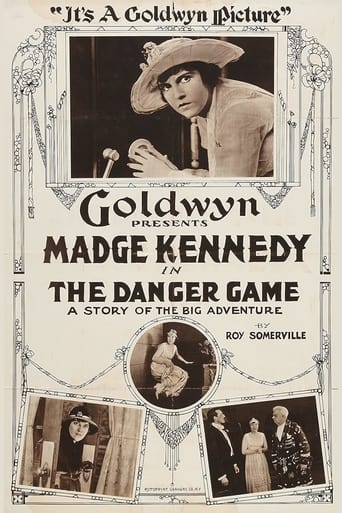

Madge Kennedy
Actor
Born: April 19, 1891 in Chicago, Illinois, USA Died: June 9, 1987 Active: 1912-1977 Birth Name: Madge Olga Kennedy
Films
1 film
About Madge Kennedy
Celebrated American actress who rose to fame during the silent film era, beginning her career on Broadway before transitioning to motion pictures. She made her stage debut in 1912 and quickly became a popular comedic actress, known for her vivacious personality and expressive performances. Kennedy signed with Goldwyn Pictures in 1917 and became one of the studio's biggest stars, appearing in numerous successful comedies throughout the late 1910s and early 1920s. After marrying cowboy star William S. Hart in 1933, she largely retired from acting for several decades. In the 1950s, she made a remarkable comeback as a character actress in both films and television, often playing matronly roles. Her over six decades, from the silent era through the golden age of television, making her one of the few performers to successfully bridge these entertainment mediums. Kennedy's final screen appearance came in 1977, marking the end of an extraordinary career that witnessed the entire evolution of American cinema.
The Craft
On Screen
Known for her energetic comedic timing and expressive facial performances perfect for silent films, Kennedy brought a naturalistic charm to her roles that set her apart from many of her contemporaries. Her acting style evolved from the broad gestures required in silent films to more subtle, nuanced performances in her later character roles. She possessed a remarkable ability to convey emotion through her eyes and expressions, making her particularly effective in both comedic and dramatic situations.
Milestones
- Broadway debut in 'Little Miss Brown' (1912)
- Signed with Goldwyn Pictures (1917)
- Starred in 'The Danger Game' (1918)
- Became one of the highest-paid actresses of the late 1910s
- Retired from films after marrying William S. Hart (1933)
- Made comeback as character actress in the 1950s
- Appeared in classic films like 'Lilith' (1964) and 'The Graduate' (1967)
Best Known For
Iconic Roles
Must-See Films
Accolades
Won
- Hollywood Walk of Fame Star (1960)
Special Recognition
- Hollywood Walk of Fame Star for Motion Pictures at 6773 Hollywood Boulevard
Working Relationships
Worked Often With
Studios
Why They Matter
Impact on Culture
Madge Kennedy represents a unique bridge between the silent film era and modern cinema, having successfully navigated the dramatic transitions in entertainment technology and style. As one of the few silent film stars to make a successful comeback as a character actress, she demonstrated remarkable adaptability and longevity in an industry known for its fleeting fame. Her performances in classic films of the 1960s, particularly 'The Graduate,' introduced her to new generations of audiences who were unaware of her earlier stardom. Kennedy's career arc shows the evolving nature of film acting and the possibilities for reinvention in Hollywood.
Lasting Legacy
Madge Kennedy's legacy encompasses both her work in silent comedy and her successful transition to character acting in later years. She is remembered as. Her ability to reinvent herself decades later, appearing in acclaimed films like 'The Graduate' and 'Lilith,' speaks to her enduring talent and adaptability. Kennedy's career serves as an inspiration for performers facing career transitions and demonstrates that artistic relevance can span multiple generations and entertainment mediums.
Who They Inspired
Kennedy influenced subsequent generations of character actors by demonstrating that comedic timing and expressive performance could translate across different eras of filmmaking. Her successful comeback in the 1950s and 1960s paved the way for other silent film performers to find work in the new Hollywood. Her naturalistic acting style, particularly in her later roles, showed how early film techniques could evolve into more subtle, modern performances. Many character actresses of the 1960s and 1970s cited her ability to seamlessly blend into ensemble casts while maintaining a memorable presence as an inspiration.
Off Screen
Madge Kennedy's personal life was marked by two significant marriages that influenced her career trajectory. Her first marriage to businessman Harold Bolster lasted from 1915 until their divorce in 1933, during which time she established herself as a major film star. In 1933, she married legendary western film star William S. Hart, a union that lasted until Hart's death in 1946. Following Hart's death, Kennedy largely withdrew from public life for several years before eventually returning to acting. She never had children but was known for her close relationships with friends in the entertainment industry and her dedication to preserving Hart's legacy after his death.
Education
Attended Chicago public schools, studied drama at the Chicago Musical College
Family
- Harold Bolster (1915-1933)
- William S. Hart (1933-1946)
Did You Know?
- Was one of the highest-paid actresses in Hollywood during the late 1910s, earning $1,000 per week
- Discovered by Sam Goldwyn while performing on Broadway
- Her marriage to William S. Hart was controversial due to their 24-year age difference
- Appeared in over 50 films during her silent era career
- Was a skilled horsewoman, a skill she developed during her marriage to western star William S. Hart
- Made her television debut in 1953 on 'The Ford Television Theatre'
- Was a close friend of actress Lillian Gish
- Preserved William S. Hart's ranch and estate after his death, helping establish it as a museum
- Spoke fluent French, which helped her in international film markets
- Was an accomplished painter in her later years
In Their Own Words
In silent pictures, your eyes had to do the talking. Every emotion, every thought had to show in your face.
The transition from silent to sound wasn't as hard for me as for some. I had stage training, so I knew how to use my voice.
Working with young actors in my later years kept me fresh. They had so much energy and new ideas.
Hollywood has changed so much, but the basic need for good storytelling remains the same.
Frequently Asked Questions
Who was Madge Kennedy?
American actress who achieved stardom during the silent film era of the 1910s and later made a successful comeback as a character actress in the 1950s and 1960s. She was known for her comedic talents and appeared in classic films like 'The Graduate' in her later career.
What films is Madge Kennedy best known for?
Titles linked here include The Danger Game (1918), The Service Star (1918).
When was Madge Kennedy born and when did she die?
Born April 19, 1891; died June 9, 1987.
What awards did Madge Kennedy win?
Madge Kennedy received a star on the Hollywood Walk of Fame in 1960 for her contributions to motion pictures. While she didn't receive major acting awards during her career, her long-lasting impact on Hollywood was recognized with this honor.
What was Madge Kennedy's acting style?
Kennedy was known for her energetic comedic timing and expressive facial performances, particularly effective in silent films where visual expression was crucial. Her style evolved from the broad gestures required in silent cinema to more subtle, nuanced character work in her later years.
Who did Madge Kennedy marry?
Madge Kennedy was married twice: first to businessman Harold Bolster from 1915 to 1933, and then to legendary western film star William S. Hart from 1933 until his death in 1946.
How did Madge Kennedy transition from silent films to later career?
After retiring following her marriage to William S. Hart, Kennedy made a successful comeback in the 1950s as a character actress, leveraging her experience and maturity to play maternal and supporting roles in both films and television.
What was Madge Kennedy's connection to Broadway?
Before entering films, Kennedy began her career on Broadway, making her debut in 'Little Miss Brown' in 1912. Her stage success helped launch her film career when Sam Goldwyn discovered her and brought her to Hollywood.