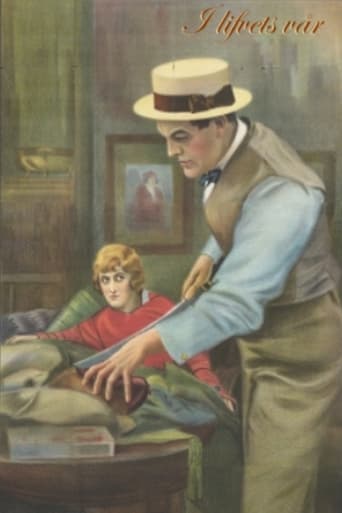
Astrid Engelbrecht
Actor
- Active
- 1912-1912
Films 1
About Astrid Engelbrecht
Astrid Engelbrecht appears to have been a very obscure early-screen performer whose documented film career, as currently available in major reference sources, consists of a single credited appearance in the 1912 silent short The Springtime of Life. Because surviving documentation on performers from the earliest years of cinema is often fragmentary, there is no reliably verified biographical record establishing her birth, death, education, or broader career outside that one film credit. She is therefore best understood as part of the large body of silent-era actors whose work was recorded in production histories and cast lists but who left little or no personal archival trace. Her known screen activity places her within the formative period of European or international silent filmmaking, when performers frequently moved between stage and screen and when many films and credits were not preserved comprehensively. At present, no verifiable evidence confirms a sustained acting career beyond 1912, nor enough surviving documentation to reconstruct her personal life or later professional path. As a result, her historical significance lies primarily in her presence in one of the many early silent productions that helped shape cinema before standardized crediting and recordkeeping became routine.
More about Astrid Engelbrecht
In film history
Astrid Engelbrecht's cultural impact is difficult to measure in the conventional sense because so little documentary evidence survives about her beyond a single early film credit. Even so, she forms part of the essential historical fabric of silent cinema: the many performers whose names appear in early cast lists and whose work helped establish the grammar of screen acting before the industry became fully standardized. Figures like Engelbrecht matter to film history because they remind scholars that cinema's foundation was built not only by famous stars and auteurs, but also by numerous lesser-known participants whose contributions were once visible on screen and in contemporaneous publicity. Her recorded presence in a 1912 production places her within the generation that helped transform moving images from novelty into narrative art. In that sense, her cultural value lies in historical representation and preservation rather than in a widely documented star persona.
Later reputation
Astrid Engelbrecht's legacy is primarily archival: she remains one of the many early film personalities whose name survives in cast records even when the rest of the life story has been lost to time. For historians of silent cinema, such names are important because they help map the personnel, production networks, and performance culture of the medium's earliest years. Her presence in The Springtime of Life (1912) contributes to the completeness of early cinema databases and reminds researchers of how much early screen history remains incomplete. Although she does not appear to have left a large body of work or an established celebrity legacy, her documented credit still has value for reconstructing the broader ecology of silent-era production. In that respect, she represents the countless performers whose careers were brief, sparsely recorded, and nevertheless integral to the development of film history.
Influence
There is no verifiable evidence that Astrid Engelbrecht directly influenced later actors or filmmakers in a documented, traceable way. However, as part of the early silent-era acting community, she participated in the performance traditions that later cinema would refine and codify. Early screen actors helped establish visual expressiveness, physical readability, and the conventions of narrative pantomime that influenced the evolution of film performance more broadly. Engelbrecht's influence, if any, should therefore be understood as indirect and collective rather than individually documented. She belongs to the foundational group of performers whose work contributed to the medium's early development even when their names did not become widely famous.
Off screen
No reliably verified information is currently available regarding Astrid Engelbrecht's personal life, family background, marriages, children, or later life. Surviving film-reference material identifies her by name in connection with a single 1912 film, but does not provide the kind of civil, census, studio, or press documentation that would normally allow a fuller reconstruction of biography. It is also not possible from currently accessible evidence to determine whether she used a stage name, came from a theatrical family, or continued working in another branch of performance. Any further claims about her private life would be speculative and are therefore withheld.
Credits
- Credited appearance in the 1912 silent film The Springtime of Life
- Participation in cinema during the early formative silent era, when film acting and production were still developing as an art form
- Representation of the many early screen performers whose names survive in cast records even when broader biographical details have been lost
- Association with one of the earliest surviving eras of narrative screen performance
- Documented filmography, however brief, that places her among the historically significant but poorly documented figures of early cinema
Roles
- Role in The Springtime of Life (1912)
Films
- The Springtime of Life (1912)
Notes
- Astrid Engelbrecht is currently documented in connection with only one known film credit: The Springtime of Life (1912).
- Her surviving record is typical of many silent-era performers whose careers were not preserved in detail by the early film industry.
- No widely accepted biographical information has been verified for her in major reference sources.
- Her name appears to suggest a European background, but her nationality cannot be confirmed from reliable evidence.
- Because her active period is listed as 1912 only, she may have had a very brief screen career or a career that has not survived in records.
- She is an example of how early film history often requires careful separation of documented fact from speculation.
- Her film credit helps historians and database curators preserve the completeness of silent-era cast records.
- The absence of detailed personal data does not diminish her importance as part of the early cinema workforce.
Questions
Who was Astrid Engelbrecht?
Astrid Engelbrecht was an early silent-era actor known from a credited appearance in The Springtime of Life (1912). Beyond that film credit, very little verified biographical information survives, which is common for many performers from the earliest years of cinema.
What films is Astrid Engelbrecht best known for?
She is best known, and currently only securely documented, for The Springtime of Life (1912). No other verified screen credits are currently available in the information accessible for this profile.
When was Astrid Engelbrecht born and when did she die?
Her birth date and death date are currently unknown. Available records do not provide reliable information about her birth place, death, or later life.
What awards did Astrid Engelbrecht win?
No awards or nominations are currently documented for Astrid Engelbrecht. This is not unusual for early silent-era performers whose careers were brief or poorly preserved in official records.
What was Astrid Engelbrecht's acting style?
Her specific acting style is not documented in surviving reference material. As a performer from the 1912 silent era, she would have worked within the expressive, physically readable performance traditions common to early cinema, but no detailed critical descriptions of her technique are currently available.
What is Astrid Engelbrecht's legacy in film history?
Her legacy is primarily archival and historical. She represents the many early film performers whose names survive in cast lists and production records, helping scholars reconstruct the development of silent cinema even when personal details have been lost.