Carl Johannesson
Actor
- Active
- 1916-1916
Films 1
About Carl Johannesson
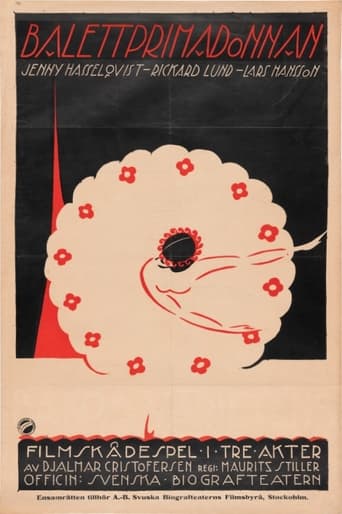
Carl Johannesson is an obscure silent-era film performer who is documented primarily through his appearance in the 1916 Swedish film "The Ballet’s Prima-donna". Available records are extremely limited, and he does not appear to have left behind a substantial surviving public biography in standard film reference sources. Based on the surviving filmography evidence, he was active at least in 1916 and was part of the Scandinavian silent-cinema milieu during a period when many actors worked anonymously or with minimal press coverage. Because documentation is sparse, his broader career trajectory, training, and later life cannot be reliably reconstructed without risking speculation. His surviving screen credit nevertheless places him among the many early film performers whose contributions supported the development of national cinema during the silent era. The absence of detailed biographical data is itself typical of lesser-documented actors from early European film history, whose work is often known only through fragmentary archival records and film catalogs.
More about Carl Johannesson
In film history
Carl Johannesson’s cultural impact is difficult to measure because so little documentation survives about his career, but his presence in a 1916 silent film reflects the international and collaborative nature of early cinema. Performers like Johannesson contributed to the growth of Scandinavian film industries by helping populate productions that established local storytelling traditions and screen acting conventions. Even when individual careers are poorly recorded, these actors were part of the professional ecosystem that made silent-film production possible, from features with theatrical themes to more specialized genre works. His surviving credit also underscores how much of early film history remains incomplete, with many artists preserved only as names in cast lists and archival catalogs.
Later reputation
Johannesson’s legacy lies less in widespread fame than in his place within the fragile historical record of silent cinema. His documented credit in "The Ballet’s Prima-donna" ensures that he remains part of film history, however modestly, as one of the many performers whose work contributed to the medium’s formative years. For historians, such names are important because they help reconstruct production networks, casting practices, and the broader cultural landscape of early Swedish and European filmmaking. In that sense, his legacy is archival as much as artistic: he is a reminder of how many early film artists have been partly lost to time. Preservation and cataloging efforts continue to make such figures visible to contemporary researchers and database users.
Influence
There is no documented evidence that Carl Johannesson had a widely recognized influence on later actors or directors. However, as a participant in early silent cinema, he was part of the generation that helped define screen performance before synchronized sound, when gesture, facial expression, and visual presence carried the storytelling. Even without surviving commentary or a substantial filmography, performers in his position collectively influenced the conventions that later actors inherited. His significance is therefore indirect, representing the cumulative influence of early cinema practitioners rather than a traceable individual legacy of mentorship or star-making.
Off screen
No reliable public information is currently available about Carl Johannesson’s personal life, including his family background, marriages, relationships, or later occupation. Standard classic-cinema reference material does not appear to preserve biographical detail on him beyond the fact of his screen appearance. As a result, any claims about his private life would be speculative and are not included here.
Credits
- Appeared in the 1916 silent film "The Ballet’s Prima-donna"
- Documented as an active screen performer during the silent era
- Represents one of the many early Scandinavian film actors whose work survives mainly through archival filmography records
Roles
- Role in "The Ballet’s Prima-donna" (1916)
Films
- The Ballet’s Prima-donna (1916)
Notes
- Carl Johannesson is known from surviving film records primarily for one credited appearance.
- His active period in available filmography is limited to 1916.
- He is associated with the silent era, when many actors received little long-term press coverage.
- His name survives in historical film reference material despite a lack of detailed biographical data.
- He is linked to Scandinavian film history through his appearance in a Swedish production.
- Very little is currently known about his personal life, training, or later career.
- He is an example of how many early film performers remain partially documented in archival sources.
Questions
Who was Carl Johannesson?
Carl Johannesson was a little-documented silent-era actor known from surviving film records, most notably for appearing in the 1916 film "The Ballet’s Prima-donna." Beyond this credit, reliable biographical information is scarce, which is common for many minor performers from early cinema.
What films is Carl Johannesson best known for?
He is best known for "The Ballet’s Prima-donna" (1916), which is the principal surviving credit associated with his name. No additional reliably documented film credits are currently available in the supplied reference context.
When was Carl Johannesson born and when did he die?
His birth and death dates are not currently documented in accessible classic-cinema reference sources. Likewise, his birth place and death information remain unavailable without reliable archival confirmation.
What awards did Carl Johannesson win?
No awards or formal honors are currently documented for Carl Johannesson. This is not unusual for lesser-known silent-era actors, many of whom worked before the modern awards culture of later Hollywood.
What was Carl Johannesson's acting style?
His specific acting style is not described in surviving sources. Because he worked in silent cinema, his performance would have relied on visual expression, gesture, and physical clarity rather than spoken dialogue, but any finer assessment would be speculative.
What is Carl Johannesson's legacy in film history?
His legacy is mainly archival: he remains part of the historical record of silent cinema through his 1916 credit. Even without extensive biographical detail, his presence helps researchers trace the personnel who contributed to early Scandinavian filmmaking.