The Ballet’s Prima-donna
Plot
A young couple in love is separated when a nobleman becomes fixated on the woman and uses his social power to interfere in their relationship. As the noble’s interest intensifies, the lovers are pushed into a conflict that exposes the inequality between class privilege and ordinary affection. The story develops as the couple struggles against pressure, manipulation, and the vulnerability that comes from being at the mercy of a powerful patron. In the end, the film centers on the emotional cost of desire distorted by status and the tragic strain placed on private love by public power.
About the Production
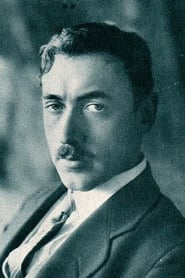
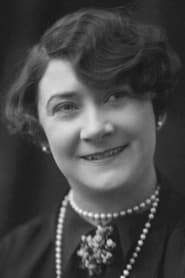
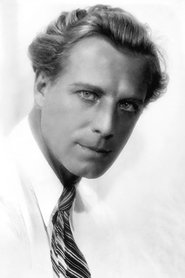
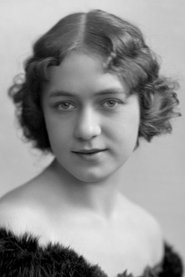
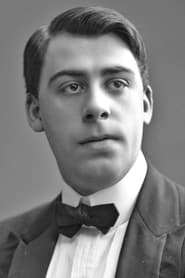
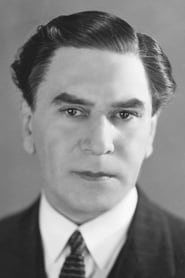
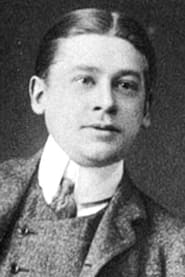
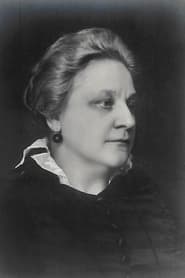
The film was made during the most celebrated period of Mauritz Stiller’s early career, when Swedish silent cinema was gaining an international reputation for refined staging and visual elegance. Like many Scandinavian productions of the era, it was created as a compact drama emphasizing performance, atmosphere, and expressive imagery rather than spectacle. Surviving documentation on the production is limited, so precise notes about sets, shooting schedule, and promotional campaign are not well established. The casting of Dagmar Ebbesen, Lars Hanson, and Jenny Hasselqvist connects the film to the early careers of major Swedish screen performers who would become familiar names in Scandinavian cinema.
Historical Background
The film was made in 1916, during the height of World War I, even though Sweden remained neutral. That neutrality allowed Swedish film production to continue when many European industries were disrupted, helping Stockholm-based studios gain prominence at a moment when international cinema was being reshaped by wartime conditions. Mauritz Stiller was working in an era when Swedish films were increasingly admired for their visual sophistication, literary ambition, and moral seriousness. The story’s emphasis on class difference, desire, and social power reflects concerns that resonated strongly in early twentieth-century Europe, where traditional hierarchies were being questioned even as aristocratic privilege still carried force in everyday life.
Why This Film Matters
This film matters primarily as part of the early body of work that established Mauritz Stiller as one of the leading figures in Swedish silent cinema. Even when individual titles are not widely seen today, films like this helped build the prestige of Swedish filmmaking through their dramatic seriousness and strong visual storytelling. It also contributes to the screen histories of Dagmar Ebbesen, Lars Hanson, and Jenny Hasselqvist, all of whom are important in understanding the transition from stage-centered performance culture to cinema in Scandinavia. For film historians, the title is valuable as evidence of the kinds of melodramatic class-and-romance narratives that circulated in early Nordic cinema and helped define the region’s artistic identity.
Making Of
Very little detailed behind-the-scenes documentation survives for this title, but it belongs to a formative stage in Mauritz Stiller’s filmmaking when he was refining the restrained, psychologically alert style that later defined his work. The production likely relied on the economical methods typical of Swedish silent drama: controlled sets or modest natural locations, carefully arranged tableaux, and expressive physical performance rather than intertitles-heavy exposition. Casting is notable because it brings together performers with strong stage associations, especially Jenny Hasselqvist, whose ballet background would have added authenticity to a story centered on a dancer or prima-donna figure. Because the film is from 1916, many production specifics such as shooting dates, crew credits beyond the director, and contemporary press reactions are either incomplete or lost in surviving records.
Visual Style
Specific cinematographic credits and techniques are not consistently documented in surviving sources for this film, but it would have been photographed in the prevailing style of mid-1910s Swedish silent cinema. That usually meant carefully composed static or gently mobile camera setups, expressive framing, and a strong dependence on gesture, posture, and costume to convey class and emotional tension. Stiller’s work in this period is often associated with clarity of spatial arrangement and an ability to turn ordinary interiors and social interactions into psychologically legible drama. Even without detailed shot records, the film likely used performance-centered visuals to emphasize the imbalance between the lovers and the aristocratic figure exerting pressure on them.
Innovations
No specific technical innovations are documented for this title, but its value lies in its contribution to the polished dramatic style associated with early Swedish silent cinema. The film likely demonstrates the era’s mature silent storytelling methods: concise plotting, controlled mise-en-scène, and expressive performance calibrated for emotional clarity. Its importance is historical rather than technological, showing how Swedish filmmakers like Stiller elevated simple narrative material through elegant direction and actor-centered composition. Because the film survives primarily as an archival entry rather than a widely circulated print, technical discussion is necessarily limited.
Music
As a silent film, it had no synchronized recorded soundtrack at release. Like most films of the period, it would have been accompanied by live music in theaters, often improvised by a pianist or small ensemble depending on venue and exhibition practice. No original score has been reliably preserved in accessible documentation. Modern screenings, when they occur, may use reconstructed or newly commissioned accompaniment rather than a historically fixed musical track.
Memorable Scenes
- The central emotional confrontation in which the nobleman’s desire disrupts the lovers’ relationship and exposes the imbalance of power between them.
- Scenes of heightened romantic tension in which the lovers are forced to confront social forces larger than their own private feelings.
- Moments built around the prima-donna figure, where performance, presence, and class distinction intersect in the visual design of the drama.
Did You Know?
- The film is a 1916 Swedish silent drama directed by Mauritz Stiller, one of the key figures of Sweden’s silent-era prestige cinema.
- It is associated with Svenska Biografteatern, the studio that helped shape early Swedish film production and export.
- Lars Hanson appears in one of his earlier screen roles before becoming an internationally recognized star of Swedish and Hollywood cinema.
- Jenny Hasselqvist was primarily known as a ballerina, and her presence in the cast reflects the era’s interest in performance artists with stage credibility.
- The English-language title is commonly rendered as The Ballet’s Prima-donna, though the original Swedish title is not always consistently reproduced in later databases.
- Information about runtime, full cast billing, and production circumstances is scarce, which is common for many silent films from the 1910s.
- The film’s surviving reputation rests largely on archival catalog records rather than on widespread circulation or modern home-video availability.
- Its theme of class power interfering with romance is characteristic of melodramatic silent-era storytelling.
- Mauritz Stiller’s silent films are often studied for their sophisticated direction of actors and attention to social atmosphere, even in relatively brief dramatic works like this one.
- The film belongs to a period when Swedish cinema was beginning to attract attention beyond its domestic market.
What Critics Said
Contemporary critical response is not well preserved in accessible sources, so there is no securely documented consensus on how the film was first reviewed. In modern scholarship, the film is generally treated as an obscure but noteworthy surviving record of Mauritz Stiller’s 1910s output rather than as a canonical masterpiece. Because many of its production details and exhibition records are incomplete, criticism tends to focus more on its place within Stiller’s development and Swedish silent cinema overall than on detailed scene-by-scene analysis. Its reputation today is largely archival and historical rather than based on broad critical reassessment through frequent revival screenings.
What Audiences Thought
Audience response at the time is difficult to reconstruct because surviving box-office and exhibition data are unavailable. As a silent-era Swedish melodrama with professional performers and a socially charged premise, it was likely aimed at general urban audiences accustomed to emotionally direct narratives. Modern audiences generally encounter the film, if at all, through archival references or rare festival and preservation contexts rather than mainstream circulation. As a result, its present-day audience reception is limited but typically shaped by interest in early Scandinavian cinema and silent-film history.
Film Connections
Influenced By
- Stage melodrama
- Nordic romantic drama traditions
- Early 20th-century social-problem storytelling
- Silent-era performance-driven cinema
This Film Influenced
- Later Mauritz Stiller melodramas
- Swedish silent films emphasizing class and romance
- Nordic romantic dramas of the silent era
You Might Also Like
More Drama Films
View allMore from Mauritz Stiller
View allFilm Restoration
Preservation status is uncertain in accessible public records. The film is known to exist in archival catalog references, but detailed information about surviving prints, completeness, or restoration status is not readily available from commonly accessible sources. It should therefore be treated as a poorly documented silent film whose availability may be extremely limited.