Thure Holm
Actor
- Active
- 1913-1916
Films 4
About Thure Holm
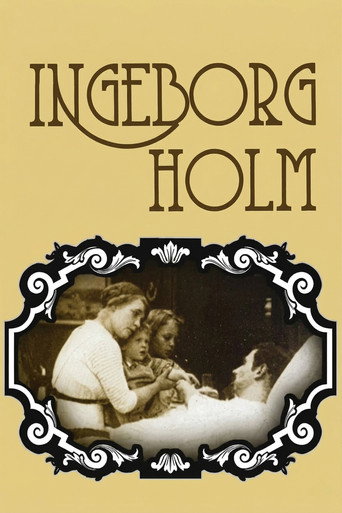
Thure Holm was a Swedish silent-era actor whose screen career was brief but tied to one of the foundational works of Scandinavian cinema. He is best remembered for appearing in Victor Sjöström's Ingeborg Holm (1913), a landmark film often cited as one of the great early achievements of Swedish silent drama. Beyond that film, his surviving filmography shows only a handful of credited appearances in the mid-1910s, including Kiss of Death (1916) and The Ballet’s Prima-donna (1916), suggesting that his career in motion pictures was short-lived or that much of his work has been lost to incomplete archival records. Like many actors of the period, he worked during a time when Scandinavian filmmaking was rapidly evolving from stage-like melodrama into a more naturalistic and psychologically subtle cinema. Because documentation from the silent era is often fragmentary, comparatively little is known about his personal life, training, or later career. His importance lies less in a long star career than in his participation in a historically significant moment in early Swedish film history. For historians and silent-cinema enthusiasts, his name survives primarily through film credits and the enduring reputation of the films in which he appeared.
More about Thure Holm
On screen
No detailed contemporary criticism of Thure Holm's acting style is widely documented in standard reference sources. As a performer in early Swedish silent cinema, he would have worked within the restrained, expressive conventions that were becoming more naturalistic under the influence of Victor Sjöström and other Scandinavian filmmakers. His surviving film appearances suggest participation in a style that emphasized readable facial expression, economical gesture, and emotionally grounded performance rather than broad theatrical exaggeration. Any further assessment is limited by the scarcity of surviving documentation and the small size of his known filmography.
In film history
Thure Holm's cultural impact is inseparable from the importance of Ingeborg Holm, a film widely recognized as a landmark in the development of socially conscious cinema. Even when an actor's individual role is not exhaustively documented, participation in such a film places him within an early movement toward serious, human-centered screen storytelling that helped distinguish Swedish cinema on the international stage. His career reflects the broader contribution of working actors who supported the rise of national film styles in Europe before the Hollywood studio system dominated global movie culture. For modern viewers and scholars, his name serves as a reminder that film history is built not only on celebrated stars but also on the many lesser-documented performers whose work helped establish cinema as an art form. In archival and historiographical terms, he represents the challenge and importance of recovering silent-era talent whose careers were brief, under-recorded, or only partially preserved.
Later reputation
Thure Holm's lasting legacy lies in his presence in one of the essential films of early Swedish cinema rather than in a long sequence of star vehicles or a highly publicized personal brand. His name endures because Ingeborg Holm continues to be studied as an important early example of realist melodrama and social critique, and every credited participant in such a film becomes part of that historical record. He stands as part of the generation of Scandinavian actors whose work helped shape the expressive vocabulary of silent film during its formative years. In film history databases, his value is archival as much as artistic: preserving his credit helps reconstruct the personnel and production networks of early 20th-century European filmmaking. His legacy is therefore that of a contributing performer in a foundational period of cinema, remembered through scholarship, restoration, and the continuing interest in silent film heritage.
Influence
No direct line of influence can be firmly documented for Thure Holm as an individual performer, but his work participated in the broader influence of Swedish silent cinema on international acting and filmmaking practices. The restrained, emotionally credible style associated with Scandinavian silent films influenced later European screen acting and helped establish alternatives to the more theatrical traditions inherited from stage performance. By appearing in Ingeborg Holm, he contributed to a film tradition that would influence how social issues, female suffering, and domestic realism were represented onscreen. His significance is therefore collective and historical rather than personal and traceable through named protégés or disciples.
Off screen
Very little verifiable information appears to survive about Thure Holm's personal life, family background, marital history, or later years. Standard silent-film reference material does not consistently provide biographical detail for him beyond his screen credits, which is common for many early Scandinavian character actors and supporting players. As a result, no reliable information can be given here about marriages, children, residence, or life outside cinema without risking speculation. His known legacy is therefore primarily professional and historical rather than biographical.
Education
No verified information available regarding formal education, acting school training, or theatrical apprenticeship.
Credits
- Appeared in Ingeborg Holm (1913), one of the most celebrated early Swedish silent films and a landmark in realistic social drama
- Worked during the formative years of the Swedish silent cinema boom under the influence of major filmmakers such as Victor Sjöström
- Received screen credits in at least three surviving or documented films between 1913 and 1916
- Represents the many early Scandinavian performers whose careers are preserved primarily through fragmentary filmographies and surviving film credits
- Contributed to the development of emotionally direct, naturalistic screen acting in early European cinema
Roles
- Unnamed role in Ingeborg Holm (1913)
- Unnamed role in Kiss of Death (1916)
- Unnamed role in The Ballet’s Prima-donna (1916)
Films
- Ingeborg Holm (1913)
- Kiss of Death (1916)
- The Ballet’s Prima-donna (1916)
Collaborators
Studios
- Svenska Biografteatern
Notes
- Thure Holm is best known today because of his credit in Ingeborg Holm, a film often cited as a milestone in Swedish silent cinema.
- His known film career appears to have been very short, with documented screen work concentrated between 1913 and 1916.
- He is one of many early Scandinavian film performers whose biography is difficult to reconstruct because silent-era records are incomplete.
- His surviving credits place him at the center of the period when Swedish cinema was gaining international artistic prestige.
- Ingeborg Holm is especially significant because it helped establish a more realistic and socially aware approach to screen drama.
- There is no widely verified information available in standard reference sources about his private life, which makes him a largely archival figure for researchers.
- He should not be confused with other similarly named individuals in non-film fields, as the available evidence points specifically to a Swedish actor of the silent era.
Questions
Who was Thure Holm?
Thure Holm was a Swedish actor from the silent-film era, best remembered for his credit in Ingeborg Holm (1913). He appears to have had a brief screen career in the mid-1910s, with only a small number of surviving or documented film credits. Because records are sparse, he is known mainly to film historians and silent-cinema researchers.
What films is Thure Holm best known for?
He is best known for Ingeborg Holm (1913), along with Kiss of Death (1916) and The Ballet’s Prima-donna (1916). These films make up the core of his documented filmography. Of them, Ingeborg Holm is by far the most historically significant.
When was Thure Holm born and when did he die?
His birth and death dates are not reliably documented in the standard sources available for this profile. The surviving record focuses on his silent-era film credits rather than his personal biography. As a result, both dates remain unknown here.
What awards did Thure Holm win?
No awards or major honors are currently documented for Thure Holm. This is not unusual for performers from the silent era, especially supporting actors whose work was preserved mainly through film credits rather than publicity records. His historical value comes from his participation in important early films rather than formal accolades.
What was Thure Holm's acting style?
No detailed critical description of his individual style survives, but as a Swedish silent-film actor he would have worked within the restrained, expressive conventions of early Scandinavian cinema. That tradition emphasized naturalistic emotion, clear visual storytelling, and subtle gesture over theatrical excess. His performances would have fit the evolving realism associated with Swedish silent drama.
What is Thure Holm's legacy in film history?
His legacy is tied to his participation in Ingeborg Holm, one of the key films in the history of Swedish cinema. He represents the many early actors whose work helped shape silent-film style even if their personal histories are only partially known. For scholars, his preserved credit is part of reconstructing the people behind cinema's formative years.