Edward Elkas
Actor
- Active
- 1915-1915
Films 1
About Edward Elkas
Edward Elkas was a silent-era American actor whose surviving documented screen credit places him in the 1915 short film Cabman Kate. Beyond that single film record, very little biographical information has survived in widely accessible film reference sources, which is not unusual for many performers who worked briefly during the earliest years of American cinema. His known activity falls within the formative period of the U.S. film industry, when many actors moved between stage, vaudeville, and early film productions with little formal publicity. Because no reliable, widely confirmed biographical profile has been preserved, details such as his exact birth date, birthplace, family background, and later life remain uncertain. What can be said with confidence is that Elkas was part of the generation of performers who helped establish the silent-film acting tradition in the 1910s. His credited presence in Cabman Kate ties him to the rapid expansion of short-reel filmmaking and the studio system's early development. In film history terms, he belongs to the many under-documented players whose work contributed to the foundations of American screen comedy and drama even if their careers were only sparsely recorded.
More about Edward Elkas
In film history
Edward Elkas's cultural impact is best understood as part of the collective contribution of early silent-film actors rather than through a large surviving body of star vehicles. Performers like Elkas helped populate the thousands of shorts, one-reelers, and early feature films that established screen acting conventions, pacing, and visual storytelling before synchronized sound existed. Even when individual careers were not heavily publicized, these actors were essential to the industrial and artistic growth of American cinema in the 1910s. His presence in a surviving film credit underscores how much of early film history depends on fragmentary records and how many contributors remain largely anonymous to modern audiences. In that sense, Elkas represents an important historical category: the working player whose brief screen work supported the medium's transition from novelty to mass entertainment.
Later reputation
Edward Elkas's legacy lies primarily in his place within the silent-cinema workforce of the 1910s, a crucial period when the language of film acting was being standardized. Although he does not appear to have left behind a well-documented star persona or an extensive filmography in readily available sources, his credit in Cabman Kate preserves his contribution to early film history. His name survives as evidence of the many artists whose work may be fragmentary in the record but was nonetheless part of cinema's development. For historians, such figures are important because they illuminate the breadth of participation in the silent era beyond the most famous stars and directors. His lasting significance is therefore archival and historical: he is one of the many names that help reconstruct the early ecology of American filmmaking.
Influence
There is no documented record of Edward Elkas directly influencing major later performers or filmmakers in a traceable, named way. His influence, insofar as it can be inferred, is indirect and collective: he participated in the silent-film environment that shaped performance norms for later screen acting. The early actors of his era helped establish expressive physical acting, economical gesture, and visual clarity that became foundational to movie performance before sound altered the craft. In that broader historical sense, Elkas belongs to the generation whose work informed the medium's artistic grammar.
Off screen
No reliable public record has been located that documents Edward Elkas's personal life, including marriages, family, or later biographical details. He appears to be one of the many early silent-era performers whose private life was never widely profiled in surviving sources. As a result, there is no verified information about spouses, children, education, or later occupation available from standard film-reference material.
Credits
- Credited screen appearance in the silent film Cabman Kate (1915)
- Participation in the early American silent-film era during the mid-1910s
- Representation of the many lightly documented character performers working in short subjects at the time
- Historical association with the expansion of film exhibition and production in the 1910s
Roles
- Role in Cabman Kate (1915)
Films
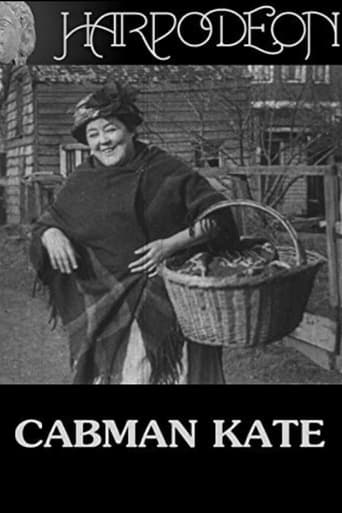
- Cabman Kate (1915)
Notes
- Edward Elkas is known in surviving film records primarily for one credited appearance, Cabman Kate (1915).
- He appears to have been active only in 1915 based on available filmography data.
- He is an example of a silent-era performer whose career has been only sparsely preserved in modern reference sources.
- His surviving credit places him in the formative years of American short-subject filmmaking.
- No widely verified biographical details such as birth date, birthplace, or death date are readily established from standard sources.
- Because early film documentation was often incomplete, many performers like Elkas are known only through a single surviving title or cast listing.
Questions
Who was Edward Elkas?
Edward Elkas was a silent-era film actor known from surviving records for appearing in Cabman Kate (1915). He is one of many early cinema performers whose careers are only sparsely documented today. His surviving screen presence places him in the formative period of American film history.
What films is Edward Elkas best known for?
He is best known for Cabman Kate (1915), which is the primary surviving film credit associated with his name. At present, that is the only widely documented title connected to him in accessible reference material.
When was Edward Elkas born and when did he die?
Reliable public sources available here do not confirm Edward Elkas's birth or death dates. His biography is one of many early silent-era cases where the historical record is incomplete or has not survived in a readily verifiable form.
What awards did Edward Elkas win?
No awards or formal honors are currently documented for Edward Elkas in the surviving reference material available for this profile. This is not unusual for early silent-era supporting performers, many of whom worked before the modern awards culture developed.
What was Edward Elkas's acting style?
No detailed critical description of his acting style appears to have survived in accessible sources. As a silent-era performer, he would have worked within the visual, gesture-driven performance traditions common to films of the 1910s.
What is Edward Elkas's legacy in film history?
His legacy is primarily archival and historical: he represents the many under-documented actors who helped build the silent-film industry. Even with limited surviving information, his credit in an early film helps preserve the broader record of cinema's development.