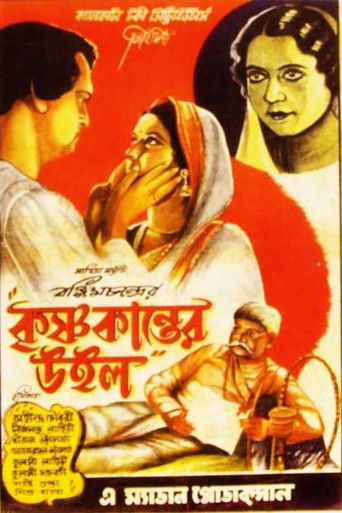
Films
1 film
About Manorama Devi
This archive lists one role for Manorama Devi: Krishnakanter Will (1932). Her most notable and possibly only known film appearance was in the 1932 Bengali film 'Krishnakanter Will', which was an adaptation of Bankim Chandra Chattopadhyay's famous novel of the same name. As an actress working in the early sound era of Indian cinema, she was part of the generation of performers who helped establish the foundations of Indian film industry. The 1930s was a crucial period for Indian cinema, with the transition to sound creating new opportunities and challenges for actors. While detailed records from this era are often incomplete, her participation in a significant literary adaptation suggests she was likely a trained actress with theatrical background. Her career appears to have been brief, possibly limited to the early 1930s, which was not uncommon for many actresses of that period due to various social and professional factors.
The Craft
Milestones
- Appeared in the 1932 film 'Krishnakanter Will'
Best Known For
Iconic Roles
Must-See Films
Why They Matter
Impact on Culture
Manorama Devi represents the early generation of Indian cinema actresses who worked during the crucial transition period from silent films to talkies in the 1930s. Her appearance in 'Krishnakanter Will' places her within the context of early Bengali cinema's efforts to adapt literary classics for the screen. These early adaptations were instrumental in establishing cinema as a legitimate art form in India and helped bridge the gap between traditional theatrical arts and the new medium of film. Though her career appears brief, she contributed to the foundation of what would become one of the world's largest film industries.
Lasting Legacy
As an actress from the early sound era of Indian cinema, Manorama Devi's legacy is preserved through her contribution to the 1932 adaptation of Bankim Chandra Chattopadhyay's work. While detailed information about her career and life is limited, she represents the many women who helped establish Indian cinema during its formative years. Her work in adapting literary classics to film was part of a broader movement that elevated the cultural status of cinema in India.
Who They Inspired
Due to the limited documentation of her career and the brief nature of her apparent film work, specific details about her influence on other actors or directors are not well-documented. However, like many early cinema pioneers, her work contributed to the establishment of acting traditions in Indian cinema that would influence subsequent generations of performers.
Off Screen
Very little is documented about Manorama Devi's personal life, which was common for many early cinema actresses whose personal details were not systematically recorded in film archives of the time.
Did You Know?
- Appeared in the 1932 film 'Krishnakanter Will', an adaptation of Bankim Chandra Chattopadhyay's famous novel
- Worked during the early sound era of Indian cinema, a pivotal time in film history
- Participated in Bengali cinema, which was one of the early centers of Indian film production
- Her film career appears to have been limited to the year 1932, which was not uncommon for actresses of that era
- The lack of extensive documentation about her career reflects the challenges of preserving early Indian cinema history
Frequently Asked Questions
Who was Manorama Devi?
Screen credits include the 1932 Bengali film 'Krishnakanter Will'. She was active during the early sound era of Indian cinema, though her career appears to have been brief and primarily focused on that single notable film appearance.
What films is Manorama Devi best known for?
Titles linked here include Krishnakanter Will (1932).
When was Manorama Devi born and when did she die?
Specific birth and death dates for Manorama Devi are not documented in available historical records, which is unfortunately common for many early cinema personalities from the 1930s Indian film industry.
What awards did Manorama Devi win?
There are no documented awards or honors for Manorama Devi, which reflects that formal award systems for Indian cinema were not yet established during her active period in 1932.
What was Manorama Devi's acting style?
Specific details about Manorama Devi's acting style are not well-documented, though actresses of her era typically drew from theatrical traditions due to the strong influence of stage performance on early cinema acting techniques.