Harris Gordon
Actor
- Active
- 1920-1920
Films 1
About Harris Gordon
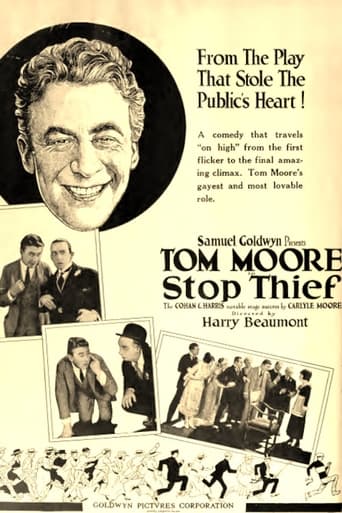
Harris Gordon is a little-documented silent-era screen actor whose surviving film record places him in the American motion picture industry in 1920, when he appeared in the comedy-drama Stop Thief. Beyond this credit, reliable biographical information about his life, training, and later career has not survived in standard reference sources, and he appears to have been one of the many short-lived performers who worked briefly in the rapidly expanding silent-film industry. Like numerous screen actors of the period, he is preserved primarily through cast listings and production records rather than extensive publicity material, interviews, or feature coverage. His known association with Stop Thief connects him to the bustling era of American silent comedy, when supporting players often moved quickly between stage, vaudeville, and film work. Because the historical record is sparse, it is not currently possible to reconstruct a full career arc, family background, or post-film life with confidence. His surviving filmography nevertheless places him within the early development of Hollywood performance culture, where even minor credited appearances helped shape the texture of silent cinema. For database purposes, he is best understood as a documented but obscure silent-era character actor whose career evidence currently consists of a single known film credit.
More about Harris Gordon
In film history
Harris Gordon's cultural impact is best understood in the broader context of the silent-era screen ecosystem rather than through a large body of surviving work. Performers like him formed the essential supporting fabric of early American cinema, helping populate comedies, dramas, and genre pictures with the kinds of faces and character types audiences came to recognize instantly. Even when a performer did not become a major star, a single credit can place them within the historical record of how films were cast, produced, and exhibited during the formative years of Hollywood. His presence in Stop Thief links him to a period when motion pictures were consolidating their storytelling language and building the industrial system that would define the classical era. For historians and database researchers, such names are important because they document the breadth of participation in silent film and remind us that the era was sustained by many working actors whose careers were not fully publicized.
Later reputation
Harris Gordon's legacy lies primarily in documentation: he is one of the many silent-era actors whose names survive in cast records even when personal details have been lost. This kind of residual credit is historically valuable because it helps reconstruct the labor history of early Hollywood and preserves the identities of performers who contributed to the medium's development. His known appearance in Stop Thief gives him a modest but legitimate place in silent-film historiography, especially for researchers tracing production personnel and cast networks from the 1920 period. While he does not appear to have left behind a widely recognized body of work, his record illustrates how fragile early film fame could be and how quickly many working actors disappeared from the public eye. In that sense, his legacy is representative of the countless overlooked performers whose small screen roles collectively built the silent cinema tradition.
Influence
There is no documented evidence that Harris Gordon directly influenced later actors or filmmakers in a traceable way. His historical importance is indirect: like many minor silent players, he contributed to the professional performance standards and ensemble traditions that later generations of screen actors inherited. The broader influence of performers such as Gordon can be seen in the normalization of character acting, quick establishment of narrative types, and the industrial casting practices that became standard in Hollywood. Because his career is currently represented by only a single verified credit, any claim of personal influence would be speculative. His contribution is best understood as part of the collective acting workforce that shaped silent-era screen grammar.
Off screen
No reliable biographical records currently available in standard film-reference sources confirm Harris Gordon's birth, family background, marital history, or later life. As with many minor silent-era performers, his personal life appears to have left little trace in the surviving press and studio documentation. Until additional archival evidence emerges, details about his relationships, residence, education, and activities after 1920 remain unknown.
Credits
- Appeared in the 1920 silent film Stop Thief, the only verified screen credit currently associated with him
- Worked during the peak years of American silent cinema, when even brief film appearances contributed to the era's rapidly growing studio output
- Represents the large body of early film performers whose careers are preserved mainly through production records and cast lists
Roles
- Role in Stop Thief (1920)
Films
- Stop Thief (1920)
Notes
- Harris Gordon is currently identified in surviving film records primarily through one verified credit: Stop Thief (1920).
- He appears to have worked during a very brief window in the silent era, at least as far as existing filmographies can confirm.
- No widely cited biographical profile, obituary, or interview has been located in standard classic-cinema reference materials.
- His obscurity is typical of many early film performers whose names survived in cast lists even when studio publicity did not preserve their biographies.
- Because silent-era documentation is incomplete, additional credits may exist in archival sources that have not yet been fully indexed.
- His case highlights the importance of production records and trade publications for reconstructing early Hollywood personnel histories.
- Stop Thief (1920) places him in the energetic post-World War I silent-film industry, when American cinema was expanding rapidly.
- He is not to be confused with any later or unrelated individuals sharing a similar name.
Questions
Who was Harris Gordon?
Harris Gordon was a silent-era film actor known from surviving records for appearing in Stop Thief (1920). Very little biographical information about him has been preserved, so he is best known today as a documented early cinema performer rather than a major star. His surviving credit places him within the formative years of American film history.
What films is Harris Gordon best known for?
The only verified film currently associated with Harris Gordon is Stop Thief (1920). If additional archival credits exist, they are not yet confirmed in the standard reference record. For present database purposes, Stop Thief is his principal known work.
When was Harris Gordon born and when did he die?
His birth and death dates are not currently verified in the available classic-cinema reference record. The surviving information on Harris Gordon is limited to his silent-era screen credit, so both his birth and death details remain unknown.
What awards did Harris Gordon win?
No awards or nominations are currently documented for Harris Gordon. This is common for many lesser-known silent-era actors, especially those whose careers were brief or poorly documented. His significance is historical rather than award-based.
What was Harris Gordon's acting style?
No detailed contemporary criticism or biographical profile survives that describes Harris Gordon's acting style. Based on his era, he would have worked in the expressive, gesture-oriented performance mode typical of silent film. However, without more verified film credits or reviews, any more specific description would be speculative.
What is Harris Gordon's legacy in film history?
Harris Gordon's legacy is that of a preserved name from the silent era whose credit helps document the working population of early Hollywood. Even performers with very small surviving filmographies are important to film history because they show how many artists participated in building the silent-film industry. His record is part of the broader historical archive of early cinema labor and production.