Olive Valerie
Actor
- Active
- 1919-1919
Films 1
About Olive Valerie
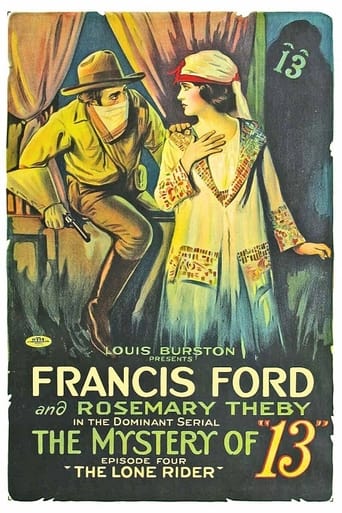
Olive Valerie appears to have been a very early screen performer whose documented film career is limited to the silent era, with The Mystery of 13 (1919) the only confirmed credit currently associated with the name. Surviving reference material for many minor players from the 1910s is sparse, and in this case there is no reliable, widely preserved biographical record that firmly establishes birth details, background, or a broader career beyond that single known appearance. Because of that, any attempt to expand her life story beyond the surviving film credit would risk confusion with similarly named performers or unsupported speculation. What can be said with confidence is that she was active in motion pictures at a time when the American silent industry was rapidly expanding and casting large numbers of lesser-known actors in short subjects, serials, and mystery dramas. Her presence in The Mystery of 13 places her within the early independent and low-budget production world of the late 1910s, when many performers’ contributions were recorded only briefly in trade listings or incomplete studio paperwork. No verified later career in sound films, stage work, or publicity-driven stardom has been reliably documented under this exact name. As a result, Olive Valerie is best understood as an obscure silent-era actor whose surviving legacy rests primarily on a single credited film appearance and the historical importance of those often-overlooked contributors to early cinema.
More about Olive Valerie
In film history
Olive Valerie's cultural impact lies less in celebrity than in representation: she is part of the large but under-documented workforce of silent-era performers whose names survived in credits, cast lists, and production records even when their broader careers did not. These actors helped populate the mystery, melodrama, and serial pictures that defined early popular cinema, contributing to the visual storytelling traditions that would shape later film acting. The preservation of her name in connection with The Mystery of 13 offers historians a reminder that silent film history is built not only on famous stars but also on countless supporting players and one-film credits that reveal the scale and diversity of the era's production system. Her presence in the historical record therefore has value as an artifact of film history, even though her personal fame did not endure in the way of major silent stars.
Later reputation
Olive Valerie's legacy is that of a documented but elusive participant in early film history. She stands for the many performers whose work has become difficult to reconstruct because silent films were often lost, credits were inconsistently recorded, and trade-paper references were not always preserved. In database terms, her continued listing helps maintain the integrity of early cinema scholarship by acknowledging that even minor credits belong to the larger story of film development. While she does not appear to have left behind a major star legacy, her name remains useful to researchers tracing cast lists, production histories, and the social world of 1910s motion pictures. The fact that she is still identifiable at all underscores the importance of archival preservation for recovering the contributions of lesser-known silent-era actors.
Influence
There is no documented direct influence by Olive Valerie on later actors or filmmakers that can be verified from surviving sources. Her historical significance is indirect: by appearing in early cinema, she contributed to the body of work from which later acting conventions, visual storytelling methods, and production practices evolved. For modern historians, performers like Valerie are valuable examples of how the silent screen depended on a broad pool of working actors whose careers may have been brief but were nonetheless part of the medium's development. Her influence is therefore best understood as archival and contextual rather than celebrity-based.
Off screen
No reliable biographical records have been found that document Olive Valerie's personal life, family background, marital history, or private associations. For many minor silent-era performers, especially those with only one surviving credit, personal details were rarely publicized and often omitted from studio publicity unless the performer later achieved significant fame. At present, no verified information can be responsibly provided about marriages, children, education, or residence. Any such details would require stronger primary-source confirmation than is currently available.
Credits
- Confirmed screen appearance in the silent mystery film The Mystery of 13 (1919)
- Participation in early American cinema during the final years of the silent film industry's formative decade
- Association with a period when many performers worked in rapidly produced, now-largely lost films that documented the breadth of early studio casting
Roles
- Role in The Mystery of 13 (1919) is the only verified screen role currently documented
Films
- The Mystery of 13 (1919)
Notes
- Olive Valerie is currently documented with only one confirmed film credit: The Mystery of 13 (1919).
- Her career falls entirely within the silent film era, before synchronized sound became standard.
- She appears to be one of many early screen performers whose careers were too brief or too lightly documented to leave a substantial surviving paper trail.
- Because surviving records are limited, it is difficult to distinguish her from any similarly named person without stronger archival evidence.
- Her name survives in film history primarily through cast documentation rather than through interviews, star profiles, or studio publicity.
- The 1919 film credit places her in the transitional late-teen years of American cinema, just before the industry’s major consolidation in the 1920s.
Questions
Who was Olive Valerie?
Olive Valerie was a silent-era screen actor known from the surviving credit record for The Mystery of 13 (1919). Very little biographical information has survived about her life or career beyond that confirmed film appearance. She is best understood as one of the many lesser-documented working performers of early American cinema.
What films is Olive Valerie best known for?
Olive Valerie is currently best known for The Mystery of 13 (1919), which is the only verified film credit associated with her name. No other securely documented films are currently confirmed in the available historical record. Her known work is therefore extremely limited but still valuable to silent-film researchers.
When was Olive Valerie born and when did she die?
Her birth date and death date are not currently verifiable from reliable surviving sources. Many minor silent-era performers were not consistently documented in the way major stars were, which makes basic biographical reconstruction difficult. Until stronger archival evidence appears, these details should remain listed as unknown.
What awards did Olive Valerie win?
No awards or formal honors are currently known for Olive Valerie. This is not unusual for an obscure silent-era performer with a very limited documented screen career. The historical record for her appears to consist mainly of a single film credit rather than a prize-driven public profile.
What was Olive Valerie's acting style?
There is no surviving critical description of Olive Valerie's acting style in the available record. Since she is only confirmed through one silent film credit, any precise description would be speculative. Like other actors of the period, she would have performed in the expressive visual style required by silent cinema, but no detailed assessment can be verified.
Why is Olive Valerie important to film history?
Olive Valerie is important because she represents the many early film performers whose names survived even when their broader biographies did not. Her credited appearance in a 1919 film helps historians reconstruct the casting and labor history of the silent era. Even minor credits like hers contribute to a fuller understanding of how early cinema was made.