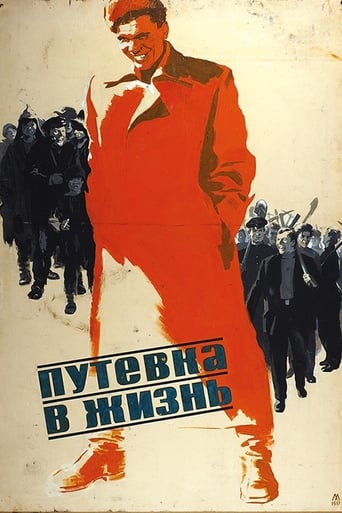
Films
1 film
About Mariya Andropova
This archive lists one role for Mariya Andropova: Road to Life (1931). Her career, though brief, coincided with a pivotal moment in film history as Soviet cinema transitioned from silent films to talkies. She is known to have appeared in the 1931 film 'Road to Life' (Путёвка в жизнь), which was one of the first Soviet sound films and addressed social issues of homeless youth rehabilitation. Unfortunately, detailed records of her life and career are scarce, which was common for many Soviet actors of her era who were not part of the major theatrical circles. Her single known film appearance suggests she may have been a non-professional actor or someone who had a very brief acting career. The lack of extensive documentation about her life reflects both the passage of time and the limited preservation of records for lesser-known figures in early Soviet cinema.
The Craft
Milestones
- Appeared in 'Road to Life' (1931), one of the first Soviet sound films
Best Known For
Must-See Films
Working Relationships
Worked Often With
Why They Matter
Impact on Culture
Mariya Andropova's contribution to cinema, while limited to a single known appearance, is part of the broader historical significance of early Soviet sound films. 'Road to Life' represented a technical and artistic milestone in Soviet cinema, being among the first successful sound films produced in the USSR. The film itself was influential in its social realist approach and its treatment of contemporary social issues, particularly the rehabilitation of homeless youth. Her participation in this work places her within the context of Soviet cinema's important transition period from silent to sound films, even if her individual role was not extensively documented.
Lasting Legacy
Mariya Andropova's legacy is primarily tied to her appearance in 'Road to Life,' a film that holds historical importance as one of the first Soviet sound productions. While her personal legacy may be obscure, the film she participated in continues to be studied by film historians interested in early Soviet cinema and the technical challenges of transitioning to sound. The movie's social themes and innovative techniques have ensured its place in cinema history, thereby preserving at least a record of her contribution to this significant cultural achievement.
Who They Inspired
Due to the limited documentation of her career and the brevity of her known film work, there is insufficient information to determine Mariya Andropova's direct influence on other actors or filmmakers. Her influence exists primarily through her participation in a historically significant film that helped establish the conventions of Soviet sound cinema.
Off Screen
Very little is known about Mariya Andropova's personal life, which is not uncommon for Soviet actors of the early 1930s who had brief or minor film careers. Historical records from this period were often incomplete, especially for performers who were not part of the major theatrical or film institutions.
Did You Know?
- Appeared in one of the first Soviet sound films ever produced
- 'Road to Life' was directed by Nikolai Ekk, a pioneer of Soviet sound cinema
- The film she appeared in dealt with the rehabilitation of homeless children through labor colonies
- Her film career appears to have been limited to the year 1931 only
- The film 'Road to Life' was internationally recognized and won awards at the Venice Film Festival
- Very little biographical information about her survives in historical records
- Her case is typical of many early Soviet actors whose documentation was limited or lost over time
Frequently Asked Questions
Who was Mariya Andropova?
Soviet actress active in 1931, known primarily for her appearance in the film 'Road to Life,' which was one of the first Soviet sound films. Very little is documented about her life beyond this single film appearance.
What films is Mariya Andropova best known for?
Titles linked here include Road to Life (1931).
When was Mariya Andropova born and when did she die?
Unfortunately, the birth and death dates of Mariya Andropova are not documented in available historical records, which is common for many lesser-known Soviet actors of the early 1930s.
What awards did Mariya Andropova win?
There are no records of Mariya Andropova receiving individual awards or nominations. However, the film she appeared in, 'Road to Life,' was internationally recognized and won awards at film festivals.
What was Mariya Andropova's acting style?
Due to the limited documentation of her career and the lack of extensive filmography, there is insufficient information to determine Mariya Andropova's specific acting style or techniques.