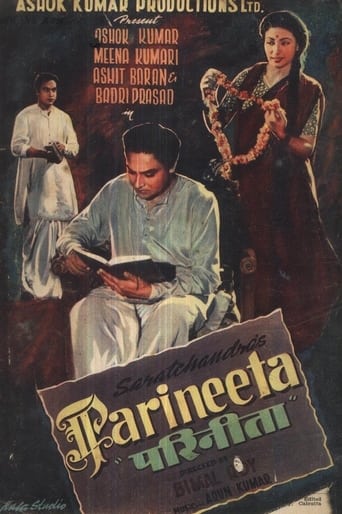

Meena Kumari
Actor
Born: August 1, 1932 in Bombay, Bombay Presidency, British India Died: March 31, 1972 Active: 1939-1972 Birth Name: Mahjabeen Bano
Films
2 films
About Meena Kumari
Meena Kumari, born Mahjabeen Bano, was one of Indian cinema's most actresses, known as 'The Tragedy Queen' for her portrayals of sorrowful and romantic characters. She began her career as a child artist in 1939 with 'Leather Face' and transitioned to lead roles in the early 1950s, quickly establishing herself as a powerhouse performer. Her breakthrough came with films like 'Baiju Bawra' (1952) and 'Parineeta' (1953), which showcased her exceptional acting range and emotional depth. Throughout her career spanning over three decades, she delivered memorable performances in classics like 'Sahib Bibi aur Ghulam' (1962), 'Kaagaz Ke Phool' (1959), and her magnum opus 'Pakeezah' (1972). Beyond acting, she was also a accomplished poet writing under the pen name 'Naaz', expressing her personal struggles and romantic sensibilities. Her turbulent personal life, including three failed marriages, particularly her relationship with filmmaker Kamal Amrohi, deeply influenced both her performances and poetry. She posthumously received the Filmfare Lifetime Achievement Award and remains one of Hindi cinema's most enduring icons, remembered for bringing unprecedented emotional authenticity to Indian film acting.
The Craft
On Screen
Known for her naturalistic and deeply emotional performances, Meena Kumari revolutionized Hindi cinema acting with her subtle expressions and ability to convey complex emotions through her eyes. She specialized in tragic romantic roles, bringing unprecedented authenticity to suffering characters, often drawing from her personal experiences. Her technique involved complete immersion into characters, using minimal gestures and maximum emotional intensity, particularly excelling in scenes requiring quiet dignity and repressed passion.
Milestones
- Child artist debut in 'Leather Face' (1939)
- Breakthrough with 'Baiju Bawra' (1952)
- First Filmfare Award for 'Baazi' (1951)
- National Award for 'Sahib Bibi aur Ghulam' (1962)
- Posthumous release of 'Pakeezah' (1972)
- Published poetry collection 'Tanha Chand'
Best Known For
Iconic Roles
Must-See Films
Accolades
Won
- Filmfare Award for Best Actress - 'Baazi' (1951)
- Filmfare Award for Best Actress - 'Baiju Bawra' (1952)
- Filmfare Award for Best Actress - 'Kohinoor' (1960)
- Filmfare Award for Best Actress - 'Dil Ek Mandir' (1963)
- Filmfare Award for Best Actress - 'Kaajal' (1965)
- Filmfare Award for Best Actress - 'Phool Aur Patthar' (1966)
- Bengal Film Journalists' Association Award - 'Sahib Bibi aur Ghulam' (1962)
- National Film Award for Best Actress - 'Sahib Bibi aur Ghulam' (1962)
Nominated
- Filmfare Nomination for 'Aarti' (1962)
- Filmfare Nomination for 'Main Chup Rahungi' (1962)
- Filmfare Nomination for 'Saheb Bibi Aur Ghulam' (1962)
Special Recognition
- Filmfare Lifetime Achievement Award (posthumous, 1972)
- Stamps issued by India Post in her honor (2011)
- Named one of 'Greatest Actresses of Indian Cinema' by Forbes India
- Featured in '100 Years of Indian Cinema' commemoration
Working Relationships
Worked Often With
Studios
Why They Matter
Impact on Culture
Meena Kumari fundamentally changed the portrayal of women in Indian cinema, bringing depth and complexity to female characters beyond traditional stereotypes. Her performances challenged societal norms by depicting women with agency, desires, and emotional complexity, particularly in films like 'Sahib Bibi aur Ghulam' where she portrayed a neglected aristocratic woman's journey. She became the face of tragic romance in Indian popular culture, with her style and mannerisms being emulated by generations of actresses. Her poetry and interviews revealed a progressive, intellectual woman ahead of her time, contributing to discussions about women's rights and artistic freedom in post-independence India.
Lasting Legacy
Meena Kumari's legacy endures through her timeless performances that continue to influence Indian cinema decades after her death. She holds the record for the most Filmfare Award wins for Best Actress (four), proof of her critical acclaim. Her final film 'Pakeezah' has achieved cult status and is regularly screened at international film festivals as a masterpiece of Indian cinema. The Meena Kumari Award was established in her honor to recognize outstanding contributions to Indian cinema. Her poetry collections continue to be studied and published, revealing her literary talent beyond acting. Contemporary filmmakers frequently reference her work, and modern actresses cite her as a major influence on their craft.
Who They Inspired
Meena Kumari pioneered naturalistic acting in Hindi cinema, moving away from theatrical performances to more subtle, realistic portrayals. Her technique of using eyes as primary expressive tools influenced generations of actors, particularly in conveying complex emotions without dialogue. Directors like Satyajit Ray praised her ability to underplay emotions, a technique that became standard in parallel cinema. Her success in tragic roles created a new archetype in Indian cinema, though she also proved her versatility in comedic and dramatic roles. Her poetry and interviews inspired other artists to pursue creative expression beyond their primary medium, encouraging a more holistic approach to artistry in Indian film culture.
Off Screen
Meena Kumari's personal life was marked by tragedy and heartbreak, mirroring many of her on-screen roles. She married filmmaker Kamal Amrohi at age 18, but their marriage ended in divorce after 11 years, though they remained connected professionally. She later married businessman R. K. Dalmia in 1958, which was annulled after a few months, and finally married poet-actor Rajendra Kumar in 1969, which also ended in separation. She struggled with alcoholism in her later years and died of liver cirrhosis at age 39. Despite her personal struggles, she maintained a close relationship with her step-son Tajdar Amrohi and was known for her generosity towards friends and co-workers.
Education
Received minimal formal education due to early entry into films, but was well-read and self-educated in Urdu and English literature
Family
- Kamal Amrohi (1952-1963)
- R. K. Dalmia (1958-1958)
- Rajendra Kumar (1969-1972)
Did You Know?
- She was discovered at age 6 when her mother brought her to a film studio looking for work
- She earned the nickname 'The Tragedy Queen' for her repeated roles in sad romantic films
- She wrote over 200 poems under the pen name 'Naaz'
- She was the first Indian actress to win four Filmfare Awards for Best Actress
- Her final film 'Pakeezah' took 14 years to complete and was released just weeks after her death
- She was paid only Rs. 500 for her role in 'Baiju Bawra', despite it being a major hit
- She was fluent in Urdu, Hindi, and English, and could recite complex poetry from memory
- Her relationship with Kamal Amrohi inspired the film 'Mahesh Bhatt's 'Arth'
- She was offered a role in Hollywood but declined to focus on Indian cinema
- She owned a collection of rare books and manuscripts worth millions at the time of her death
In Their Own Words
Life is a tragedy when seen in close-up, but a comedy in long-shot
I have never been in love. It is my profession to be in love on screen
My heart is a garden where only thorns grow
In cinema, I live many lives. In real life, I have none
Tears are words that need to be written
I am not a tragic person. I just play tragic roles
Poetry is my escape from the prison of stardom
Frequently Asked Questions
Who was Meena Kumari?
Meena Kumari was one of Indian cinema's most celebrated actresses, known as 'The Tragedy Queen' for her emotive performances in tragic romantic roles. She starred in over 90 films from 1939 to 1972 and was also a accomplished poet. Her legacy includes classics like 'Pakeezah' and 'Sahib Bibi aur Ghulam'.
What films is Meena Kumari best known for?
Titles linked here include Pakeezah (1972), Sahib Bibi aur Ghulam (1962).
When was Meena Kumari born and when did she die?
Born August 1, 1932; died March 31, 1972.
What awards did Meena Kumari win?
Meena Kumari won four Filmfare Awards for Best Actress, a National Film Award for Best Actress for 'Sahib Bibi aur Ghulam', and received a posthumous Filmfare Lifetime Achievement Award. She holds the record for the most Best Actress wins at Filmfare.
What was Meena Kumari's acting style?
Meena Kumari was known for her naturalistic, emotionally intense acting style, particularly excelling in conveying complex emotions through subtle expressions and her eyes. She specialized in tragic roles, bringing unprecedented authenticity to suffering characters while maintaining dignity and restraint in her performances.
Why was Meena Kumari called The Tragedy Queen?
Meena Kumari earned the nickname 'The Tragedy Queen' due to her numerous portrayals of sorrowful, suffering characters in romantic tragedies. Her personal life, marked by failed marriages and struggles, mirrored her on-screen persona, reinforcing this image in popular culture.
Did Meena Kumari write poetry?
Yes, Meena Kumari — accomplished poet who wrote over 200 poems under the pen name 'Naaz'. Her poetry reflected her personal experiences, romantic sensibilities, and philosophical thoughts, with collections like 'Tanha Chand' published posthumously.