Films
1 film
About Garry McGarry
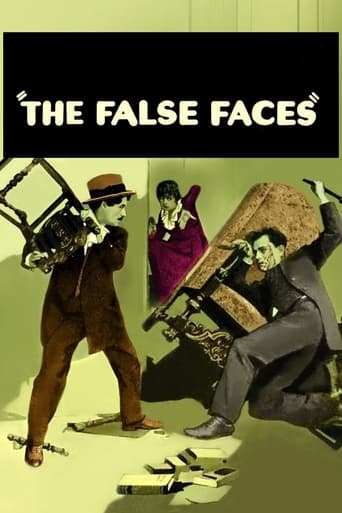
Brief but notable figure in the landscape of American silent cinema,: entire known film career was condensed into a single year. His sole documented screen appearance was in the 1919 World War I espionage thriller 'The False Faces,' a film that has since become a notable example of post-war adventure serials. While specific details about his early life, training, or how he entered the film industry remain scarce, his casting in a feature film suggests he may have been a stage actor or possessed a specific look desired by the production. The film itself, directed by Irvin V. Willat and starring Henry B. Walthall, was a significant production for its time, adapting a popular novel by Louis Joseph Vance. McGarry's role, while not a leading part, placed him within the ensemble of a major studio release Hollywood's development. After 1919, Garry McGarry vanished from the historical record of film, making him a representative example of the countless actors who participated in the explosive growth of cinema but did not achieve lasting stardom. His legacy is intrinsically tied to this single film, preserved through the medium that briefly captured his contribution to the art form.
The Craft
Milestones
- Appeared in the 1919 feature film 'The False Faces'
Best Known For
Iconic Roles
Must-See Films
Working Relationships
Worked Often With
Studios
Why They Matter
Impact on Culture
Garry McGarry's cultural impact is not as an individual artist but as a representative of the vast, anonymous workforce that powered the Hollywood studio system during its formative years. His existence, known only through a single credit in a surviving film, highlights the transient nature of fame for many early film actors. He serves as a microcosm of the era, a time when individuals could drift into the burgeoning film industry, participate in a major production, and then drift back into obscurity, their contributions preserved only on celluloid. His presence in 'The False Faces' contributes to the film's authentic texture, reminding modern viewers of the countless faces that filled the screens of silent movie palaces.
Lasting Legacy
The legacy of Garry McGarry is one of historical mystery and archival intrigue. For film historians and silent cinema enthusiasts, he represents a puzzle: a name in the credits with no corresponding life story. His primary legacy is his immortalization in 'The False Faces,' ensuring that his name, if not his life, is remembered as long as the film is studied and preserved. He stands as proof of the thousands of forgotten performers who were the backbone of early cinema, and his story underscores the importance of film preservation in maintaining the record of even the most minor contributors to cinematic history.
Who They Inspired
Given his extremely brief and undocumented career, there is no evidence to suggest that Garry McGarry directly influenced other actors or directors. His influence is indirect, serving as a case study for researchers examining the structure and casting practices of the Hollywood studio system in the late 1910s. He symbolizes the journeyman actor, a category of performer whose collective work, rather than individual contributions, shaped the look and feel of classic cinema.
Off Screen
Very little is known about the personal life of Garry McGarry, as his name does not appear in biographical dictionaries, newspaper archives, or census records connected to the entertainment industry beyond his single film credit. His brief appearance in the film industry suggests he may have pursued acting as a temporary venture or been unable to secure further roles. Details regarding his family, relationships, or life outside of his 1919 film work are currently undocumented by historical sources.
Did You Know?
- Garry McGarry's entire known filmography consists of a single film, 'The False Faces' (1919).
- He is listed in the credits simply as 'Garry McGarry' with no character name specified in most film databases.
- The film he appeared in, 'The False Faces,' was based on a popular 1918 novel by Louis Joseph Vance.
- Despite being a supporting player, he worked alongside prominent silent film star Henry B. Walthall.
- His name does not appear in major entertainment encyclopedias like the 'American Film Institute Catalog' beyond this single credit, suggesting he was not a contract player for a major studio.
- The film was produced by the Famous Players-Lasky Corporation, a precursor to Paramount Pictures.
- No contemporary newspaper articles or trade magazine mentions have been found that provide personal details about him.
- His brief career is typical of many actors who worked during the rapid expansion of the film industry in the 1910s.
Frequently Asked Questions
Who was Garry McGarry?
American with credits in this catalog.' His career was exceptionally brief, with no other film credits to his name, making him a largely obscure figure in cinema history.
What films is Garry McGarry best known for?
Titles linked here include The False Faces (1919).
When was Garry McGarry born and when did he die?
Unfortunately, the birth and death dates for Garry McGarry are unknown. Biographical information about him is extremely limited, and he does not appear in public records or census data in a way that can be definitively linked to the actor.
What awards did Garry McGarry win?
There are no records of Garry McGarry receiving any awards or nominations for his work. Given his very brief film career consisting of a single role in 1919, he was not active during the era of major award ceremonies like the Academy Awards, which began in 1929.
What was Garry McGarry's acting style?
Due to the lack of surviving information and the likely minor nature of his role, it is impossible to determine Garry McGarry's specific acting style. As a performer in a late-1910s silent film, he would have used the typical dramatic gestures and facial expressions common to the era.
Why is so little known about Garry McGarry?
The scarcity of information about Garry McGarry is common for many bit-part players and supporting actors from the silent era. Studio records were often not preserved, and unless an actor achieved significant fame, their personal details were not documented for posterity, leaving only their name on a film credit.