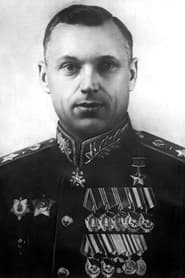
Konstantin Rokossovsky
Actor
Born: December 21, 1896 in Velikiye Luki, Russian Empire (now in Pskov Oblast, Russia) Died: August 3, 1968 Active: 1941-1941 (film appearance) Birth Name: Konstantin Konstantinovich Rokossovsky
Films
1 film
About Konstantin Rokossovsky
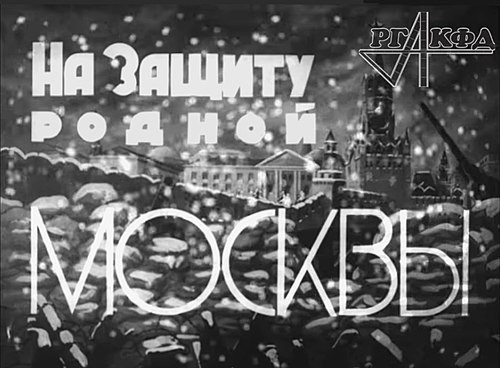
Konstantin Konstantinovich Rokossovsky was primarily known as one of the Soviet Union's most military commanders and Marshals of the Soviet Union, rather than as a professional actor. Born in Poland in 1896, he rose through the ranks of the Red Army to become brilliant military strategists of World War II. His appearance in 'To Protect Native Moscow' (1941) was likely as himself in a propaganda or documentary capacity during the early stages of the Great Patriotic War, rather than as a dramatic performance. Rokossovsky's military decades, from his service in the Imperial Russian Army during World War I through his command of Soviet forces in major WWII operations including the Battle of Moscow, Stalingrad, and the final assault on Berlin. After the war, he served as Poland's Defense Minister and remained a prominent military figure until his death in 1968. His brief film appearance reflects the Soviet practice of featuring military leaders in propaganda films to boost morale and lend authenticity to wartime productions.
The Craft
Milestones
- Commanded Soviet forces at Battle of Moscow (1941)
- Led the Don Front at Stalingrad (1942-43)
- Commanded the Central Front at Kursk (1943)
- Led Operation Bagration (1944)
- Commanded the 2nd Belorussian Front in Berlin operation (1945)
- Served as Poland's Defense Minister (1949-1956)
- Awarded Hero of the Soviet Union twice
Best Known For
Iconic Roles
Must-See Films
Accolades
Won
- Hero of the Soviet Union (1944)
- Hero of the Soviet Union (1945)
- Order of Victory (1945)
- Order of Lenin (4 times)
- Order of the Red Banner (3 times)
- Order of Suvorov (1st Class, twice)
- Order of Kutuzov (1st Class)
Special Recognition
- Marshal of the Soviet Union (1944)
- Marshal of Poland (1949)
- Order of Polonia Restituta (Poland)
- Virtuti Militari (Poland)
- Legion of Merit (USA)
- Order of the Bath (UK)
- Croix de Guerre (France)
Why They Matter
Impact on Culture
Rokossovsky's impact on culture was primarily through his military leadership rather than cinematic contributions. He became a symbol of Soviet military genius and resilience during World War II. His strategic victories were celebrated in Soviet propaganda, literature, and film. The appearance in 'To Protect Native Moscow' was part of the broader Soviet effort to use film as a medium for wartime mobilization and morale-boosting. His image and legacy were frequently invoked in post-war Soviet culture as examples of military excellence and dedication to the motherland.
Lasting Legacy
Konstantin Rokossovsky's lasting legacy is as one of the greatest military commanders of World War II, known for his brilliant strategic thinking and operational art. Unlike typical cinema personalities, his cultural significance stems from his military achievements rather than artistic contributions. He is remembered for his role in major Soviet victories and for being one of the few high-ranking commanders who survived Stalin's purges to return to prominence. His military innovations and leadership style continue to be studied in military academies worldwide.
Who They Inspired
Rokossovsky influenced generations of military strategists and officers through his operational concepts and leadership methods. His approach to combined arms operations and deep battle tactics became part of Soviet military doctrine. In the cultural sphere, he influenced how military leadership was portrayed in Soviet cinema and literature, serving as a model for the ideal Soviet commander figure.
Off Screen
Rokossovsky was married twice. His first marriage was to Julia Barmina, who died during Stalin's purges in 1930. He later married military doctor Galina Talanova in 1949. He had one daughter, Ariadna, from his first marriage. His personal life was deeply affected by Stalin's purges, during which he was arrested in 1937 and tortured, though he was later released and rehabilitated.
Education
Military education through Red Army training programs and officer schools
Family
- Julia Barmina (1920s-1930)
- Galina Talanova (1949-1968)
Did You Know?
- Was of Polish ethnicity, born in what was then the Russian Empire
- Was arrested during Stalin's Great Purge in 1937 and tortured but refused to confess
- His teeth were knocked out during torture and he wore dentures for the rest of his life
- Was one of the few Soviet commanders who successfully argued with Stalin over military strategy
- Spoke several languages including Polish, Russian, and some German
- Was known for his distinctive mustache and military bearing
- Served as Poland's Defense Minister despite being ethnically Polish but serving the Soviet Union
- His military uniform was designed by himself and became a model for other Soviet commanders
- Was nicknamed 'the Marshal of Two Victories' for his role in both Moscow and Berlin operations
- Died during the Warsaw Pact invasion of Czechoslovakia, timing his death with another major Soviet military action
In Their Own Words
The art of winning a battle consists in knowing when to attack and when to retreat
A commander must have three qualities: courage, intelligence, and the ability to understand his soldiers
War is not a game of chess played with pieces, but a terrible reality that costs human lives
The best strategy is always the one that saves the most lives while achieving the objective
Frequently Asked Questions
Who was Konstantin Rokossovsky?
Soviet military commander and Marshal of the Soviet Union, widely regarded as one of the greatest military strategists of World War II. While he appeared in one film in 1941, his primary identity was as a military leader rather than an actor.
What films is Konstantin Rokossovsky best known for?
Titles linked here include To Protect Native Moscow (1941).
When was Konstantin Rokossovsky born and when did he die?
Born December 21, 1896; died August 3, 1968.
What awards did Konstantin Rokossovsky win?
Rokossovsky received numerous military honors including twice being named Hero of the Soviet Union, receiving the Order of Victory, four Orders of Lenin, and various international military decorations from Allied nations.
What was Konstantin Rokossovsky's acting style?
Rokossovsky was not a professional actor and had no acting style. His appearance in film was as himself in a military capacity, typical of propaganda films that featured real military leaders for authenticity.