Suzanne De Labroy
Actor
- Active
- 1913-1913
Films 1
About Suzanne De Labroy
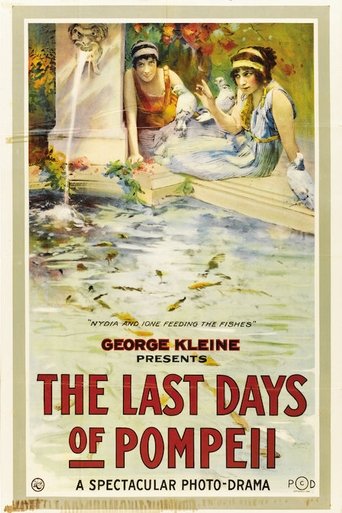
Suzanne De Labroy is a little-documented silent-era screen performer whose surviving film credit places her in the 1913 Italian historical epic The Last Days of Pompeii. Very little biographical information about her life has survived in standard film reference sources, and she appears to be one of the many early cinema actors whose careers are preserved primarily through cast lists and archival film records rather than detailed contemporary publicity. Based on the available evidence, she was active in film only in 1913, at a time when European and international productions frequently employed theatrical performers whose names were recorded with inconsistent spellings or limited promotional detail. Her known screen presence belongs to the formative years of feature-length spectacle filmmaking, when productions such as The Last Days of Pompeii relied on elaborate settings, classical subject matter, and ensemble casting. Because no reliable surviving sources currently provide confirmed information about her later life, training, family background, or additional film work, her biography remains fragmentary. Her significance lies less in a large body of credited roles than in her participation in one of the many ambitious early historical films that helped shape silent cinema's visual language. As a result, Suzanne De Labroy is best understood today as an elusive but authentic figure from the international silent era, representative of the many performers whose contributions are embedded in early film history even when their personal stories have been lost.
More about Suzanne De Labroy
On screen
No detailed contemporary criticism or performance description appears to have survived for Suzanne De Labroy specifically. Given the production context of 1913 silent cinema, her work would almost certainly have relied on expressive pantomime, clear physical gesture, and visual readability rather than spoken dialogue. Performers in prestige historical films of this period typically emphasized broad emotional legibility, composed poses, and theatrical presence suited to large-scale tableaux and intertitles. Any assessment of her personal style beyond that general silent-era performance mode would be speculative.
In film history
Suzanne De Labroy's cultural impact is primarily archival and historical rather than widely public-facing. Her name survives as part of the cast record for The Last Days of Pompeii, helping scholars reconstruct the personnel involved in early European historical filmmaking. Even when a performer leaves behind only a single identifiable credit, that credit contributes to the broader understanding of how silent cinema assembled its casts, especially for literary and ancient-world adaptations that were popular with international audiences. Her presence underscores the importance of preserving cast documentation for early films, many of which are now lost or survive incompletely.
Later reputation
Her legacy rests in her association with one of the early 1910s' ambitious silent spectacles and in the fact that her name remains cataloged for historians and database researchers. While she is not a widely celebrated star with an extensive surviving filmography, she is part of the essential fabric of silent-era cinema: the many performers whose work supported the industry's growth but whose personal histories were not comprehensively preserved. For modern film history, figures like Suzanne De Labroy are reminders that the silent era was built not only by its marquee names but also by numerous lesser-known actors whose contributions helped establish the conventions of feature storytelling and historical reenactment. Her legacy is therefore one of historical presence, documentation, and the continuing work of recovery in early cinema studies.
Influence
There is no evidence that Suzanne De Labroy exerted a documented direct influence on later actors or filmmakers. Her broader influence is indirect: by participating in an early historical epic, she contributed to the performance traditions of silent spectacle, helping exemplify the visual acting style that later generations of screen performers would refine. In this sense, her role belongs to the collective evolution of film acting in the 1910s rather than to an individually traceable line of mentorship or imitation.
Off screen
No reliable publicly documented information has been confirmed about Suzanne De Labroy's personal life, including marriage, family, education, or later career. Surviving sources do not currently establish her birth name, private background, or biographical details beyond her screen credit. She appears to be one of the many early film personalities whose identities were recorded in production histories but not richly documented in later reference works. Because of this, any claims about her relationships or offscreen life would be conjectural and are not included here.
Credits
- Appeared in the 1913 silent historical production The Last Days of Pompeii
- Participated in an early feature-film adaptation of a major literary and historical subject
- Represents the international cast presence common in European silent cinema of the 1910s
- Has surviving documentation in film databases despite an otherwise obscure personal history
- Associated with one of the early prestige spectacles of the silent era
Roles
- Performer in The Last Days of Pompeii
Films
- The Last Days of Pompeii (1913)
Collaborators
- Unknown
Studios
- Unknown
Notes
- Suzanne De Labroy is primarily known from a single surviving film credit rather than a long documented career.
- Her only confirmed film association in available reference material is The Last Days of Pompeii (1913).
- She worked during the silent era, when many performers left behind sparse biographical records.
- Her name appears in historical film documentation, but standard sources do not currently preserve basic life details such as birth and death dates.
- The Last Days of Pompeii was part of a popular early cinema trend of adapting literary and ancient historical subjects.
- Because early film credits were often incomplete or inconsistently recorded, her name may appear with variant archival spellings in some records.
- Her obscurity is typical of many supporting or lesser-documented performers from the international silent period.
- She is of interest to film historians mainly as part of the cast history of early European prestige productions.
Questions
Who was Suzanne De Labroy?
Suzanne De Labroy was a silent-era actor known for appearing in The Last Days of Pompeii (1913). She is an obscure early cinema figure whose surviving record is limited, but she remains part of the historical cast of an important silent historical film.
What films is Suzanne De Labroy best known for?
She is best known for The Last Days of Pompeii (1913), which is the only confirmed film credit currently associated with her in readily available reference material. No other verified film appearances are established here.
When was Suzanne De Labroy born and when did she die?
Her birth and death dates are not currently documented in reliable surviving sources. The available record identifies her as a film performer active in 1913, but not enough biographical material survives to confirm her dates or places of birth and death.
What awards did Suzanne De Labroy win?
No awards or nominations are currently documented for Suzanne De Labroy in the surviving record. This is not unusual for early silent-era performers whose careers were not widely publicized in the way later studio-era stars were.
What was Suzanne De Labroy's acting style?
Her personal acting style is not specifically described in surviving criticism, but as a 1913 silent-film performer she would have worked in the expressive, gesture-based style typical of the period. That would have emphasized visual clarity, emotion through posture and movement, and strong physical presence suitable for historical spectacle.
What is Suzanne De Labroy's legacy in film history?
Her legacy is mainly historical and archival: she is remembered as part of the cast of an early prestige silent film and as one of many performers whose names survive even when personal details do not. For film historians, her record helps document the people who contributed to the development of feature-length silent cinema.