Amos Droughan
Actor
Born: February 8, 1918 in Robertson County, Texas, USA Died: October 20, 1996 Active: 1944-1944
Films
1 film
About Amos Droughan
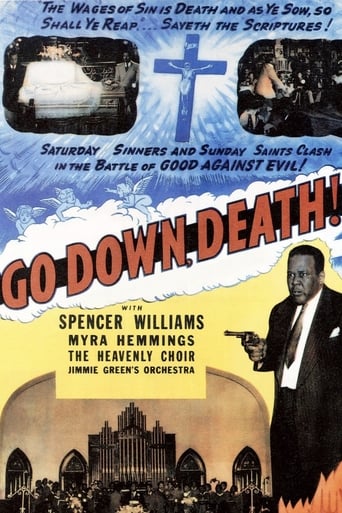
African-American actor who contributed to the vibrant era of 'race films' during the 1940s, a period where Black filmmakers and casts created content specifically for Black audiences outside the Hollywood mainstream. Born in Robertson County, Texas, Droughan was part of the local talent pool in Dallas that director Spencer Williams frequently tapped for his independent productions. His most significant cinematic contribution came in 1944 with the release of 'Go Down Death', a morality drama directed by Williams and produced by Alfred N. Sack. In this film, Droughan appeared alongside a notable cast including Myra D. Hemmings and Samuel H. James, helping to bring to life a story inspired by the poetry of James Weldon Johnson. While his screen career was brief, Droughan's participation in these independent productions was vital for the survival of Black cinema during a time of intense segregation. He later moved to California, where he spent the latter half of his life before passing away in Los Angeles in 1996.
The Craft
On Screen
Droughan's performance style was characterized by the earnest, naturalistic approach favored by Spencer Williams for his morality plays. Unlike the exaggerated caricatures often found in mainstream Hollywood's portrayal of Black characters at the time, Droughan and his contemporaries in race films aimed for dignity and realism, reflecting the everyday lives and spiritual struggles of their audience.
Milestones
- Featured as a principal cast member in the landmark race film 'Go Down Death' (1944)
- Collaborated with Black director Spencer Williams during the Dallas production era
- Participated in the cinematic adaptation of James Weldon Johnson's 'God's Trombones' poetry
- Contributed to the Sack Amusement Enterprises filmography, a key distributor of African-American cinema
Best Known For
Iconic Roles
Must-See Films
Accolades
Special Recognition
- Recognized in historical retrospectives of African-American 'Race Films'
- Included in the American Film Institute's records of early Black cinema participants
Working Relationships
Worked Often With
Studios
Why They Matter
Impact on Culture
Amos Droughan's involvement in 'Go Down Death' represents a crucial moment in the history of African-American representation in film. By appearing in 'race films,' Droughan helped provide an alternative to the stereotypical roles offered by the major Hollywood studios. These films served as a cultural lifeline for Black audiences during the Jim Crow era, offering stories of faith, community, and moral complexity that were otherwise absent from the silver screen.
Lasting Legacy
Droughan's legacy is tied to the preservation of early Black independent cinema. 'Go Down Death' is now regarded by film historians as a significant artifact of the 1940s, showcasing the creativity and resilience of Black filmmakers working with limited resources. As a member of this cast, Droughan is remembered as part of the movement that paved the way for future generations of Black actors and directors to claim their space in the industry.
Who They Inspired
His work influenced the preservation efforts of organizations like the Southern Methodist University (SMU) Tyler, Texas Black Film Collection, which seeks to archive and honor the performers of the race film era.
Off Screen
Amos Droughan was born and raised in Texas, specifically within the Robertson County area, before moving toward the Dallas metropolitan region where he engaged with the local arts community. Following his brief stint in the film industry, he relocated to Los Angeles, California. He lived a relatively private life following his active years in the 1940s, maintaining a residence in the Los Angeles area until his death at the age of 78.
Education
Educated in the Texas public school system; further details on specific collegiate or dramatic training are not publicly documented.
Did You Know?
- The film he appeared in, 'Go Down Death', was inspired by a poem from James Weldon Johnson's famous book 'God's Trombones'.
- He was part of the Dallas-based talent pool that director Spencer Williams used to avoid the high costs and restrictive unions of Hollywood.
- Though he only has one major film credit, he is frequently cited in academic texts regarding the history of Black cinema in Texas.
- He passed away in Los Angeles, a city he moved to long after his film career in the South had ended.
- His film 'Go Down Death' utilized sequences from earlier silent films to depict 'Heaven' and 'Hell', making it a unique hybrid of eras.
Frequently Asked Questions
Who was Amos Droughan?
American with credits in this catalog. He was part of a group of Black performers who worked with director Spencer Williams to create independent films for African-American audiences.
What films is Amos Droughan best known for?
Titles linked here include Go Down Death (1944).
When was Amos Droughan born and when did he die?
Born February 8, 1918; died October 20, 1996.
What awards did Amos Droughan win?
Droughan did not win any major mainstream awards during his career, as race films were largely ignored by the Academy and other major bodies at the time; however, he is honored today by film historians and archivists.
What was Amos Droughan's acting style?
Droughan employed a naturalistic and dignified acting style, typical of the performers in Spencer Williams' productions, which sought to portray Black characters with depth and moral agency.