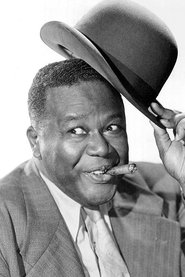

Go Down Death
"Frame and preacher"
Keys: Space play/pause · ←/→ 10s · F fullscreen · M mute · </> speed
About this film
The owner of a juke joint arranges to frame an innocent preacher with a scandalous photograph, but his scheme backfires when his own adoptive mother interferes. is a 1944 race film directed by and starring Spencer Williams.
Cast & crew
More films like this
More Drama films
View all →







More from Spencer Williams
View all →More about this film
About the production
Release date1944
BudgetEstimated at under $10,000 (Shoestring budget typical of 1940s race films)
Box officeUnknown; primarily distributed through the 'Chitlin' Circuit' and segregated theaters
ProductionSack Amusement Enterprises
Filmed inDallas, Texas, USA
The film was produced by Alfred N. Sack, a prominent figure in the production of 'race films'—movies made specifically for Black audiences during the era of segregation. Director Spencer Williams, who also stars as the antagonist, was a pioneer of independent Black cinema and often worked with extremely limited resources. To compensate for the low budget and lack of special effects, Williams famously repurposed footage from the 1911 Italian silent epic 'L'Inferno' to depict the scenes of Hell. The production relied heavily on local non-professional actors and community members in Dallas to fill out the cast and choir.
Themes
Good vs. EvilRedemption and DamnationThe sanctity of the Church vs. the corruption of the Juke JointDivine JusticeMaternal Sacrifice
Themes & topics
PreacherBlackmailJuke jointHellVisionsConscienceAccidental deathRace filmReligious dramaFramed
Historical background
Made in 1944, Go Down Death reflects production norms of World War II and immediate postwar filmmaking—shorter runtimes, regional audiences, and limited preservation infrastructure.
Why this film matters
Historians reference Go Down Death (1944) when discussing 1944 race film.
Making of
Production of 'Go Down Death' was a masterclass in low-budget ingenuity. Spencer Williams often had to shoot in real locations around Dallas, such as local churches and homes, because he lacked the funds for studio sets. The use of 'L'Inferno' footage was not just an artistic choice but a necessary shortcut to provide a visual spectacle that the production could never have afforded to film from scratch. Williams worked closely with the Black community in Dallas, often casting real ministers and choir members to lend the film a sense of spiritual authenticity. The filming process was rapid, often completed in just a few weeks, to keep costs at a minimum for Sack Amusement Enterprises.
What critics said
Where contemporary reviews survive, Go Down Death is discussed in terms of audience appeal at release; later criticism often reframes it through archive restoration and festival programming.
Did you know?
- The film's title and central theme are derived from the famous poem 'Go Down Death' by African-American writer James Weldon Johnson, found in his 1927 collection 'God's Trombones'.
- Director Spencer Williams later became nationally famous for playing the character Andrew 'Andy' Hogg Brown in the television version of 'Amos 'n' Andy'.
- To create the elaborate 'Hell' sequences, Williams used clips from the 1911 Italian silent film 'L'Inferno', which was the first full-length Italian feature film.
- The film ran into significant censorship issues in Maryland, New York, and Ohio due to the 'Hell' sequences, which contained brief nudity from the original 1911 footage.
- Myra D. Hemmings, who plays Aunt Caroline, was a prominent educator and one of the original founders of the Delta Sigma Theta sorority.
- This was the third film in a religious-themed trilogy directed by Williams, following 'The Blood of Jesus' (1941) and the now-lost 'Brother Martin: Servant of Jesus' (1942).
- The film features authentic gospel music performed by The Heavenly Choir and Jimmie Green's Orchestra.
- Despite being a 'race film' intended for Black audiences, the production was financed and distributed by Alfred Sack, a white businessman based in Dallas.
- The 'Hell' sequence in Ohio was specifically ordered to be edited to remove a scene of a devil chewing on a man's head.
- The film is often cited as a prime example of the 'morality play' genre within early Black independent cinema.
Visual style
The film was shot in black-and-white by cinematographer H.W. Kier. Due to budget constraints, the visual style is largely functional, utilizing static shots and natural lighting. However, the film becomes visually experimental during the supernatural sequences, using double exposures to depict ghosts and the jarring insertion of high-contrast, grainy footage from 'L'Inferno' to create a nightmarish, collage-like aesthetic for the afterlife scenes.
Innovations
The film's primary technical achievement is its early use of 'found footage' or 'stock footage' as a narrative device. By integrating 30-year-old silent film clips into a contemporary sound film, Williams created a proto-postmodern aesthetic. Additionally, the film's use of double exposure to represent the spirit of Aunt Caroline's late husband was a sophisticated effect for such a low-budget independent production.
Music
The soundtrack is a rich tapestry of 'Negro spirituals' and traditional gospel music, which often takes precedence over the dialogue. It features performances by The Heavenly Choir and Jimmie Green's Orchestra. The music serves as the emotional heartbeat of the film, reinforcing the religious themes and providing a sense of cultural familiarity for the 1940s audience.
Famous quotes
Jasper Jones: 'Purity of heart was the very essence of Christ's message.'
Aunt Caroline: 'Jim, I'm not going to give you these pictures. I'll die first!'
Big Jim Bottoms: 'I'm going to show you the kind of bait to use in your preacher trap.'
Narrator (reciting Johnson): 'And Death began to ride again—up beyond the morning star, into the glittering light of glory...'
Memorable scenes
- The 'Hell' Sequence: A surreal montage where Big Jim is haunted by demons and fire, utilizing repurposed footage from the 1911 silent film 'L'Inferno'.
- Aunt Caroline's Death: A tense struggle in Big Jim's office where the moral heart of the film is silenced, leading to the protagonist's ultimate downfall.
- The Funeral Sermon: A lengthy, powerful sequence where the preacher recites James Weldon Johnson's poem as the camera cuts to symbolic imagery of the soul's journey to heaven.
- The Ghostly Visitation: Aunt Caroline's late husband appears as a transparent spirit to help her find the incriminating photographs in Big Jim's safe.
What audiences thought
Contemporary Black audiences embraced the film as a powerful 'morality tale' that resonated with their spiritual beliefs. The inclusion of popular gospel music and the familiar conflict between the church and the 'juke joint' made it a staple in community screenings. Modern audiences, particularly those interested in film history, often find the 'Hell' sequences and the surreal ending to be the most memorable and striking aspects of the viewing experience.
Film connections
Influenced by
- James Weldon Johnson's 'God's Trombones' (Poetry)
- L'Inferno (1911 film)
- Traditional African-American oral preaching traditions
- Dante's Inferno
This film influenced
- Daughters of the Dust (1991)
- Eve's Bayou (1997)
- The films of the L.A. Rebellion movement
Film restoration
The film is in the public domain and has been preserved by various archives, including the Library of Congress. It was notably restored and included in the 'Pioneers of African-American Cinema' collection by Kino Lorber.
Where to watch
- YouTube (Public Domain)
- Internet Archive
- Kino Lorber (Pioneers of African-American Cinema Blu-ray/DVD)
- Tubi (occasionally)
- Plex
- The Criterion Channel (as part of special collections)