Dolly Jones
Actor
Born: November 27, 1902 in Chicago, Illinois, USA Died: August 1975 Active: 1919-1975
Films
1 film
About Dolly Jones
Dolly Jones (also known as Doli Armenra) was an African American jazz musician and actress who made history as the first female jazz trumpeter to be commercially recorded. Born into a musical family in Chicago, she was taught to play the trumpet by her mother, Diyaw Jones, a respected musician who also mentored the Valaida Snow. Dolly's career began in the late 1910s, performing with the Jones Family Band alongside a young Josephine Baker before touring with blues legends like Ma Rainey and Ida Cox. In 1926, she achieved a major milestone by recording with Albert Wynn's Gut Bucket Five, a session that solidified her place in jazz history. Throughout the 1930s and 1940s, she transitioned into film, appearing in several influential 'race films' directed by Oscar Micheaux and Spencer Williams, where she often showcased her exceptional musical talent. Despite her immense skill and the respect she garnered from contemporaries like Roy Eldridge and Doc Cheatham, Jones remained largely under-recognized by the mainstream industry during her lifetime.
The Craft
On Screen
In her film appearances, Jones was primarily a musical performer, characterized by a confident and commanding screen presence. Her roles often required her to perform 'hot' jazz solos, where she displayed technical mastery and a natural, swinging rhythm that mirrored her live stage persona.
Milestones
- First female jazz trumpeter to be commercially recorded (1926)
- Performed with the Jones Family Band and Josephine Baker (1919)
- Toured with Ma Rainey's band as a trombonist
- Featured performer in Oscar Micheaux's musical film 'Swing!' (1938)
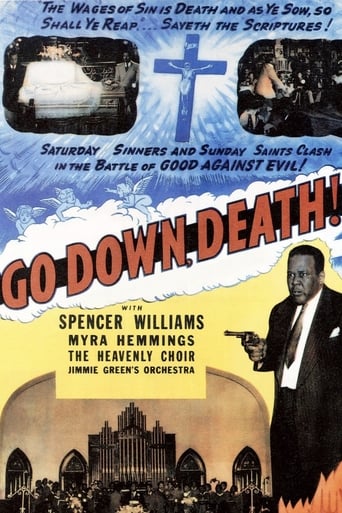
- Starred in the religious drama 'Go Down, Death!' (1944)
- Led her own bands, 'The Twelve Spirits of Rhythm' and 'The Disciples of Swing'
Best Known For
Iconic Roles
Must-See Films
Accolades
Special Recognition
- Recognized by jazz historians as a 'Hidden Figure' of early jazz
- Subject of various retrospective jazz studies and documentaries on female musicians
Working Relationships
Worked Often With
Studios
Why They Matter
Impact on Culture
Trailblazer who shattered gender and racial barriers in the early 20th-century music and film industries. As the first recorded female jazz trumpeter, she challenged the prevailing notion that brass instruments were the exclusive domain of men. Her participation in 'race films' provided a platform for authentic Black musical expression at a time when Hollywood often relegated Black performers to stereotypical or subservient roles. By appearing as a professional, highly skilled musician on screen, she offered a sophisticated image of Black womanhood to audiences across the United States.
Lasting Legacy
Her legacy lives on through the recordings and films that captured her 'hot' trumpet style, serving as a vital link in the history of women in jazz. While she did not achieve the same level of fame as some of her contemporaries, her influence is felt in the generations of female brass players who followed. She is remembered today as a key figure in the development of Chicago jazz and a vital contributor to the independent Black cinema movement of the 1930s and 40s.
Who They Inspired
She influenced notable jazz trumpeters such as Doc Cheatham and Roy Eldridge, who admired her syncopated energy and technical proficiency. Her career served as a blueprint for other female instrumentalists like Valaida Snow, proving that women could lead bands and command respect in the competitive jazz circuit.
Off Screen
Dolly Jones was born into a highly musical household; her father was a saxophonist and her mother was a trumpeter. She was briefly married to saxophonist Jimmy 'Hook' Hutchinson, during which time she occasionally performed under the name Dolly Hutchinson. She spent much of her later life in New York City, continuing to play music well into her 70s.
Education
Primarily self-taught and mentored by her mother, Diyaw Jones.
Family
- Jimmy 'Hook' Hutchinson
Did You Know?
- She was often billed as 'Doli Armenra' or 'Doli Armena' in film credits.
- Her mother, Diyaw Jones, was also the teacher of the famous trumpeter Valaida Snow.
- In the 1930s, she was the only woman in a 15-member multiracial band called 'The Disciples of Swing'.
- Publicity for her work with Stuff Smith once falsely claimed she was a 'Mohawk Indian girl' to add an exotic appeal to her performances.
- She recorded 'Creole Blues' in 1941, which is one of the few surviving examples of her solo work.
- She continued to perform in New York City clubs until shortly before her death in 1975.
In Their Own Words
I just play the way I feel.
Frequently Asked Questions
Who was Dolly Jones?
African American jazz trumpeter and actress, best known as the first woman to record a jazz trumpet solo commercially. She was a prominent figure in the 'race films' of the 1930s and 40s.
What films is Dolly Jones best known for?
Titles linked here include Swing! (1938), Go Down, Death! (1944).
When was Dolly Jones born and when did she die?
Born November 27, 1902; died August 1975.
What awards did Dolly Jones win?
While she did not win major mainstream awards like an Oscar, she is highly honored by jazz historians and was a celebrated figure in the independent Black film circuit.
What was Dolly Jones's acting style?
Her acting was deeply integrated with her musicality; she was known for her 'hot' trumpet solos and a confident, professional screen presence that broke away from contemporary stereotypes.