William Lloyd
Actor
- Active
- 1917-1917
Films 1
About William Lloyd
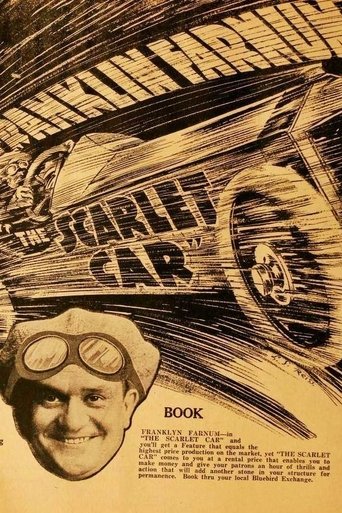
William Lloyd was a silent-era American actor whose documented screen work is extremely limited, with The Scarlet Car (1917) being the principal film associated with his surviving filmography. Like many minor performers of the period, he appears in the historical record largely through studio casting lists and film credits rather than through extensive biographical coverage, which suggests that he worked primarily as a supporting or bit player rather than a star. Because the available evidence for his life is sparse, many personal details, including his birth and death information, remain unverified in standard reference sources. His career belongs to the transitional years of American silent cinema, when hundreds of actors moved through short-lived productions and serials without leaving the kind of publicity trail later preserved for more prominent screen personalities. William Lloyd is therefore best understood as one of the many working players who helped populate early Hollywood productions and contribute to the fabric of silent film storytelling. His surviving credit in The Scarlet Car places him within the world of 1910s studio-era production, when film companies relied heavily on ensemble casts to dramatize melodramatic, action-driven narratives. Although little else is known with certainty, his presence in early cinema history remains a useful reminder of the many unheralded performers who supported the development of the medium.
More about William Lloyd
In film history
William Lloyd's cultural impact is modest and largely archival rather than celebrity-based, but his credit illustrates the breadth of the silent-era workforce that sustained early Hollywood. Performers like Lloyd populated the background, supporting roles, and ensemble structures that gave silent films their social texture and dramatic momentum. Even when a player did not become a household name, their presence helped establish the industrial rhythm of studio production and the visual language of screen acting in the 1910s. For historians, such names are important because they document the many participants who shaped silent cinema beyond the small circle of stars now remembered by the public. His surviving association with The Scarlet Car links him to a formative period in American film history when the industry was rapidly professionalizing and standardizing its performance styles.
Later reputation
Lloyd's legacy lies in the historical record of early film labor rather than in a widely recognized star persona. He is one of countless actors whose contributions are preserved only in cast lists and filmographies, yet these fragmentary traces are essential to reconstructing the ecology of silent cinema. For database and archival purposes, his name helps fill out the cast histories of early productions and supports more accurate scholarship on early studio-era casting networks. His limited surviving record also underscores a broader legacy of invisibility for many silent-era performers whose work was important but insufficiently documented by contemporary publicity systems. In this sense, William Lloyd represents the many anonymous craftsmen and players whose careers formed the foundation of American screen entertainment. His place in film history is small but genuine, anchored by his participation in the silent film era's evolving narrative tradition.
Influence
There is no documented evidence that William Lloyd directly influenced major actors or directors in a traceable, named way. His broader influence is indirect: by participating in early silent productions, he contributed to the performance ecosystem that helped normalize screen acting conventions in the 1910s. Minor performers such as Lloyd were part of the large pool of professional talent from which studios shaped the visual and emotional style of silent storytelling. His work is therefore best understood as part of the collective influence of early Hollywood ensemble acting rather than as the legacy of a singularly influential star.
Off screen
No reliable biographical record has been located that details William Lloyd's personal life, family background, marriages, or domestic circumstances. As with many minor silent-era performers, he may have worked under circumstances that were not extensively publicized in fan magazines or later reference works. At present, there is no verifiable information confirming spouse, children, education, or residence history. Any claims beyond his screen credit in The Scarlet Car would be speculative and are therefore omitted.
Credits
- Appeared in the 1917 silent film The Scarlet Car, the principal documented credit associated with his screen career
- Worked during the height of American silent cinema, when studio productions depended on large supporting casts and repertory performers
- Represents the many lesser-documented actors whose names survive through film credits even when biographical records are incomplete
- Contributed to early motion-picture storytelling during the World War I era of Hollywood production
Films
- The Scarlet Car (1917)
Notes
- William Lloyd's surviving film record is extremely limited, with The Scarlet Car (1917) being the primary documented title associated with him.
- He is an example of a silent-era performer whose career is known mainly through film credit listings rather than interviews, studio publicity, or memoirs.
- Because so little biographical information survives, he can easily be confused with other individuals of the same name, making exact identification important for researchers.
- His career falls within the World War I period, when American studios were expanding rapidly and producing large numbers of melodramas and action pictures.
- Lloyd's documented work illustrates how many early film actors left only a faint archival footprint despite contributing to major production pipelines.
- He is not known from the surviving record to have transitioned into the sound era.
- The scarcity of information about him is common among minor silent-era performers, whose lives were often underreported unless they achieved star status.
Questions
Who was William Lloyd?
William Lloyd was a silent-era American actor whose surviving screen record is very limited. He is primarily associated with the 1917 film The Scarlet Car, and little verified biographical information about him has survived in standard film references.
What films is William Lloyd best known for?
He is best known for The Scarlet Car (1917), which is the principal documented credit connected to his career. No other confirmed major films are readily verifiable from the surviving record.
When was William Lloyd born and when did he die?
At present, William Lloyd's birth and death dates are not reliably documented in accessible standard references. His exact birthplace and lifespan remain unverified.
What awards did William Lloyd win?
No awards or formal honors have been verified for William Lloyd. This is not unusual for a lesser-documented silent-era supporting actor whose career was preserved mainly through cast listings.
What was William Lloyd's acting style?
No detailed reviews or performance analyses of William Lloyd's acting style are currently verified. Given his period, he would have worked within silent-film performance conventions that relied on expressive gesture, facial clarity, and visual storytelling.
What is William Lloyd's legacy in film history?
His legacy is archival rather than star-driven: he represents the many working actors who helped build silent cinema but did not become major public figures. For historians, his name is valuable because it helps reconstruct the cast networks and labor history of early Hollywood.