Films
1 film
About V. Obelensky
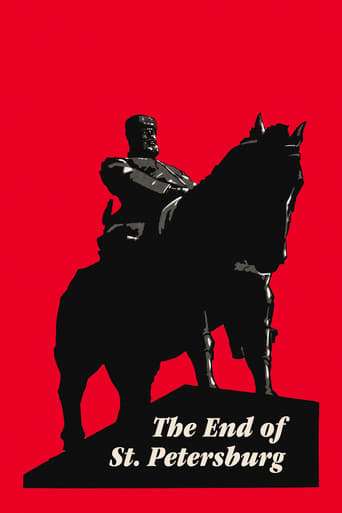
This archive lists one role for V. Obelensky: The End of St (1927). Petersburg. He is most recognized for his pivotal role in Vsevolod Pudovkin's 1927 masterpiece 'The End of St. Petersburg,' where he portrayed the industrialist Lebedev, a character representing the capitalist interests of the pre-revolutionary era. His performance was central to the film's narrative, serving as the primary antagonist to the peasant protagonist and the striking workers. Unlike many of his contemporaries who transitioned into the sound era, Obolensky's film career appears largely concentrated in the late 1920s, coinciding with the peak of the Soviet montage movement. His work is characterized by the 'typage' method favored by directors like Pudovkin and Eisenstein, where actors were chosen for their physical presence and ability to embody specific social classes. Although details of his life outside this landmark production are sparse in Western records, his contribution remains etched in film history through his participation in one of the 'Revolutionary Trilogy' films that defined Soviet cinematic art.
The Craft
On Screen
Obolensky utilized the 'typage' technique, a hallmark of Soviet silent cinema where actors were selected based on their physical features to represent specific social types. His portrayal of Lebedev was marked by a stern, authoritative presence, using subtle facial expressions and posture to convey the perceived coldness and greed of the industrialist class.
Milestones
- Cast as the lead antagonist Lebedev in Vsevolod Pudovkin's 'The End of St. Petersburg' (1927)
- Participated in the state-commissioned film celebrating the 10th anniversary of the October Revolution
- Collaborated with legendary Soviet director Vsevolod Pudovkin and cinematographer Anatoli Golovnya
- Represented the 'Capitalist' archetype in the foundational era of Soviet Montage cinema
Best Known For
Iconic Roles
Must-See Films
Accolades
Special Recognition
- Featured in the 'Revolutionary Trilogy' of Soviet Cinema
Working Relationships
Worked Often With
Studios
Why They Matter
Impact on Culture
Through his role in 'The End of St. Petersburg,' Obolensky contributed to the global dissemination of Soviet Montage theory. The film was widely exported and studied by filmmakers worldwide, making Obolensky's face a recognizable symbol of the 'old regime' in cinematic history. His performance helped establish the visual language used to depict class struggle on screen.
Lasting Legacy
Obolensky's legacy is tied to the preservation of 'The End of St. Petersburg' as a cornerstone of world cinema. As a key figure in Pudovkin's most famous work, he remains a subject of study for film historians focusing on the 1920s avant-garde and the development of political narrative in film.
Who They Inspired
His portrayal of the industrialist archetype influenced the depiction of villainous capitalist figures in later Soviet socialist realism and international political cinema.
Off Screen
Little is recorded regarding Vladimir Obolensky's personal life. He belonged to a generation of Russian performers whose careers were often intertwined with the political shifts of the early Soviet Union, and many such actors were either non-professionals chosen for their looks or stage actors from the pre-revolutionary era.
Did You Know?
- He is often confused with Leonid Obolensky, another famous Soviet actor and director who also worked with Pudovkin.
- The film he starred in, 'The End of St. Petersburg,' was commissioned to compete with Sergei Eisenstein's 'October.'
- His character, Lebedev, was named after the actual factory where the film's strike takes place.
- Obolensky was part of a cast that included both professional actors and real-life workers and peasants to achieve 'proletarian authenticity.'
- The film was so influential that it inspired an oratorio by composer Vernon Duke in 1937.
Frequently Asked Questions
Who was V. Obolensky?
V. Obolensky was a Soviet silent film actor best known for his role as the industrialist Lebedev in the 1927 film 'The End of St. Petersburg.' He was a key figure in the Soviet montage movement of the late 1920s.
What films is V. Obolensky best known for?
Titles linked here include The End of St. Petersburg (1927).
When was V. Obolensky active in cinema?
His most significant and recorded activity was in 1927 during the production and release of the 10th-anniversary revolutionary films in the Soviet Union.
What was V. Obolensky's acting style?
He practiced 'typage,' a method where his physical appearance and demeanor were used to represent the capitalist class, emphasizing social status over individual psychology.
Is V. Obolensky related to Leonid Obolensky?
While they share a surname common among Russian nobility, there is no confirmed direct familial link in standard film biographies, though both were active in the early Soviet film industry.