Films
1 film
About V. Chuvelyov
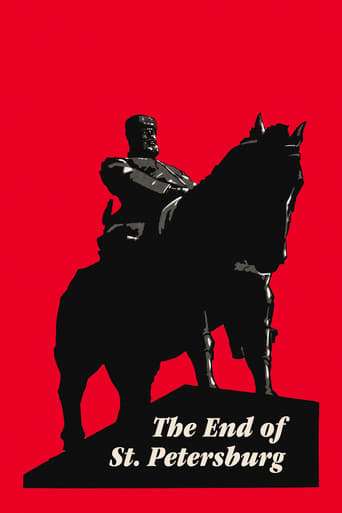
Vladimir Chuvelyov (often credited as V. Chuvelyov) was a Soviet film actor whose career was deeply intertwined with the experimental and revolutionary cinema of the 1920s. He is best remembered for his role in Vsevolod Pudovkin's silent masterpiece 'The End of St. Petersburg' (1927), where he played a factory scab, a character that served as a narrative foil to the film's protagonist. Unlike his relative Ivan Chuvelyov, who often played lead roles, Vladimir specialized in supporting characters that added texture to the social realism of the era. His work was characterized by the 'typage' method popular in Soviet montage theory, where actors were cast based on their physical appearance and social 'type' rather than traditional theatrical training. Throughout the late 1920s, he appeared in several significant productions at the Mezhrabpom-Rus studio, contributing to the visual language of early Soviet propaganda and drama. While his individual fame was eclipsed by the directors he worked with, his presence in foundational films of the silent era remains a subject of interest for film historians studying the Bolshevik trilogy.
The Craft
On Screen
Chuvelyov's acting style was rooted in the Soviet theory of 'typage,' which emphasized naturalistic physical presence and social authenticity over psychological depth. Under the direction of Vsevolod Pudovkin, he utilized the Kuleshov effect, where his expressions were often edited to convey complex emotions through juxtaposition rather than overt emoting. His performances were typically understated, designed to blend into the gritty, realistic environments of industrial factories or revolutionary battlefields.
Milestones
- Cast in Vsevolod Pudovkin's 'The End of St. Petersburg' (1927), a cornerstone of Soviet montage cinema.
- Collaborated with director Sergei Komarov in the 1928 comedy 'The Doll with Millions'.
- Appeared in 'The Poet and the Tsar' (1927), a historical drama about Alexander Pushkin.
- Worked at the prestigious Mezhrabpom-Rus studio during the height of the Soviet silent film era.
- Contributed to the 'Fighting Film Collection' (Boyevoy kinosbornik) during the early years of World War II.
Best Known For
Iconic Roles
Must-See Films
Working Relationships
Worked Often With
Studios
Why They Matter
Impact on Culture
Vladimir Chuvelyov contributed to the international success of the Soviet montage movement. By appearing in 'The End of St. Petersburg,' he was part of a film that revolutionized cinematic editing and was used globally to demonstrate the power of film as a political and artistic tool. His portrayal of the 'scab' provided a human face to the internal conflicts within the working class during the Russian Revolution, a theme that was central to the social discourse of the 1920s.
Lasting Legacy
His legacy is preserved through the enduring study of Vsevolod Pudovkin's 'Revolutionary Trilogy.' As a representative of the 'typage' era, Chuvelyov serves as a case study for how early Soviet directors utilized non-professional or semi-professional actors to achieve a documentary-like verisimilitude. His work remains a vital part of the filmography of the silent era's most influential period.
Who They Inspired
He influenced the development of 'socialist realism' in acting, moving away from the exaggerated gestures of 19th-century theater toward a more cinematic, grounded performance style that would later influence global political cinema.
Off Screen
Vladimir Chuvelyov was part of a family of actors active in the early Soviet film industry. He is most notably associated with Ivan Chuvelyov, who was the lead actor in 'The End of St. Petersburg.' Due to the era's focus on collective achievement over individual celebrity, personal details regarding his family life and education remain largely undocumented in Western film archives.
Education
Likely trained at the State Technicum of Cinematography (GTK) in Moscow, which was the primary training ground for actors working with directors like Pudovkin and Kuleshov.
Did You Know?
- He is frequently confused with Ivan Chuvelyov, who played the 'Peasant Boy' in the same film.
- His film 'The End of St. Petersburg' was commissioned to celebrate the 10th anniversary of the October Revolution.
- He appeared in 'The Doll with Millions,' which was a rare foray into comedy for the usually serious Mezhrabpom studio.
- He was active during the transition from silent film to 'talkies' in the Soviet Union.
- His final recorded credit was during the 'Fighting Film Collections' of 1941, which were short films produced to boost morale during the German invasion of the USSR.
Frequently Asked Questions
Who was V. Chuvelyov?
V. Chuvelyov (Vladimir Chuvelyov) was a Soviet actor active during the 1920s and 1930s, best known for his role in the landmark silent film 'The End of St. Petersburg' (1927).
What is his most famous film?
His most famous work is 'The End of St. Petersburg,' directed by Vsevolod Pudovkin, which is considered one of the greatest examples of Soviet montage cinema.
Was he related to Ivan Chuvelyov?
Yes, they were relatives and often appeared in the same films, most notably 'The End of St. Petersburg,' where Ivan played the lead and Vladimir played a supporting role.
What was his acting style?
He practiced 'typage,' a Soviet acting theory where performers were chosen for their physical resemblance to specific social classes, resulting in a highly realistic and grounded screen presence.
What happened to his career after the silent era?
He continued to work into the early 1940s, appearing in historical dramas and patriotic film collections during World War II before his career faded from the public eye.