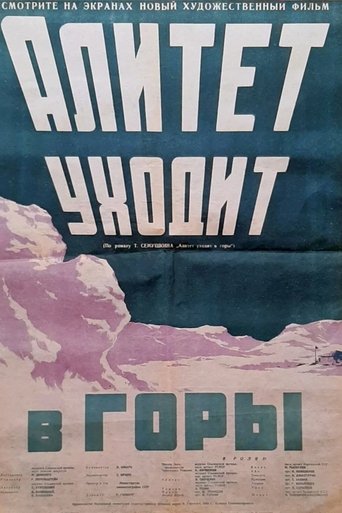

Films
1 film
About Kenenbai Kozhabekov
Kazakh actor who emerged during the early Soviet era of Kazakh cinema. His career appears to have been concentrated primarily around the year 1950, coinciding with the development of the Kazakh film industry under Soviet cultural policies. Like many actors of his generation from Central Asian republics, Kozhabekov likely came from a theatrical background before transitioning to film. His work in 'Alitet Leaves for the Hills' represents one of the early examples of indigenous Kazakh representation in Soviet cinema, during a period when the Soviet government was promoting regional cinema to showcase the diverse cultures within the USSR. Unfortunately, detailed records about his complete career trajectory remain limited, as was common for many regional actors during this period whose contributions were not extensively documented in mainstream film histories.
The Craft
Milestones
- Appeared in 'Alitet Leaves for the Hills' (1950)
- Early contributor to Kazakh cinema during Soviet era
Best Known For
Iconic Roles
Must-See Films
Working Relationships
Studios
Why They Matter
Impact on Culture
Kenenbai Kozhabekov represents an important figure in the early development of Kazakh cinema during the Soviet era. His participation in 'Alitet Leaves for the Hills' contributed to the broader Soviet project of showcasing the diverse cultures within the union, while also helping establish a national film identity for Kazakhstan. As one of the early indigenous Kazakh actors in film, he helped pave the way for future generations of Kazakh performers and contributed to the preservation of Kazakh stories and characters on screen during a period of significant cultural and political transformation.
Lasting Legacy
While Kenenbai Kozhabekov may not be widely known outside of film scholarship circles, his work represents an important chapter in the history of Kazakh and Soviet cinema. His appearance in one of the early Kazakh films demonstrates the Soviet Union's efforts to develop regional cinema industries and promote cultural diversity within the framework of socialist realism. For film historians studying the development of Central Asian cinema, Kozhabekov serves as an example of the indigenous talent that emerged during this crucial period of cultural institution building.
Who They Inspired
Due to the limited documentation of his career and the regional nature of his work, specific influences that Kenenbai Kozhabekov may have had on subsequent generations of Kazakh actors are difficult to trace. However, his participation in early Kazakh cinema would have contributed to establishing a precedent for indigenous representation in the region's film industry, potentially inspiring other Kazakh artists to pursue careers in cinema during the Soviet era.
Off Screen
Very limited information is available about Kenenbai Kozhabekov's personal life, which was common for many regional actors during the early Soviet period. Like many artists of his era from Central Asia, he likely faced the challenges of working within the Soviet cultural system while trying to preserve and represent Kazakh cultural identity through his artistic work.
Did You Know?
- Appeared in only one known film, 'Alitet Leaves for the Hills' (1950)
- His career coincided with the early development of Kazakh national cinema under Soviet rule
- The film he appeared in was likely produced by Kazakhfilm Studios, which was established in the 1940s
- His name follows traditional Kazakh naming conventions
- Like many regional Soviet actors, his complete filmography may not be fully documented in Western sources
- His work represents the intersection of Kazakh cultural identity and Soviet cultural policy
Frequently Asked Questions
Who was Kenenbai Kozhabekov?
Screen credits include the 1950 Soviet film 'Alitet Leaves for the Hills.' He was active during the early development of Kazakh cinema under Soviet rule, representing one of the indigenous actors who helped establish the region's film industry.
What films is Kenenbai Kozhabekov best known for?
Titles linked here include Alitet Leaves for the Hills (1950).
When was Kenenbai Kozhabekov born and when did he die?
Specific birth and death dates for Kenenbai Kozhabekov are not readily available in documented sources, which is common for many regional actors from the early Soviet period. He was active as an actor in 1950.
What awards did Kenenbai Kozhabekov win?
There are no documented awards or nominations for Kenenbai Kozhabekov in available sources. This was typical for many regional actors during the early Soviet era, whose contributions were often not formally recognized through established award systems.
What was Kenenbai Kozhabekov's acting style?
Specific details about Kenenbai Kozhabekov's acting style are not extensively documented. However, as a Kazakh actor during the early Soviet period, he likely worked within the framework of socialist realism while incorporating elements of traditional Kazakh performance culture.
What is the significance of 'Alitet Leaves for the Hills'?
'Alitet Leaves for the Hills' (1950) represents an important early work in Kazakh cinema, produced during a period when the Soviet Union was developing regional film industries. The film likely showcased Kazakh culture and landscapes while adhering to Soviet cultural policies.