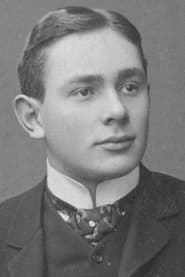
Georg Grönroos
Actor
- Active
- 1913-1913
Films 1
About Georg Grönroos
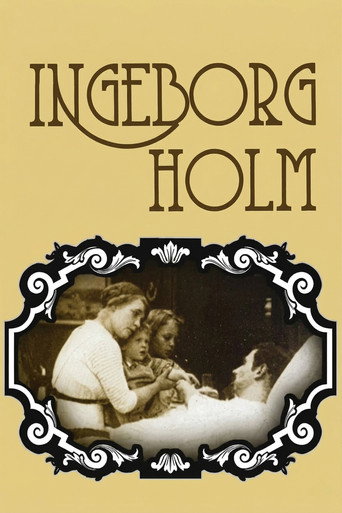
Georg Grönroos is a documented early Swedish silent-film actor, best remembered today for his appearance in Victor Sjöström's landmark 1913 drama Ingeborg Holm. Surviving records about his personal life are extremely limited, and he appears in film history primarily through contemporary cast listings and later archival filmographies rather than through extensive biographical coverage. His screen career, as far as currently verifiable, is concentrated in the silent era and seems to have been brief, with Ingeborg Holm standing as the key credited work associated with his name. Because early Scandinavian cinema often preserved only partial personnel records, many details such as his birth date, birthplace, family background, and later life have not been securely documented in standard reference sources. Even so, his participation in Ingeborg Holm places him within one of the most important early Swedish films, a production widely regarded as foundational in the development of realistic narrative cinema in Scandinavia. Grönroos therefore occupies a small but meaningful place in silent-film history as part of the ensemble that helped bring Sjöström's socially conscious drama to the screen. His surviving legacy is tied less to a large body of credited performances than to the enduring importance of the film in which he appeared.
More about Georg Grönroos
On screen
No detailed contemporary description of Georg Grönroos's individual acting style has survived in standard film reference sources. As a performer in a 1913 Swedish silent drama, his work would have depended on the restrained, highly legible body language typical of early Scandinavian silent acting, which often aimed for emotional clarity rather than theatrical excess. His performance should be understood within the naturalistic aesthetic associated with Victor Sjöström's early films, where gestures and facial expression were used to support realism and dramatic credibility. Because only limited footage and documentation are available, any more specific assessment of his technique would be speculative.
In film history
Georg Grönroos's cultural impact is best understood through the film history of Ingeborg Holm, a landmark Swedish silent drama that helped establish the country's reputation for serious, socially engaged filmmaking. Even when a performer's individual biography is obscure, participation in a canonical early film can situate them within an important moment in the development of world cinema. Ingeborg Holm was notable for its emotional realism, social critique, and influence on later narrative cinema, and everyone involved in its production contributed to that achievement. Grönroos is therefore part of the foundational cast associated with one of Sweden's most historically important silent films.
Later reputation
His lasting legacy lies in his association with one of the seminal works of early Swedish cinema rather than in a long or extensively documented star career. For film historians, names like Georg Grönroos represent the many performers whose contributions supported the emergence of the Scandinavian silent tradition, even when their individual biographies were not preserved in detail. Ingeborg Holm continues to be screened, studied, and discussed as an early masterpiece, ensuring that the film's cast remains part of cinema history. Grönroos's legacy is thus archival and historical: he is remembered as one of the participants in a film that helped define the artistic ambitions of Swedish silent cinema.
Influence
There is no direct evidence that Georg Grönroos personally mentored later actors or developed a documented school of performance. His influence is indirect, stemming from his role in an influential early film whose style and seriousness contributed to the broader direction of Scandinavian screen acting. The naturalistic approach associated with Victor Sjöström and the Swedish silent tradition influenced generations of filmmakers and performers, and Grönroos's participation places him within that lineage. His name persists as part of the performance history of a foundational film rather than as a widely cited individual stylistic influence.
Off screen
No reliable, detailed personal biography for Georg Grönroos is readily documented in standard classic-cinema reference sources. Information regarding his marriages, children, education, residence, or later career has not been securely established from the available historical record. Like many performers from the earliest years of Swedish cinema, he appears in surviving film documentation more clearly than in civil or biographical records. As a result, his personal life remains largely unknown to modern researchers unless additional archival material is uncovered.
Education
No verified information available about his education.
Credits
- Appeared in Victor Sjöström's Ingeborg Holm (1913), one of the most celebrated early Swedish silent films
- Worked during the formative years of Scandinavian cinema, when Swedish film was developing an international reputation for realism and dramatic seriousness
- Contributed to a production that became historically significant for its social themes and naturalistic performance style
Roles
- Cast member in Ingeborg Holm (1913)
Films
- Ingeborg Holm (1913)
Collaborators
Studios
- Svenska Biografteatern
Notes
- Georg Grönroos is primarily known to modern researchers because of his credited appearance in Ingeborg Holm (1913).
- His career is currently documented as active only in 1913, suggesting either a very brief screen career or incomplete archival survival.
- He worked in the silent era, when film credits and biographical records were often incomplete or inconsistent.
- Ingeborg Holm is widely regarded as one of the most important early Swedish films, which gives his filmography historical significance beyond its size.
- Because his personal details are scarce, he is an example of the many early film performers whose names survive more clearly than their life stories.
- His work is associated with the early Swedish studio environment that helped establish Sweden as a major center of silent cinema.
- No widely circulated portraits, interviews, or detailed memoir material for him are readily available in standard reference sources.
Questions
Who was Georg Grönroos?
Georg Grönroos was a Swedish silent-film actor best known for appearing in Ingeborg Holm (1913). Beyond that credit, very little biographical information has survived in standard film reference sources, which is common for performers from the earliest years of cinema. His historical importance comes mainly from his participation in one of Sweden's landmark early films.
What films is Georg Grönroos best known for?
He is best known for Ingeborg Holm (1913), the major early Swedish drama directed by Victor Sjöström. That film is the primary surviving reference point for his career and appears to be his most significant credited screen role. No other firmly verified film credits are readily documented.
When was Georg Grönroos born and when did he die?
His birth date and death date are not securely documented in the available historical record. Many performers from early Swedish silent cinema are difficult to trace biographically because records were incomplete or have not survived. At present, only his film credit history can be stated with confidence.
What awards did Georg Grönroos win?
No awards or formal honors are currently documented for Georg Grönroos. This is not unusual for silent-era actors, especially those whose careers were brief and whose surviving records are sparse. His recognition comes primarily from film-historical importance rather than from awards.
What was Georg Grönroos's acting style?
There is no surviving detailed critical description of his personal acting style. As a performer in a 1913 silent film, his work would likely have relied on clear facial expression, controlled gesture, and the restrained realism favored in early Swedish cinema. Any further assessment would be speculative because of the limited archival record.
Why is Georg Grönroos important in film history?
He is important because he was part of the cast of Ingeborg Holm, a landmark film in the development of Swedish and world cinema. Even though his own biography is obscure, his screen credit connects him to one of the foundational works of silent-era realism and social drama. That association ensures his place in film history.