Valeriy Medvedev
Actor
- Active
- 1942-1942
Films 1
About Valeriy Medvedev
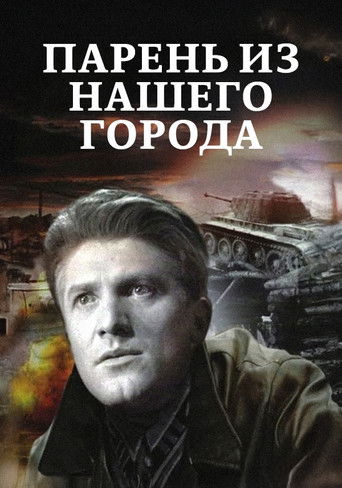
Valeriy Medvedev is a very obscure Soviet screen actor whose documented film career, as commonly indexed in surviving film databases, is limited to a single credited appearance in the wartime production "Lad from Our Town" (1942). Because his name appears in fragmentary filmography listings rather than in widely circulated biographical sources, much of his life outside that credit remains undocumented in readily available reference material. He appears to have been active during the early 1940s, a period when Soviet cinema was heavily shaped by the demands of the Great Patriotic War and by films intended to support morale, patriotism, and collective resilience. In that context, even small supporting roles could carry ideological and narrative importance, especially in pictures centered on ordinary citizens and wartime duty. No reliable public record currently confirms his birth date, death date, birthplace, education, or broader stage and screen career, suggesting either a very limited filmography or the loss of archival information over time. He should therefore be regarded as a little-known historical screen performer whose surviving trace in cinema history rests primarily on his participation in "Lad from Our Town."
More about Valeriy Medvedev
In film history
Valeriy Medvedev's cultural impact is best understood in the broader context of Soviet wartime cinema rather than through celebrity status or a large body of work. Performers like him helped populate the screen worlds of the 1940s, contributing to films that reinforced social solidarity, sacrifice, and everyday heroism during a period of national crisis. Even where a performer left only a single credited trace, that appearance still forms part of the historical texture of Soviet film production and the collaborative labor behind state cinema.
Later reputation
Medvedev's legacy is essentially archival: he survives in film history as a name attached to a specific 1942 production, offering evidence of the many actors whose work supported Soviet cinema without leaving behind a substantial star persona. For researchers, such figures are important because they complete the cast histories of period films and help reconstruct the production networks of wartime filmmaking. His name also illustrates how many early and mid-20th-century screen artists remain under-documented, especially when they did not appear in internationally exported or heavily publicized films.
Influence
There is no evidence that Valeriy Medvedev directly influenced later actors or directors in a documented, traceable way. His importance is instead indirect, as part of the collective ensemble tradition of Soviet cinema, where supporting performers contributed to realistic social representation and the emotional credibility of wartime narratives. In that sense, his work belongs to the broader lineage of character actors whose contributions sustain film worlds even when their individual names are not widely remembered.
Off screen
No dependable public information is currently available about Valeriy Medvedev's personal life, including marriages, family background, children, or private activities. Unlike major Soviet stars whose lives were documented through studio publicity, memoirs, or press coverage, Medvedev appears in surviving records only as a credited performer in a single film listing. As a result, any claims about his relationships, household, or later life would be speculative and are best left unasserted until archival evidence emerges.
Credits
- Credited screen appearance in the Soviet wartime film "Lad from Our Town" (1942)
- Participation in cinema during the early years of the Great Patriotic War, when film production served an important cultural and patriotic function
- Representation of the many lesser-known Soviet performers whose work survives in archival filmographies even when personal biographical records are sparse
Roles
- Role in "Lad from Our Town" (1942)
Films
- Lad from Our Town (1942)
Notes
- His known filmography, as commonly indexed, contains only one credited screen appearance.
- He is associated with a 1942 Soviet wartime film rather than the more internationally famous studio systems of Hollywood or Europe.
- Because archival biographical data is scarce, he is the kind of performer often overlooked in standard star histories.
- His surviving credit places him in a period when Soviet cinema was strongly shaped by wartime themes and production conditions.
- The name "Valeriy Medvedev" should not be confused with the better-known Soviet children's author and screenwriter of the same name.
- He is an example of how many classic-era performers remain known mainly through cast lists rather than interviews or memoirs.
Questions
Who was Valeriy Medvedev?
Valeriy Medvedev was a Soviet screen actor known from surviving filmography records for appearing in "Lad from Our Town" (1942). Very little biographical information about him is publicly documented, so he is best understood as an obscure classic-era performer rather than a major star.
What films is Valeriy Medvedev best known for?
He is best known, and seemingly only securely credited, for "Lad from Our Town" (1942). No other reliably documented screen roles are currently available in the standard reference trail.
When was Valeriy Medvedev born and when did he die?
His birth date and death date are not currently available in reliable public sources. The surviving record mainly identifies him through a single film credit rather than a full biographical profile.
What awards did Valeriy Medvedev win?
No awards or nominations are currently documented for Valeriy Medvedev in the available reference material. His historical footprint is primarily that of a credited performer in a wartime Soviet film.
What was Valeriy Medvedev's acting style?
There is not enough surviving information to describe his individual acting style with confidence. Since his known work is limited to a single credit, any stylistic characterization would be speculative.
What is Valeriy Medvedev's legacy in film history?
His legacy lies in the archival record of Soviet cinema, where even obscure performers help document the cast networks behind wartime filmmaking. He represents the many supporting artists whose contributions are preserved in film credits even when personal biographies have been largely lost.