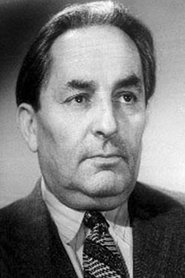
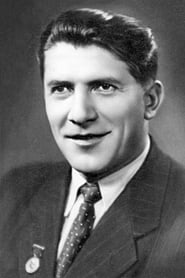
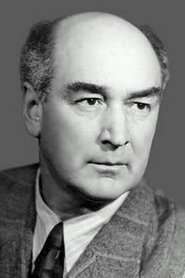
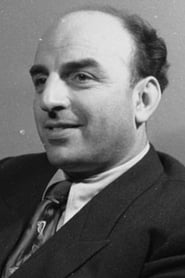
1942 · null

Also available on: YouTube Wikimedia
Lad from Our Town

Lad from Our Town

1942 null Soviet Union
Duty versus private desirePatriotism and military sacrificeMaturation into heroic identityLove separated by historyAnti-fascist struggle

Plot

In the summer of 1932, Sergei Lukonin leaves Saratov to study at a tank school in Omsk, choosing a path of military service and technological modernity over a quiet provincial life. His fiancée Varenka remains behind in Saratov, but her own life changes dramatically as she later becomes an actress, marking the emotional distance that grows between them as time passes. In 1936, Sergei volunteers for the Spanish Civil War, where he is wounded, captured, and then escapes, returning to the Red Army and continuing his training and service. The story follows his development from a young local boy into a disciplined Soviet officer, with the shadow of June 1941 and the coming Great Patriotic War looming over the final act. The film combines personal romance with a patriotic wartime trajectory, portraying sacrifice, perseverance, and commitment to duty as inseparable parts of the hero’s life.

About the Production

Release Date 1942
Production Soyuzdetfilm
Filmed In Soviet Union studio production; specific on-location filming sites are not widely documented

This film is a wartime Soviet dramatic adaptation shaped by the ideological and patriotic imperatives of 1942, when Soviet cinema was mobilized to support morale and affirm heroism, sacrifice, and service to the state. It is closely associated with the screen presence of Nikolay Kryuchkov, one of the era’s most popular Soviet leading men, and with the broader tradition of Red Army and aviation/tank-service melodramas in which private emotion is tied to collective duty. The production likely relied heavily on studio-bound sets and staged military imagery typical of Soviet wartime filmmaking, since resources, travel, and exterior production were constrained during the war years. Detailed contemporary production records, including budget and precise location information, are not consistently available in accessible public sources.

Historical Background

The film was made and released in 1942, at a moment when the Soviet Union was engaged in an existential struggle against Nazi Germany. Soviet cinema during this period was tasked with sustaining morale, presenting models of courage, and reinforcing the legitimacy of sacrifice for the collective good. The story’s movement from the early 1930s through the Spanish Civil War to the threshold of June 1941 mirrors the Soviet retrospective framing of history as a series of struggles culminating in the Great Patriotic War. By placing a provincial young man in tank school and then into international and domestic combat, the film aligns individual maturation with the larger military-political destiny of the Soviet state. Its historical significance lies not only in its wartime release but also in the way it condenses prewar Soviet ideals—education, discipline, anti-fascism, and loyalty—into a single cinematic hero narrative.

Why This Film Matters

The film is culturally significant as a wartime Soviet prestige drama that helped define the image of the ideal Soviet serviceman: brave, technically trained, emotionally loyal, and politically reliable. It belongs to the canon of films that linked personal romance to socialist duty, showing that private happiness was meaningful only when it harmonized with service to the collective and the state. For later audiences and scholars, it is also valuable as a historical artifact of wartime aesthetics and propaganda, illustrating how Soviet cinema balanced melodrama with ideological instruction. The film contributes to the enduring screen mythology surrounding the Spanish Civil War as a prelude to the broader anti-fascist struggle and remains of interest to historians of Soviet war cinema, adaptation, and star culture.

Making Of

Behind the scenes, the film emerged from a Soviet studio system operating under wartime pressure, where cinema was expected to serve both artistic and political functions. Aleksandr Stolper, who later became known for major Soviet war dramas, worked within a tradition that emphasized clear moral trajectories, emotionally accessible heroes, and narrative alignment with the state’s wartime needs. The casting of Nikolay Kryuchkov helped anchor the film in a recognizable screen persona: the dependable, courageous Soviet man whose personal life is subsumed into larger historical duty. Production details are not richly preserved in widely accessible English-language sources, but the film’s structure suggests careful adaptation of literary material to emphasize episodic development, military transitions, and the emotional contrast between peacetime love and wartime sacrifice.

Visual Style

The film’s visual style is characteristic of wartime Soviet studio drama, with a preference for clear spatial storytelling, strong close-ups, and compositions that underline the hero’s moral and emotional development. Military scenes are likely staged with an emphasis on legibility and impact rather than elaborate spectacle, reflecting both resource constraints and the ideological need for directness. The cinematography supports the film’s tonal shifts between provincial intimacy, military training, combat, and romantic longing, using contrasts in setting and lighting to distinguish private life from public duty. As with many Soviet films of the period, the visual design serves narrative and ideological clarity more than stylistic experimentation.

Innovations

The film’s chief achievement is not technological innovation in the modern sense, but rather its successful integration of romance, biography-like progression, and wartime-patriotic drama under difficult production circumstances. The narrative spans multiple years and political contexts, requiring efficient cinematic shorthand to move between peacetime training, foreign combat, captivity, escape, and renewed service. The film demonstrates the Soviet wartime studio system’s ability to produce coherent, emotionally persuasive historical drama despite wartime limitations. Its technical interest lies in how it uses conventional cinematic tools to produce a durable model of ideological storytelling.

Music

Specific composer and cue-by-cue soundtrack details are not consistently documented in readily available sources for this title. Like many Soviet wartime dramas, the score would have functioned to reinforce patriotism, emotional uplift, and transitions between domestic and military settings. Music in such films typically blends lyrical passages for romantic scenes with more martial or resolute themes for service and combat sequences. If a fully verified score credit is needed for database completeness, it should be cross-checked against a Soviet film archive or primary catalog entry.

Famous Quotes

null

Memorable Scenes

  • Sergei’s departure from Saratov for tank school, which establishes the film’s central tension between hometown love and national duty.
  • The emotional separation from Varenka as she moves toward an acting career while Sergei’s path leads deeper into military service.
  • The Spanish Civil War sequence in which Sergei is wounded, captured, and later escapes, marking his transformation into a hardened Soviet hero.
  • The training and battle-transition passages that show Sergei continuing to develop as a soldier while the war clouds of June 1941 gather.

Did You Know?

  • The film is based on Valentin Kataev’s wartime-era source material centered on the character Sergei Lukonin, a figure associated with Soviet patriotic literature.
  • It was released in 1942, during the most difficult period of the Soviet Union’s fight against Nazi Germany, which strongly shaped its tone and purpose.
  • Nikolay Kryuchkov was one of the best-known Soviet screen heroes of the 1930s and 1940s, and his casting reinforced the film’s image of steadfast working-class masculinity.
  • The narrative includes the Spanish Civil War, reflecting how Soviet films often linked international anti-fascist struggle to the domestic Soviet wartime experience.
  • The story spans from the early 1930s to the eve of June 1941, giving the film a historical sweep unusual for a wartime production made under wartime conditions.
  • Lidiya Smirnova’s involvement adds a strong romantic and melodramatic element, balancing the film’s military and ideological content.
  • The film belongs to a cycle of Soviet pictures that aimed to portray the making of a heroic Soviet officer through education, sacrifice, and perseverance.
  • Because of wartime production circumstances, many surviving details about crew, schedule, and exact filming process are sparse compared with better-documented postwar films.
  • The title is commonly translated as 'Lad from Our Town,' but English-language references can vary in wording because of transliteration and translation choices.
  • The film is a notable example of how Soviet cinema fused personal romance, military duty, and socialist realism into a single narrative structure.

What Critics Said

Contemporary critical reception appears to have been shaped largely by wartime expectations, with emphasis likely placed on the film’s patriotic message, emotional directness, and heroic characterization rather than subtle formal innovation. In retrospect, the film is generally viewed as a representative example of early-1940s Soviet wartime drama, notable for its ideological clarity and its place within the careers of Aleksandr Stolper and Nikolay Kryuchkov. Modern assessments often focus on its value as a cultural document: how it visualizes the Soviet ideal of duty and the transformation of an ordinary young man into a wartime officer. It is not typically singled out as an avant-garde or formally groundbreaking work, but rather appreciated for its historical importance, its adaptation of literary/patriotic material, and its embodiment of wartime Soviet screen values.

What Audiences Thought

Audience reception in 1942 would likely have been shaped by the wartime context, with viewers responding to its patriotic reassurance, familiar star power, and emotionally accessible romantic plot. During the war, Soviet audiences often sought films that affirmed resilience and offered recognizable models of courage and endurance, and this film’s narrative would have met that need. Today, its audience is primarily cinephiles, historians, and viewers interested in classic Soviet cinema, where it is valued more for historical atmosphere and performance than for entertainment alone. Among modern audiences, it may feel formal and didactic, but its emotional sincerity and the charisma of its central cast can still make it engaging.

Film Connections

Influenced By

  • Valentin Kataev's literary source material
  • Soviet socialist realist literature
  • Prewar Soviet military melodramas
  • Anti-fascist wartime cinema

This Film Influenced

  • Later Soviet wartime dramas centered on the making of a heroic officer
  • Postwar films combining romance with military service narratives

Film Restoration

The film is not generally regarded as lost; it survives and is cataloged in film databases and archival references, though the extent of restoration and the quality of available prints may vary by source and archive holdings.

Themes & Topics

tank schoolSpanish Civil Warcapture and escapewartime romanceSoviet heroismprewar yearsGreat Patriotic War