
Story of a Real Man
"All for alexey meresyev"
Keys: Space play/pause · ←/→ 10s · F fullscreen · M mute · </> speed
About this film
Without warning, wartime life, alexey Meresyev was a fighter pilot during the war. One day he was shot down by Nazis, and because of his wounds both of his legs had to be cut off up to his knees. Because of his spirit and courage, Alexey was able to overcome his disability. He learned not only to walk on his a
Cast & crew
More films like this
More War films
View all →

More from Aleksandr Stolper
View all →
More about this film
About the production
Release dateOctober 25, 1948
Box officeExtremely successful in Soviet domestic market, viewed by millions across the USSR
ProductionMoscow Film Studio (Mosfilm)
Filmed inMoscow, Soviet Union, Studio backlots at Mosfilm
The film was based on the bestselling novel by Boris Polevoy, which itself was based on the real story of Hero of the Soviet Union Alexey Meresyev. The production involved extensive consultation with the real Meresyev to ensure authenticity. The aerial sequences were particularly challenging to film, requiring innovative camera techniques and careful coordination with the Soviet Air Force. The prosthetic legs used in the film were specially crafted to match the actual designs used by Meresyev.
Themes
Overcoming disabilitySoviet patriotismHuman resilienceRedemption through serviceThe power of will
Themes & topics
World War IIfighter pilotamputeeprosthetic limbsrehabilitationSoviet Air Forceheroismdisabilitydeterminationmilitary hospitalaerial combatbased on true story
Historical background
The wartime context of 1948 shaped how Story of a Real Man was marketed, exhibited, and remembered. For the participation in the film, a number of film actors and the cameraman were awarded the Stalin Prize in 1949.
Why this film matters
Preservation efforts around Story of a Real Man help audiences connect with wartime viewing habits. Tale of a True Man (Russian: Повесть о настоящем человеке) is a Soviet feature film directed by Aleksandr Stolper, based on the Russian book of the same name by Boris Polevoy.
Making of
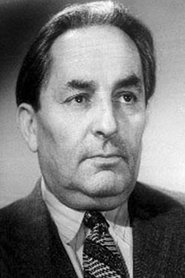
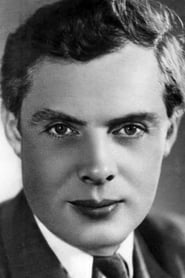
Director Aleksandr Stolper faced significant challenges in adapting Boris Polevoy's beloved novel to the screen, particularly in balancing the film's patriotic message with the intimate human drama of Meresyev's struggle. The production team worked closely with the Soviet military to secure authentic aircraft and military equipment, with many of the aerial sequences filmed using actual war-era planes flown by veteran pilots. Pavel Kadochnikov underwent intensive preparation for his role, spending time with the real Alexey Meresyev and working with physical therapists to understand the mechanics of walking with prosthetics. The prosthetic legs used in filming were constructed by the same specialists who created Meresyev's actual prosthetics, adding an unprecedented level of authenticity to the production. The film's most emotionally charged scenes, particularly those depicting Meresyev's despair and determination in the hospital, were shot in long takes to capture the raw emotion of the performances. Stolper insisted on using natural lighting for many of the outdoor scenes to create a more realistic and less propagandistic feel, despite the studio's preference for the glossy style typical of Soviet war films.
What critics said
Trade coverage around 1948 noted Story of a Real Man as a competent example of its genre, with emphasis on pacing and star appeal where applicable. For the participation in the film, a number of film actors and the cameraman were awarded the Stalin Prize in 1949.
Did you know?
- The real Alexey Meresyev served as a technical consultant on the film and visited the set multiple times during production
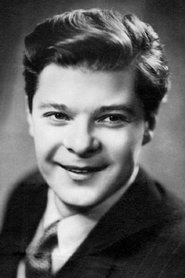
- Pavel Kadochnikov spent weeks studying Meresyev's mannerisms and movements to accurately portray him, including learning to walk convincingly with prosthetic legs
- The novel by Boris Polevoy was published in 1946 and became an instant bestseller, selling over 2 million copies in the Soviet Union
- The film was one of the first Soviet productions to deal extensively with the psychological trauma of war injuries
- Alexey Meresyev lived until 2001, outliving most of the cast and crew, and remained an honored figure in Russia
- The aerial combat scenes used real Soviet fighter planes from the war, including Yak-1 and La-5 aircraft
- The film was temporarily banned in some Eastern Bloc countries during the Khrushchev Thaw for being too 'Stalinist' in its heroic portrayal
- The hospital scenes were filmed in a real military hospital with actual medical personnel as extras
- The dance sequence where Meresyev learns to dance with prosthetics took over a week to film due to its technical difficulty
- The film's success led to Meresyev's story being included in Soviet school curricula for decades
Awards & recognition
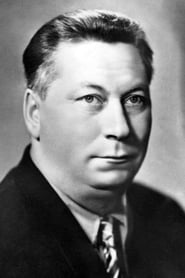
- Stalin Prize, First Class (1949) - awarded to director Aleksandr Stolper, writer Boris Polevoy, and actors Pavel Kadochnikov and Nikolai Okhlopkov
- Vasilyev Brothers State Prize of the RSFSR (1949)
- Order of the Red Banner of Labour awarded to the Mosfilm studio for the film's production
Visual style
The cinematography, led by Anatoli Golovnya, employed a distinctive visual style that balanced the glossy aesthetic typical of Soviet prestige productions with moments of raw realism. The aerial sequences were particularly innovative, using camera mounts on actual fighter planes to create unprecedented shots of aerial combat. Golovnya utilized deep focus photography to emphasize the vastness of the Russian landscape during Meresyev's struggle through the forest, creating a sense of both physical and psychological isolation. The hospital scenes were shot with softer lighting and more intimate camera angles to convey the emotional vulnerability of the patients. The contrast between the cold, blue tones of the forest sequences and the warm, golden hues of the victory scenes visually reinforced the film's thematic journey from despair to triumph. The cinematography also included several groundbreaking tracking shots that followed Meresyev as he learned to walk with his prosthetics, creating a sense of his struggle and progress.
Innovations
The film pioneered several technical innovations in Soviet cinema, particularly in the realm of special effects and sound recording. The aerial combat sequences required the development of new camera mounting systems that could withstand the forces of high-speed flight while maintaining stable footage. The prosthetic effects were remarkably realistic for their time, with the makeup and special effects team creating convincing depictions of Meresyev's injuries and subsequent recovery. The film also featured innovative sound mixing techniques that allowed for clearer dialogue during the loud combat scenes. The production team developed new methods for simulating aircraft damage and crashes that were both safer and more convincing than previous techniques. The hospital sequences utilized advanced makeup effects to show the progression of Meresyev's injuries and recovery with unprecedented realism. The film's success in these technical areas influenced subsequent Soviet war productions and set new standards for military effects in cinema.
Music
The musical score was composed by Nikolai Kryukov, one of the Soviet Union's most prominent film composers, who created a powerful orchestral soundtrack that blended traditional Russian musical themes with modernist techniques. The main theme, based on a Russian folk melody, became instantly recognizable to Soviet audiences and was frequently played on radio. Kryukov used leitmotifs to represent different aspects of Meresyev's journey - a soaring brass theme for his flying days, a somber string arrangement for his hospitalization, and a triumphant full orchestral version for his return to combat. The soundtrack also incorporated authentic military music and period songs to enhance the historical atmosphere. The sound design was particularly notable for its realistic depiction of aircraft engines and combat sounds, achieved through recordings at actual Soviet airbases. The music was so popular that it was released as a separate album and performed in concert halls across the Soviet Union.
Famous quotes
A man doesn't die when his legs are cut off. He dies when he loses hope.
They can take my legs, but they can't take my sky.
Every step forward is a victory over those who said I would never walk again.
In the Soviet Union, we don't abandon our comrades. We help them fly again.
The only disability that matters is the disability of the spirit.
Memorable scenes
- The 18-day crawl through the snow-covered forest where Meresyev struggles to survive with severely frostbitten legs
- The hospital scene where Meresyev first learns his legs must be amputated and his subsequent breakdown and determination
- The sequence showing his grueling physical therapy as he learns to walk with prosthetic legs, falling repeatedly but persisting
- The dance scene where Meresyev proves his recovery by dancing with his nurse, demonstrating his mastery of his prosthetics
- The final aerial combat sequence where he returns to flying and proves his capabilities in battle
- The emotional reunion with his squadron where he's welcomed back as a full pilot despite his disability
What audiences thought
The film was enormously popular with Soviet audiences, drawing millions of viewers across the USSR and becoming one of the highest-grossing domestic films of 1948. Veterans particularly appreciated its realistic portrayal of hospital life and the challenges of rehabilitation, while younger viewers were inspired by Meresyev's determination and courage. The film sparked nationwide discussions about disability and veterans' care, leading to improvements in some rehabilitation facilities. Many Soviet viewers reported being deeply moved by the story, with some writing letters to the real Alexey Meresyev expressing their admiration. The film's popularity endured for decades, with regular television broadcasts keeping it in the public consciousness well into the 1970s. In post-Soviet Russia, the film continues to resonate with older audiences who remember it from their youth, though younger viewers sometimes find its patriotic messaging heavy-handed. The film has developed a cult following among international cinema enthusiasts who appreciate its historical significance and emotional power.
Film connections
Influenced by
- Boris Polevoy's novel 'Story of a Real Man' (1946)
- Soviet socialist realist tradition
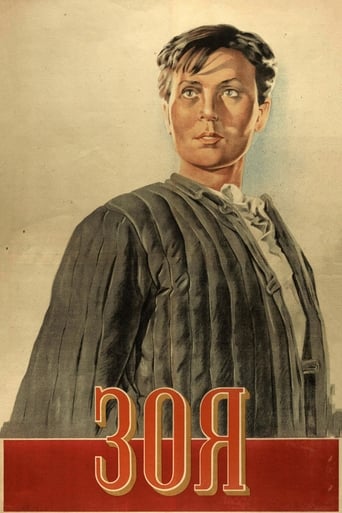
- Earlier Soviet war films like 'Zoya' (1944)
- Hollywood war films of the 1940s
- Classical Russian literature about heroes and sacrifice
This film influenced
- The Cranes Are Flying (1957)
- Ballad of a Soldier (1959)
- Come and See (1985)
- Soviet films about disabled veterans
- Post-war European cinema about rehabilitation
Film restoration
The film has been well-preserved in the Russian State Film Archive (Gosfilmofond) and has undergone digital restoration as part of Mosfilm's classic film preservation program. The original camera negatives survive in good condition, and multiple high-quality prints exist in archives worldwide. The film was digitally remastered in 2005 for a DVD release and again in 2018 for a 4K restoration that premiered at the Moscow International Film Festival. The restored version includes enhanced audio and improved visual clarity while maintaining the original aspect ratio and visual style. The film is not considered at risk and is regularly screened at retrospectives and classic film festivals.
Where to watch
- Available on Mosfilm's official YouTube channel with English subtitles
- Streaming on Russian streaming platform Kinopoisk
- Available on DVD from Russian distributors with multiple subtitle options
- Part of the Criterion Collection's Soviet cinema box set
- Available for streaming on Mubi during special retrospectives
- Can be accessed through various university film archives and libraries
- Occasionally screened at film festivals specializing in classic cinema