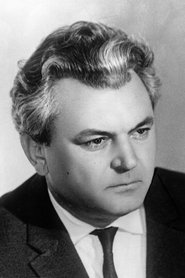
Born: September 25, 1920 in Bilozerka, Kherson Governorate, Ukrainian SSR, Soviet UnionDied: October 20, 1994Active: 1948-1994Birth Name: Sergey Fyodorovich Bondarchuk
About Sergey Bondarchuk
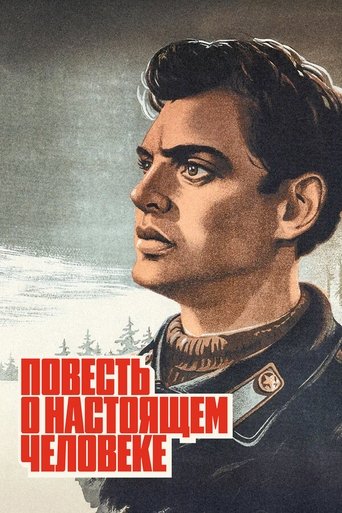
Sergey Fyodorovich Bondarchuk was one of the most celebrated figures in Soviet cinema, renowned as both an actor and director. He made his film debut in 1948 with a minor role in 'Story of a Real Man,' which marked the beginning of an extraordinary career spanning nearly five decades. Bondarchuk gained international acclaim for his powerful performances in films like 'The Young Guard' (1948) and 'Taras Shevchenko' (1951), before transitioning to directing. His magnum opus, the epic 'War and Peace' (1966-1967), which he directed and starred in, won the Academy Award for Best Foreign Language Film and remains one of the most ambitious cinematic achievements ever undertaken. As a director, he was known for his ability to orchestrate massive battle sequences and his meticulous attention to historical detail. His later works, including 'Waterloo' (1970) with an international cast, demonstrated his global appeal and technical mastery. Bondarchuk's career exemplified the pinnacle of Soviet artistic achievement, earning him numerous honors both domestically and internationally, and cementing his legacy as one of cinema's great auteurs.
The Craft
On Screen
Bondarchuk was known for his intense, emotionally powerful performances that combined naturalistic realism with theatrical gravitas. His acting technique emphasized deep psychological immersion in his characters, often portraying historical figures and complex protagonists with remarkable depth and authenticity. He had a commanding screen presence and a distinctive voice that conveyed both vulnerability and strength, making him particularly effective in roles requiring emotional range and historical significance.
Milestones
Film debut in 'Story of a Real Man' (1948)
Starring role in 'Taras Shevchenko' (1951)
Directorial debut with 'Fate of a Man' (1959)
Academy Award for 'War and Peace' (1966-1967)
International production 'Waterloo' (1970)
People's Artist of the USSR (1952)
Hero of Socialist Labor (1973)
Best Known For
Iconic Roles
Pierre Bezukhov in 'War and Peace'
Taras Shevchenko in 'Taras Shevchenko'
Andrei Sokolov in 'Fate of a Man'
Napoleon in 'Waterloo'
Must-See Films
War and Peace
1966-1967
Fate of a Man
1959
Waterloo
1970
Taras Shevchenko
1951
They Fought for Their Country
1975
],
awards
Academy Award for Best Foreign Language Film for 'War and Peace' (1969),Golden Globe for Best Foreign Language Film for 'War and Peace' (1969),Nika Award for Best Director (1988),State Prize of the USSR (1948, 1952, 1977),Lenin Prize (1960)
nominations
Golden Bear at Berlin International Film Festival for 'Fate of a Man' (1959),Golden Lion at Venice Film Festival for 'Waterloo' (1970),Academy Award nomination consideration for 'Waterloo'
honors
People's Artist of the USSR (1952),Hero of Socialist Labor (1973),Order of Lenin (multiple times),Order of the October Revolution,Order of the Red Banner of Labour,Moscow International Film Festival Lifetime Achievement Award (1979)
personalLife
Bondarchuk was married three times and had four children. His first marriage was to actress Inna Makarova, with whom he had his daughter Natalya. His second marriage was to actress Svetlana Svetlichnaya, which ended in divorce. His third and longest marriage was to actress Irina Skobtseva, with whom he had two children, Fyodor and Elena. Fyodor Bondarchuk followed in his father's footsteps, becoming a prominent Russian film director and actor. Bondarchuk was known for his demanding personality on set but was also respected for his artistic integrity and dedication to cinema.
Natalya Bondarchuk (born 1950) - actress and director,Fyodor Bondarchuk (born 1964) - prominent film director and actor,Elena Bondarchuk (1962-2009) - actress
education
Graduated from the Gerasimov Institute of Cinematography (VGIK) in 1948, where he studied under prominent Soviet film teachers and directors including Sergei Gerasimov and Boris Zakhava.
Sergei Gerasimov - film school teacher,Boris Zakhava - acting teacher,Aleksandr Stolper - early director
protégés
Fyodor Bondarchuk - son, influenced by his work,Nikita Mikhalkov - influenced by his epic style,Vladimir Bortko - influenced by his literary adaptations
culturalImpact
Bondarchuk fundamentally shaped Soviet cinema's approach to historical epics and literary adaptations, setting new standards for production values and artistic ambition. His 'War and Peace' remains the most ambitious Soviet film production ever, employing over 100,000 extras and revolutionizing the scale of historical filmmaking. He bridged Soviet cinema with international audiences, proving that Soviet productions could compete with Hollywood epics in both technical achievement and artistic merit. His work helped establish Soviet cinema as a major force in international film festivals during the Cold War era, serving as cultural diplomacy for the Soviet Union.
legacy
Bondarchuk's legacy endures through his monumental films that continue to be studied and admired by filmmakers worldwide. His approach to historical cinema influenced generations of directors, particularly in Russia and Eastern Europe, where his emphasis on authenticity and scale remains a benchmark. The Bondarchuk film dynasty continues through his son Fyodor, one of contemporary Russia's most successful filmmakers. His films, particularly 'War and Peace,' are considered essential viewing in film schools globally for their technical innovation and artistic vision. He remains one of the few directors to have won both an Academy Award and achieved lasting artistic recognition for both his acting and directing careers.
influence
Bondarchuk influenced filmmakers through his pioneering techniques in large-scale battle sequences, his methodical approach to historical accuracy, and his ability to blend intimate character studies with epic scope. Directors like Steven Spielberg cited his battle sequences as inspiration for 'Saving Private Ryan.' His adaptation strategies for literary classics influenced filmmakers worldwide, particularly in how to balance fidelity to source material with cinematic innovation. His work demonstrated that Soviet cinema could produce films of international artistic and technical excellence, inspiring subsequent generations of Russian filmmakers to aim for global recognition.
trivia
His 'War and Peace' was the most expensive Soviet film ever made, costing over $100 million in today's currency,He was one of only three Soviet directors to win an Academy Award for Best Foreign Language Film,His film 'Waterloo' featured one of the largest cavalry charges ever filmed, with 17,000 soldiers,He was a veteran of World War II, having served in the Red Army from 1941-1946,His daughter Natalya directed the acclaimed film 'The Mystery of the Third Planet' (1981),He was known for personally performing dangerous stunts in his films,His "War and Peace" took over seven years to complete,He was fluent in multiple languages, which helped him work on international productions,His final film 'Quiet Flows the Don' (1992) was completed just before his death,He was a member of the Communist Party and served in the Supreme Soviet
famousQuotes
Cinema is not just entertainment, it's a powerful instrument for educating people and shaping their consciousness,To make a historical film, you must become a historian yourself,The camera doesn't lie - it captures the truth of the human soul,Every frame must be a work of art, every word must carry meaning,I don't make films for critics or awards, I make them for the people who will watch them generations from now
controversies
Bondarchuk faced some criticism for his close relationship with Soviet authorities and his membership in the Communist Party, with some viewing him as an establishment figure. His production of 'War and Peace' was controversial for its massive cost during a period of economic hardship in the Soviet Union. Some critics accused him of excessive patriotism and ideological conformity in his historical films, though others praised his artistic integrity despite political pressures.