



Komsomolsk
"The year is 1932, and the Soviet state is developing at an exceptionally rapid pace"
Keys: Space play/pause · ←/→ 10s · F fullscreen · M mute · </> speed
About this film
The year is 1932, and the Soviet state is developing at an exceptionally rapid pace. Numerous young men and women, who have joined the Komsomol, travel to the Amur region to build a new, vibrant city named in honor of their organization. However, not everyone shares the enthusiasm for strenuous labor based on unconditional trust into authorities.
Cast & crew
More films like this
More Drama films
View all →







More from Sergei Gerasimov
View all →
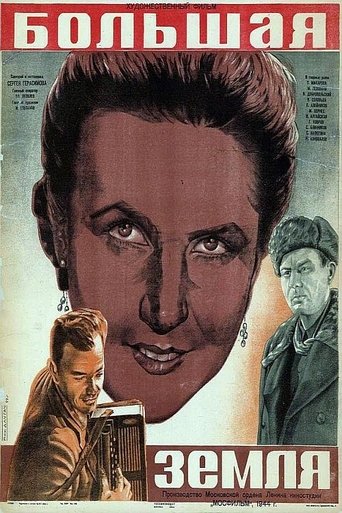

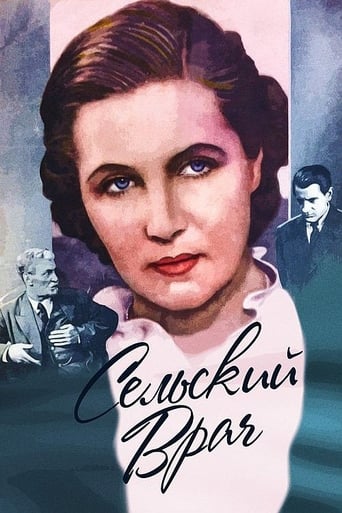

More about this film
About the production
Release dateMay 7, 1938
Box officeUnknown - Soviet box office tracking was not performed in the modern sense
ProductionGosudarstvennyy Ordena Lenina Kinostudiya "Mosfilm
Filmed inKomsomolsk-on-Amur, Russian SFSR, Moscow studios, Ural Mountains region
The film was shot on location at the actual construction site of Komsomolsk-on-Amur, with many real Komsomol volunteers appearing as extras. Director Sergei Gerasimov and his crew lived among the construction workers for months to capture authentic footage. The production faced significant logistical challenges due to the remote location and harsh weather conditions, with temperatures often dropping below -30°C during filming. The explosion sequences were created using actual industrial equipment and pyrotechnics under military supervision, adding to the film's realism. The film was part of Stalin's cultural campaign to promote industrialization and was heavily supported by Soviet authorities.
Themes
Socialist construction and industrializationYouth enthusiasm and dedication to the collectiveThe struggle against internal enemies and sabotageThe transformation of nature through human laborThe triumph of collective will over individual interests
Themes & topics
KomsomolConstructionSabotageIndustrializationYouthPropagandaSoviet UnionFar EastSocialist realismHeroismCollective effortPolitical struggleBuildingRevolutionary enthusiasmEnemy of the people
Historical background
Komsomolsk (1938) emerged during the studio era and wartime cinema. The year is 1932, and the Soviet state is developing at an exceptionally rapid pace. Archival records and catalog entries help place the work within film-history surveys of the period.
Why this film matters
Preserved under Wikidata ID Q4230166, Komsomolsk is valued as a screen drama within catalog and archive collections. Wikipedia's "Komsomolsk (film)" entry connect it to broader histories of cinema exhibition and restoration.
Making of
The production of 'Komsomolsk' was a massive undertaking that reflected the Soviet Union's commitment to using cinema as a tool for propaganda and education. Director Sergei Gerasimov, then 34 years old, was chosen for his reputation as a director who could combine artistic merit with ideological messaging. The film crew spent nearly a year living in primitive conditions at the construction site, sharing barracks with the real Komsomol volunteers they were documenting. This immersive approach allowed Gerasimov to capture authentic performances and footage that would have been impossible to stage in a studio. The relationship between Gerasimov and lead actress Tamara Makarova blossomed during the shoot, leading to their marriage shortly after filming completed. The film's technical aspects were groundbreaking for Soviet cinema, with extensive use of location sound recording and mobile camera units that could follow the action across the vast construction site. The explosion scenes required careful coordination with military engineers and were filmed using actual demolition techniques rather than special effects, creating some of the most realistic action sequences in Soviet cinema up to that point.
What critics said
Trade and archival sources offer limited day-one review coverage for Komsomolsk. Modern reception rests on its availability in collections, repertory screenings, and reference works that document 1938 cinema.
Did you know?
- Director Sergei Gerasimov married lead actress Tamara Makarova the same year this film was released, and they would become one of Soviet cinema's most celebrated couples
- The real construction of Komsomolsk-on-Amur began in 1932 and involved over 150,000 Komsomol volunteers, many of whom appear in the film
- The film was one of the first major Soviet productions to use synchronized sound recording on location rather than dubbing in studio
- Stalin personally approved the script and viewed an early cut of the film, reportedly praising its portrayal of socialist enthusiasm
- The saboteur character was based on real cases of industrial sabotage that were highlighted during the Great Purge trials
- The film's premiere was held simultaneously in Moscow and at the actual Komsomolsk-on-Amur construction site
- Many of the construction equipment shown in the film was real, newly imported from the United States as part of Soviet industrialization efforts
- The film was shown in over 40 countries and was especially successful Soviet exports of the late 1930s
- Director Gerasimov used innovative camera techniques, including mounting cameras on moving construction equipment
- The film's success led to Gerasimov being awarded the title 'People's Artist of the USSR' in 1948
Awards & recognition
- Stalin Prize (Second Class) - 1941
- Order of Lenin Award for the film's contribution to Soviet culture - 1938
- Venice Film Festival - Special Mention for Artistic Achievement - 1938
Visual style
The cinematography of 'Komsomolsk' was groundbreaking for its time, combining documentary-style realism with dramatic visual storytelling. Director of Photography Vladimir Rapoport employed innovative techniques including mounting cameras on moving cranes and construction equipment to capture dynamic shots of the building process. The film features sweeping panoramic views of the construction site, emphasizing the scale of the socialist project and the transformation of wilderness into industrial landscape. Rapoport used natural light extensively, particularly in outdoor scenes, creating a sense of authenticity that distinguished the film from studio-bound productions of the era. The explosion sequences were filmed with multiple cameras at different angles and speeds, creating dramatic slow-motion effects that heightened their impact. The visual composition often placed individual workers against massive industrial backdrops, emphasizing the relationship between human effort and technological progress. The film's black and white photography achieved remarkable contrast and texture, particularly in scenes depicting the harsh Far Eastern environment and the glow of industrial furnaces against night skies.
Innovations
'Komsomolsk' represented several technical innovations in Soviet cinema of the 1930s. The film was one of the first Soviet productions to extensively use portable sound recording equipment on location, allowing for authentic dialogue and ambient sound from the actual construction site. The production team developed special camera housings to protect equipment from the extreme cold and dust of the Far Eastern environment. The explosion sequences were particularly technically ambitious, involving coordinated detonations and multiple camera positions to capture the action from various perspectives. The film employed innovative editing techniques, including cross-cutting between individual workers and massive construction projects to emphasize the relationship between human effort and industrial progress. The production also pioneered the use of aerial photography in Soviet cinema, utilizing small aircraft to capture sweeping views of the construction site and surrounding wilderness. The film's sound mixing techniques were advanced for the period, balancing dialogue, music, and industrial sounds to create a rich audio environment that enhanced the viewing experience.
Music
The musical score for 'Komsomolsk' was composed by Vissarion Shebalin, one of the prominent Soviet composers of the period. Shebalin's music combines heroic orchestral themes with folk-inspired melodies that reflect the diverse backgrounds of the Komsomol volunteers. The soundtrack features several mass songs that became popular in their own right, including 'Song of the Builders' which was widely performed by choirs across the Soviet Union. The film's sound design was innovative for its time, particularly in its use of location recording to capture authentic construction sounds rather than relying solely on studio effects. The musical motifs are carefully synchronized with the visual narrative, with triumphant themes accompanying scenes of successful construction and more somber music during moments of sabotage and struggle. The soundtrack also incorporates actual recordings of construction work and workers' songs, adding to the film's documentary feel. Shebalin's score was praised for its ability to enhance the emotional impact of the film without overwhelming the narrative, a balance that was often difficult to achieve in Soviet film music of the era.
Famous quotes
We are building not just a city, but the future of socialism itself!
Every brick we lay is a brick in the foundation of our new world.
The saboteur thinks he can stop us, but he doesn't understand the power of collective will.
In the Far East, we are bringing light to the darkness of the wilderness.
Our youth is our greatest resource, and they are building our tomorrow today.
When one of us falls, ten others rise to take their place.
This is not just construction, it is a battle for the soul of our country.
Memorable scenes
- The opening sequence showing thousands of young Komsomol members boarding trains bound for the Far East, filled with revolutionary songs and optimistic energy
- The massive explosion at the fuel depot, filmed with multiple cameras and creating a spectacular display of destruction and chaos
- The scene where workers continue construction through a blizzard, demonstrating their dedication despite extreme weather conditions
- The climactic confrontation where the saboteur is exposed and the workers unite to repair the damage
- The final montage showing the completed industrial complex with smokestacks rising against the dawn, symbolizing the triumph of socialist construction
What audiences thought
When 'Komsomolsk' was released in 1938, it was enormously popular with Soviet audiences, drawing millions of viewers across the country. Many young people who saw the film were inspired to volunteer for construction projects in remote regions of the Soviet Union. The film's portrayal of heroic youth resonated particularly strongly with the Komsomol generation, who saw their own experiences reflected on screen. Audience letters published in Soviet newspapers praised the film's realism and emotional power, with many viewers reporting that they cried during scenes of sacrifice and triumph. The film became a mandatory viewing in schools, factories, and collective farms, ensuring its widespread cultural impact. In the years following its release, 'Komsomolsk' was regularly shown at workers' clubs and during special screenings for construction projects throughout the Soviet Union. Even decades later, the film remained popular among older generations who remembered the era it depicted. In post-Soviet Russia, the film continues to have an audience, particularly among those nostalgic for the Soviet period and film students studying the history of Russian cinema.
Film connections
Influenced by
- Battleship Potemkin (1925) - for its revolutionary themes and montage techniques
- Chapaev (1934) - for its portrayal of revolutionary heroism
- The End of St. Petersburg (1927) - for its depiction of revolutionary transformation
- Turksib (1929) - for its documentary approach to construction themes
- Three Songs About Lenin (1934) - for its celebration of Soviet achievements
This film influenced
- The Great Citizen (1938-1939) - for its themes of vigilance against enemies
- The Radiant Path (1940) - for its portrayal of socialist transformation
- The Fall of Berlin (1949) - for its epic scale and ideological messaging
- The Communist (1957) - for its biographical approach to revolutionary themes
- The Beginning of the Era (1975) - for its depiction of industrial construction
Film restoration
The film has been preserved in the Gosfilmofond of the Russian Federation, the state film archive. A restored version was released in 1978 for the film's 40th anniversary, with improved sound and image quality. In 2018, a digital restoration was completed as part of a project to preserve classic Soviet films. The restored version has been screened at several international film festivals and is available in high definition. Original nitrate elements are stored under controlled conditions, and multiple safety copies exist in various international archives, including the Library of Congress and the British Film Institute.
Where to watch
- Available on streaming platforms specializing in classic cinema such as Klassiki
- Can be purchased on DVD from Russian cinema distributors
- Available for viewing at the Museum of Modern Art's film collection in New York
- Screenings occasionally organized by film societies and Russian cultural centers
- Accessible through some university film studies programs
- Available in the online collection of the Russian State Film Archive