Films
1 film
About T'ugaita
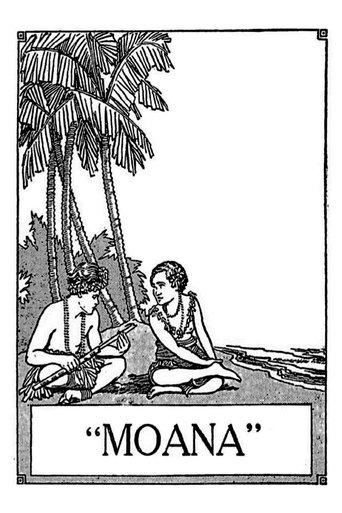
T'ugaita appeared in Robert J. Flaherty's 1926 documentary film 'Moana.' As a non-professional actor from the village of Safune on Savai'i island, T'ugaita was one of several local islanders selected by Flaherty to participate in his ethnographic film project that documented traditional Samoan life. The film was one of the earliest examples of documentary cinema and sought to capture the daily activities, rituals, and cultural practices of Samoan people before Western influence significantly altered their way of life. T'ugaita's participation in the film represented a rare opportunity for indigenous Pacific Islanders to be represented on screen during the silent era, though the film itself was created through a Western lens. Like other participants in Flaherty's work, T'ugaita would have been involved in staged recreations of traditional activities that Flaherty believed had disappeared or were disappearing. The film took over a year to shoot, requiring significant commitment from all involved. T'ugaita's appearance in 'Moana' appears to be their only known film credit, suggesting they returned to their traditional life after the production concluded.
The Craft
On Screen
Naturalistic performance style typical of non-professional documentary subjects of the era
Milestones
- Appeared in Robert J. Flaherty's documentary film 'Moana' (1926)
Best Known For
Iconic Roles
Must-See Films
Working Relationships
Worked Often With
Studios
Why They Matter
Impact on Culture
T'ugaita's participation in 'Moana' contributed to one of the earliest documentary films to feature Pacific Islander subjects, helping to introduce Western audiences to Samoan culture during the silent film era. The film was groundbreaking in its approach to ethnographic cinema, though it has been criticized for staging scenes and romanticizing traditional life. As one of the first Samoans to appear in a feature film, T'ugaita helped establish a visual record of Samoan culture during a period of rapid Westernization. The film's release coincided with growing Western interest in Pacific cultures, though it presented these cultures through a colonial lens. 'Moana' was marketed as a 'photodrama' rather than a documentary, reflecting the ambiguous nature of early ethnographic filmmaking.
Lasting Legacy
T'ugaita's legacy is preserved through their contribution to early documentary cinema and the visual record of Samoan culture captured in 'Moana.' While their individual identity remains largely obscure, they represent the important role that indigenous peoples played in early ethnographic films. The film itself has become historically significant as one of the first documentaries to focus on Pacific Islander life and as an early example of what would later be called 'salvage ethnography' - documenting cultures believed to be disappearing. Modern film scholars and anthropologists continue to study 'Moana' for both its artistic merits and its problematic aspects of representation.
Who They Inspired
As a non-professional performer in one of the earliest documentary features, T'ugaita's influence lies primarily in their contribution to the development of ethnographic cinema rather than as a mentor to other performers. The film influenced later documentary filmmakers in how they approached filming indigenous peoples, though many later works would attempt to avoid the staging and romanticization present in Flaherty's work. 'Moana' demonstrated the potential of film as a tool for cultural documentation, paving the way for more authentic representations of indigenous peoples in cinema.
Off Screen
Very little is documented about T'ugaita's personal life outside of their participation in 'Moana.' As a resident of Safune village on Savai'i island during the 1920s, they would have lived according to traditional Samoan customs and practices. The film documented aspects of daily life including fishing, cooking, and community activities that would have been familiar to T'ugaita.
Did You Know?
- 'Moana' was filmed over 15 months in Samoa, requiring extraordinary patience from all participants including T'ugaita
- The film was marketed by Paramount as 'a romance of the South Seas' rather than strictly as a documentary
- Director Robert J. Flaherty lived with the Samoan community for over a year before filming began
- The film was one of the first to use the word 'documentary' to describe its genre, coined by John Grierson
- Many scenes in 'Moana' were staged or recreated by Flaherty, including traditional activities that had largely disappeared
- The film was not commercially successful but was critically praised for its cinematography and cultural documentation
- 'Moana' was preserved in the National Film Registry in 2005 for its cultural and historical significance
- The film's score was one of the first composed specifically for a documentary feature
- Flaherty's method of working with non-professional actors like T'ugaita influenced later documentary filmmaking approaches
- The film captured one of the last visual records of traditional Samoan tattooing practices
Frequently Asked Questions
Who was T'ugaita?
Screen credits include Robert J. Flaherty's 1926 documentary film 'Moana.' As a resident of Safune village on Savai'i island, they were one of several local Samoans selected to participate in this groundbreaking ethnographic film that documented traditional Pacific Islander life during the silent era.
What films is T'ugaita best known for?
Titles linked here include Moana (1926).
When was T'ugaita born and when did they die?
Specific birth and death dates for T'ugaita are not documented in historical records. As a Samoan villager who participated in the 1926 film, they were likely born in the late 19th or early 20th century, but detailed biographical information about non-professional documentary subjects from this era is typically unavailable.
What awards did T'ugaita win?
T'ugaita did not receive any formal awards or recognition for their participation in 'Moana.' During the silent era, non-professional documentary subjects were rarely acknowledged in award ceremonies, and the film itself received limited accolades upon its release despite its later recognition as a historically significant work.
What was T'ugaita's acting style?
T'ugaita's performance style was naturalistic and authentic, typical of non-professional documentary subjects of the 1920s. Rather than employing theatrical techniques, they simply participated in daily activities and cultural practices as they would have normally lived them, though some scenes were staged for the camera by director Robert J. Flaherty.