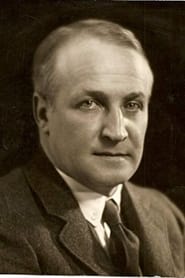
Moana
"Blending ethnographic detail with a romanticized “Gauguin idyll."
Keys: Space play/pause · ←/→ 10s · F fullscreen · M mute · </> speed
About this film
Robert J. Flaherty’s follow-up to Nanook of the North shifts from the Arctic to the South Seas, portraying Samoan village life with a painterly eye. Blending ethnographic detail with a romanticized “Gauguin idyll,” the film celebrates daily rituals, communal traditions, and the passage into adulthood, suffused with what Flaherty called “pride of beauty, pride of strength.”
Cast & crew
More films like this
More Documentary films
View all →

More from Robert Flaherty
View all →More about this film
About the production
Release dateJanuary 24, 1926
Box officeUnknown (limited release for documentary)
ProductionParamount Pictures
Filmed inSafune, Savai'i Island, Samoa
Flaherty and his family lived in Samoa for over a year during filming, building a house and integrating with the local community. The production faced numerous challenges including tropical diseases, difficult filming conditions, and the need to transport heavy equipment to remote locations. Flaherty famously staged certain scenes for dramatic effect, particularly the tattooing sequence, which he had to persuade the local people to perform specifically for the camera. The film was shot on nitrate stock, which has made preservation challenging over the decades.
Themes
Coming of ageTraditional culture vs. modernityHarmony with natureRitual and traditionCultural preservation
Themes & topics
Samoadocumentaryethnographic filmcoming of agetattooingtraditional lifePacific Islandssilent filmRobert Flahertyanthropologycultural documentationparadisenatureritualcommunity
Historical background
The 1926 release of Moana belongs to its era's exhibition habits rather than today's franchise model.
Why this film matters
Surviving prints of Moana document how 1926-era filmmakers solved story problems with limited means.
Making of
Robert Flaherty's approach to making 'Moana' was revolutionary for its time, involving an unprecedented commitment to living among his subjects. He arrived in Samoa in 1923 with his family and spent over a year immersing himself in the local culture before even beginning principal photography. Flaherty built a Western-style house in the village but made efforts to participate in daily life, learning the language and customs. His method involved observing the community for months, then reconstructing traditional activities for the camera - a practice that would later be criticized as manipulative but which he defended as necessary to capture the essence of a culture before it disappeared. The famous tattooing sequence required extensive negotiation with village elders, as the practice was becoming rare. Flaherty's wife Frances not only edited the film but also managed the complex logistics of the production and served as a cultural liaison. The production was plagued by tropical storms that damaged equipment, and Flaherty suffered from malaria during filming. Despite these challenges, he accumulated over 100,000 feet of footage, which he then spent a year editing down to create the final film.
What critics said
Press files from 1926 mention Moana in roundup columns of what played that week.
Did you know?
- The term 'documentary' was first coined by Scottish filmmaker John Grierson specifically to describe 'Moana', calling it 'a documentary film' in his review.
- Flaherty's wife Frances served as the film's editor and was crucial to the production, managing the family and local relations during their year-long stay in Samoa.
- The young man playing Moana, Ta'avale, was not actually named Moana - Flaherty gave him this name for the film as it means 'ocean' in Samoan.
- Many scenes were staged, including the famous sequence of Moana diving for pearls, which was not a traditional Samoan activity but was added for dramatic appeal.
- The film was a commercial failure upon its initial release, leading Paramount to reconsider their investment in documentary filmmaking.
- Flaherty brought his own children to live in Samoa during filming, believing this would help him better understand family dynamics in traditional societies.
- The tattooing sequence required extensive preparation and was performed by traditional Samoan tattoo artists who were reluctant to participate initially.
- The film was shot in 1924 but not released until 1926 due to extensive editing and Flaherty's perfectionism.
- Unlike 'Nanook of the North', 'Moana' received less censorship controversy as it focused more on cultural practices than survival struggles.
- The original camera negative was lost for decades, with surviving prints coming from later distribution copies.
Visual style
The cinematography of 'Moana,' primarily handled by Flaherty himself with assistance from Ernest B. Schoedsack, was groundbreaking for its time. Shot entirely on location in Samoa using portable cameras, the film captured the lush tropical landscape with unprecedented intimacy and beauty. Flaherty employed natural lighting to dramatic effect, particularly in underwater sequences that were technically remarkable for the 1920s. The camera work emphasizes the relationship between the Samoan people and their environment, with many shots framed to show humans as part of the natural world rather than separate from it. Long takes and observational shots create a sense of immediacy and authenticity, even in staged scenes. The film makes extensive use of the tropical setting, with palm trees, beaches, and ocean waves serving as both backdrop and active elements in the visual narrative. Close-ups are used sparingly but effectively, particularly in the tattooing sequence where they emphasize the pain and endurance of the young man. The cinematography achieves a painterly quality that reflects Flaherty's background as a visual artist, creating images that are both documentary and artistic.
Innovations
Moana' represented several significant technical achievements in early documentary filmmaking. The underwater photography was particularly groundbreaking, with Flaherty and his team developing special waterproof camera housings to capture scenes beneath the Pacific waves. The filming of the tattooing sequence required innovative lighting solutions to capture the detailed work in traditional Samoan dwellings. The production team also developed portable power generation systems to operate cameras and lighting equipment in remote locations without electricity. The film's location shooting in tropical conditions pushed the limits of 1920s camera technology, with the crew having to protect sensitive equipment from humidity, salt water, and extreme heat. The extensive use of natural lighting was innovative for documentary work, requiring careful planning and timing to capture scenes in optimal conditions. The film also pioneered techniques for filming traditional activities, developing methods for unobtrusive camera placement that would influence documentary filmmaking for decades. Perhaps most significantly, 'Moana' demonstrated that feature-length documentary filmmaking was technically feasible in remote locations, paving the way for future ethnographic and nature documentaries.
Music
As a silent film, 'Moana' would have been accompanied by live musical performance during its original theatrical run. The type of accompaniment varied by venue, ranging from full orchestras in major theaters to solo piano in smaller cinemas. While no original score was composed specifically for the film, theaters typically used compiled scores featuring tropical or exotic-themed music popular in the 1920s. Some performances included Samoan music or instruments when available, though authentic Samoan musicians were rarely featured in American theaters. The film's visual rhythm and pacing suggest it would have been suited to flowing, melodic accompaniment rather than the dramatic, action-oriented scores common to narrative films of the era. Modern restorations have been accompanied by newly composed scores that attempt to blend Western and Samoan musical elements. These contemporary scores often incorporate traditional Samoan instruments and melodies alongside Western orchestral arrangements, reflecting a more culturally sensitive approach than was common in the 1920s.
Famous quotes
A documentary film - a new form of cinema that captures the drama of everyday life.
John Grierson's review that coined the term 'documentary'
I have tried to make a picture that would show the beauty of these people in their own setting.
Robert Flaherty
The pride of beauty, the pride of strength.
Flaherty's description of what he sought to capture
In Samoa, life is lived as it should be lived.
Intertitle from the film
The sea gives, and the sea takes away.
Intertitle reflecting Samoan philosophy
Memorable scenes
- The extended tattooing ceremony showing Moana's painful rite of passage into manhood, with close-ups capturing both his endurance and the intricate traditional tattoo work
- The underwater sequence of Moana diving for pearls, showcasing groundbreaking underwater cinematography and the beauty of Pacific marine life
- The communal feast scene demonstrating traditional Samoan food preparation and the importance of shared meals in village life
- The opening shots of the Samoan landscape, establishing the film's visual poetry and connection between people and environment
- The sequence of traditional fishing methods, showing the sophisticated techniques Samoans developed for catching fish
- The final scenes of Moana as an adult, demonstrating his successful transition to manhood and acceptance in the community
What audiences thought
Contemporary audience reception to 'Moana' was disappointing to its producers. Unlike the surprise success of 'Nanook of the North,' 'Moana' failed to find a wide audience upon its initial release. General audiences of the 1920s, accustomed to dramatic narrative films, found the pacing slow and the lack of conventional plot challenging. The film performed poorly at the box office, leading Paramount to reconsider their investment in documentary filmmaking. However, it did find appreciation among more educated viewers interested in travel, anthropology, and artistic cinema. Small but dedicated audiences appreciated its visual beauty and exotic subject matter. In the decades since, as documentary filmmaking has become more established and audiences more sophisticated, 'Moana' has found renewed appreciation among film enthusiasts, students of cinema history, and documentary filmmakers. Today, it is primarily viewed in academic settings, film archives, and specialized cinema venues rather than by general audiences. Its reputation has grown over time as its historical significance has become more widely recognized.
Film connections
Influenced by
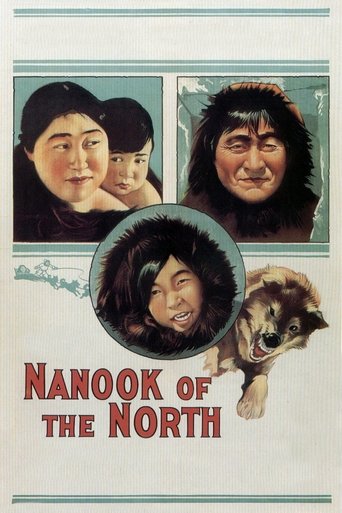
- Nanook of the North (1922)
- Travel literature of the 19th century
- Anthropological studies of Pacific cultures
- Paintings of Paul Gauguin
- Colonial expedition photography
- Ethnographic writings about Samoa
This film influenced
- Man of Aran (1934)
- Tabu (1931)
- The Silent World (1956)
- Nanook Revisited (1990)
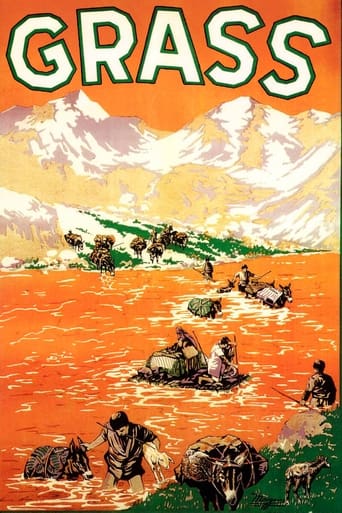
- Grass: A Nation's Battle for Life (1925)
- The Inheritors (1970)
- The Ax Fight (1975)
- The Last Wave (1977)
Film restoration
The preservation status of 'Moana' is precarious but not hopeless. The original camera negative, shot on nitrate stock, has been lost, likely due to the inherent instability of nitrate film. However, several 35mm nitrate prints survived in various archives, including the Museum of Modern Art and the British Film Institute. A major restoration was undertaken in the 1970s using the best available elements, though quality varies due to the source materials. More recently, The Criterion Collection released a digitally restored version in 2014, sourced from the best surviving 35mm elements. The restoration work has been complicated by nitrate decomposition and the wear on surviving prints. Some sequences show significant deterioration, while others remain remarkably clear. The film is considered at-risk but not lost, with ongoing preservation efforts by major film archives. The restoration has made the film accessible to modern audiences while preserving this important work of cinema history.
Where to watch
- The Criterion Collection Blu-ray/DVD release includes the restored version of 'Moana' with supplementary materials
- Streaming on The Criterion Channel (subscription required)
- Available for viewing at major film archives including the Museum of Modern Art (New York) and the British Film Institute (London)
- Occasionally screened at film festivals and cinematheques specializing in classic or documentary cinema
- Digital copies may be available through university libraries and academic film collections
- Public domain versions may be found on some internet archive sites, though quality varies significantly