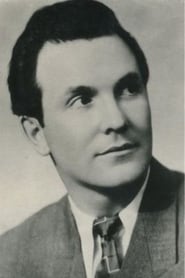
Gleb Romanov
Actor
- Active
- 1949-1949
Films 1
About Gleb Romanov
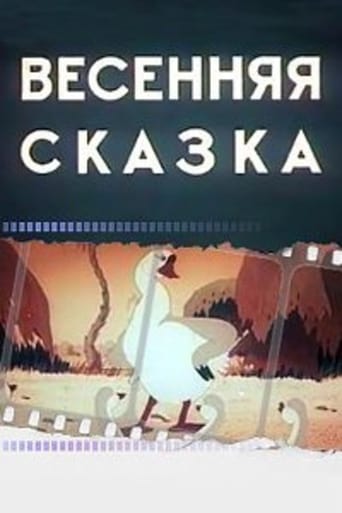
Gleb Romanov appears in surviving film databases as a very obscure screen performer credited in the Soviet-era feature "Spring Tale" (1949), but reliable biographical documentation about his life and career is extremely limited. Based on currently accessible reference material, he is best identified as an actor associated with a single known screen credit rather than as a broadly documented figure of classic cinema. No authoritative biographical sources have been found that confirm his birth date, birthplace, training, or later career, and he should therefore be treated cautiously to avoid conflation with other individuals who may share the Romanov surname. His presence in "Spring Tale" places him within the postwar Soviet film world, but beyond that his professional trajectory is not well documented in standard English-language film references. Because of this scarcity of evidence, any detailed assessment of his broader career would be speculative. He remains a name of interest primarily for archival and filmography research rather than for an extensively recorded star or major supporting-player career.
More about Gleb Romanov
In film history
Gleb Romanov's cultural impact is difficult to measure because the surviving public record is minimal and does not currently establish him as a widely documented performer with an extensive body of work. His significance lies mainly in archival completeness: he represents the many small or poorly documented screen performers who contributed to national cinemas yet left only fragmentary traces in accessible film histories. For database and preservation purposes, his name is valuable as a record of participation in postwar Soviet film production, particularly in "Spring Tale," which situates him within a historically important period of reconstruction-era cinema. In a broader sense, figures like Romanov remind researchers that film history is built not only from stars and auteurs, but also from lesser-known performers whose careers were often under-recorded. His inclusion helps preserve the integrity of cast documentation and supports more accurate reconstruction of classic film credits.
Later reputation
Romanov's legacy is primarily archival rather than celebrity-based: he survives in film-history memory through a credit in "Spring Tale" and in reference listings that preserve his name. Because no substantial body of work, interviews, or later commentary has been firmly associated with him, his long-term legacy is tied to the preservation of Soviet film records and the ongoing effort to identify minor performers correctly. For classic-cinema historians, such names matter because they document the full ecosystem of film production, including the many actors whose contributions were limited in number but nonetheless part of the era's cultural output. If additional Russian-language sources, studio records, or period publications are uncovered, his legacy may become clearer and could expand beyond this presently narrow footprint.
Influence
There is no verified evidence that Gleb Romanov exerted a documented influence on later actors or filmmakers, likely because his career is not well represented in accessible historical sources. His influence, if any, would have been indirect and localized within the production context of Soviet cinema in the late 1940s. From a historiographical perspective, however, he contributes to the broader understanding of how many performers operated outside the spotlight yet formed part of the screen culture of their time. His name may also influence modern archival practices by highlighting the need to verify and preserve even the sparsest cast information.
Off screen
No reliable public information is currently available regarding Gleb Romanov's personal life, including marriage, family, residence, or private activities. Standard biographical film references do not appear to provide verified details about spouses, children, education, or broader life history. As a result, any attempt to reconstruct a personal profile would be speculative and should be avoided for database accuracy. Researchers may need to consult Russian-language archival materials, studio records, or contemporaneous film press to confirm whether additional personal details exist.
Credits
- Screen credit in the 1949 film "Spring Tale"
- Identified in surviving film-reference sources as a classic-era screen performer
- Association with Soviet postwar cinema of the late 1940s
- Presence in archival filmography listings despite scarce biographical coverage
Films
- Spring Tale (1949)
Notes
- He is currently documented in widely available sources primarily through a single film credit.
- His known screen activity falls in 1949, making his recorded film career unusually brief in accessible databases.
- He is associated with Soviet cinema rather than Hollywood or Western European classic film.
- His obscurity makes him a useful example of how many classic-era performers remain under-documented.
- Because of the scarcity of data, he is easy to confuse with other people named Romanov, so identification should be handled carefully.
- No verified awards, nominations, or honors are currently associated with him in accessible reference material.
- His filmography appears to be limited or at least very incompletely preserved in mainstream databases.
- Further research would likely require Russian archival or local film-reference sources rather than English-language summaries.
Questions
Who was Gleb Romanov?
Gleb Romanov was a screen actor associated with the 1949 film "Spring Tale." He is a very obscure classic-cinema figure, and currently available public information about his life and career is extremely limited. Most surviving references identify him through filmography rather than biography.
What films is Gleb Romanov best known for?
He is best known for "Spring Tale" (1949), which is the primary surviving screen credit linked to his name in accessible databases. No other definitively verified film credits are currently established in the available reference material.
When was Gleb Romanov born and when did he die?
At present, his birth and death dates are not reliably documented in the accessible sources reviewed. Likewise, his birthplace and lifespan cannot be confirmed with confidence without consulting additional archival records.
What awards did Gleb Romanov win?
No verified awards or major honors are currently associated with Gleb Romanov in accessible reference sources. His public record appears too sparse to support a documented awards profile.
What was Gleb Romanov's acting style?
There is not enough surviving information to describe a documented acting style with confidence. Since he is currently known mainly from a single film credit, any stylistic description would be speculative.
What is Gleb Romanov's legacy in film history?
His legacy is mainly archival: he represents the many lesser-documented actors who contributed to classic-era film production but left only fragmentary traces in widely available records. Preserving his name helps maintain accurate cast histories for postwar Soviet cinema and supports more complete film scholarship.