Johnny Björkman
Actor
- Active
- 1918-1918
Films 1
About Johnny Björkman
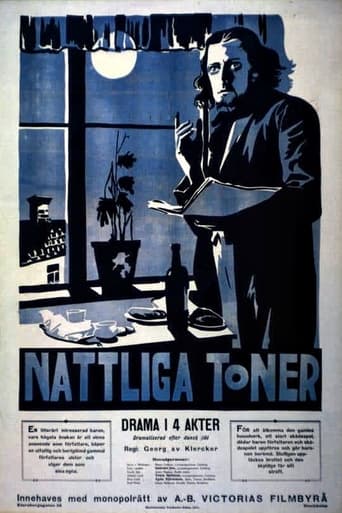
Johnny Björkman appears to have been a very early Swedish screen performer active in the silent era, with the surviving filmography information tying him specifically to the 1918 production Night Music. Unfortunately, reliable biographical records for this exact individual are scarce, and he does not appear to have left behind the kind of extensive paper trail that more prominent Scandinavian silent-era actors did. Based on the available filmographic evidence, he was part of the small pool of performers working in the Swedish film industry during the late 1910s, a period when Swedish cinema was gaining international artistic prestige through its emphasis on naturalistic acting, literary adaptation, and atmospheric cinematography. Because no authoritative biographical sources clearly establish his full life story, many personal details such as birth date, birthplace, education, and family background remain undocumented in widely accessible reference works. His importance today lies primarily in his presence in early Swedish cinema history rather than in a large or well-documented body of surviving screen work. As with many minor silent-era players, his contribution is best understood as part of the collaborative fabric of early film production, where even brief or single-credit appearances helped shape the evolving language of the medium.
More about Johnny Björkman
On screen
No detailed contemporary critical description of Johnny Björkman's acting style appears to survive in readily accessible sources. Given the era and the Swedish silent-cinema context, his performance style would likely have depended on restrained expressive gesture, clear facial emotion, and stage-influenced but naturalistic screen presence suited to intertitles and visual storytelling. Because no reviews or performance analyses are currently available for this exact actor, any more specific characterization would be speculative.
In film history
Johnny Björkman's cultural impact is tied less to celebrity than to historical presence: he is part of the generation of performers who helped build Swedish silent cinema during one of its most influential decades. Even when individual credits are sparse, actors like Björkman contributed to the collaborative ecosystem that allowed Swedish films to develop a reputation for visual refinement and emotional seriousness. His name survives as a trace of the broader creative labor that supported early Scandinavian film production, especially in an era when many performers were not yet publicly documented with modern biographical completeness. In film-historical terms, such figures are important because they remind us that national cinema was shaped not only by major stars and directors but also by numerous lesser-known participants whose work is now partially obscured by time.
Later reputation
Johnny Björkman's lasting legacy is primarily archival and historical rather than star-based. His surviving association with Night Music (1918) places him within the silent-era record of Swedish cinema, a field that later became famous for internationally admired filmmakers and performers. For historians and database researchers, his name is valuable as evidence of the many working actors whose contributions remain fragmentary, underscoring both the richness and the incompleteness of early film documentation. His legacy therefore resides in the preservation of early cinema history itself: every identified credit helps reconstruct the industrial and artistic networks of the period.
Influence
There is no documented evidence that Johnny Björkman directly mentored other performers or exerted a recognized stylistic influence on later actors or directors. His influence is best understood indirectly, through participation in the early Swedish screen tradition that helped establish conventions of silent performance and cinematic realism. In that broader sense, he belongs to the generation whose collective work informed later Scandinavian film acting, even if his individual contribution cannot presently be isolated in detail.
Off screen
No reliable public biographical record has been located that details Johnny Björkman's personal life, including marriages, children, or family background. He appears to be one of many early film performers whose off-screen life was not preserved in standard reference sources, trade publications, or widely indexed archival materials. Until archival research in Swedish civil records, studio papers, or period newspapers identifies further evidence, his personal history must be regarded as unknown.
Credits
- Appeared in the silent film Night Music (1918), the only widely documented screen credit associated with him
- Worked during the formative period of Swedish silent cinema, when the industry was gaining international recognition
- Represents the class of lesser-documented character performers whose work supported the artistic output of Scandinavian film production in the 1910s
Films
- Night Music (1918)
Notes
- The only widely documented film credit tied to Johnny Björkman is Night Music (1918).
- He appears to be associated with Swedish silent cinema, one of the most artistically respected national cinemas of the 1910s.
- Like many early film performers, he may have had a larger career in theater or stage performance that is not preserved in mainstream film references.
- His biographical record is extremely sparse, which makes him a typical example of a historically important but under-documented silent-era screen figure.
- The lack of surviving detail about his life highlights how many early actors were not comprehensively recorded in later reference works.
- Researchers seeking more information would likely need to consult Swedish archival sources, period newspapers, or production records rather than modern celebrity databases.
Questions
Who was Johnny Björkman?
Johnny Björkman was a Swedish actor associated with the silent era of cinema. The surviving record most clearly connects him to the 1918 film Night Music, but detailed biographical information about his life has not been widely preserved.
What films is Johnny Björkman best known for?
He is best known for Night Music (1918), which is the principal film credit currently tied to his name in accessible film references. No broader filmography is securely documented in the sources available here.
When was Johnny Björkman born and when did he die?
At present, his birth and death dates are not reliably documented in widely accessible reference sources. That means both his exact lifespan and places of birth and death remain unverified.
What awards did Johnny Björkman win?
No awards or formal honors are currently documented for Johnny Björkman in the available historical record. This is not unusual for lesser-documented silent-era performers, whose careers were often not preserved in the same detail as major stars.
What was Johnny Björkman's acting style?
No contemporary critical description of his individual acting style is readily available. As a silent-era Swedish screen actor, he would likely have worked in a restrained, expressive mode suited to silent storytelling and the naturalistic tendencies of Scandinavian cinema at the time.
What is Johnny Björkman's legacy in film history?
His legacy lies in his place within early Swedish silent cinema, even though his personal history is only fragmentarily documented. He represents the many working actors whose contributions helped shape the film culture of the period, but whose lives were not preserved in detail.