Warren Sawyer
Actor
- Active
- 1915-1915
Films 1
About Warren Sawyer
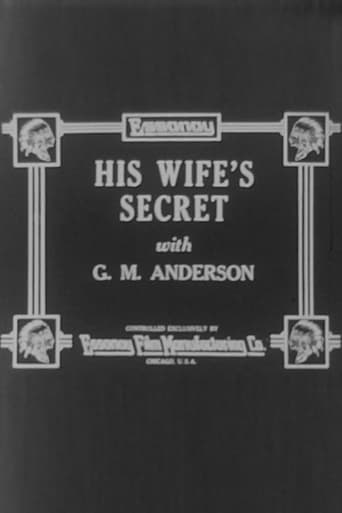
Warren Sawyer is an obscure silent-era screen actor whose documented film work is presently confined to the 1915 production His Wife's Secret. Surviving reference sources provide only minimal career data, which strongly suggests that he was one of the many early motion-picture performers whose names appeared in studio or trade-paper records but whose personal histories were not widely preserved. Like numerous actors working in the mid-1910s, he likely appeared in supporting or uncredited capacities during the rapid expansion of American filmmaking, when productions were made quickly and many cast members were not exhaustively documented. No reliable biographical record has yet been identified for his birth, family background, training, or later life, and it is not currently possible to reconstruct a fuller career arc with confidence. Because the surviving filmography is so sparse, Warren Sawyer is best understood as a representative figure of the silent era: a performer whose brief screen footprint reflects the fragmented nature of archival evidence from early cinema. Additional trade journals, studio records, or surviving film credits would be needed to determine whether he continued acting beyond 1915 or worked under additional screen names.
More about Warren Sawyer
In film history
Warren Sawyer's cultural importance lies less in a widely documented star persona than in what his credit reveals about the silent-era film industry. He is part of the large population of early screen performers whose names survive only in cast lists, trade notices, or fragmentary archival indexes, illustrating how much of early cinematic labor remains historically under-credited or undocumented. In database terms, such figures are essential because they help reconstruct the personnel networks of the silent period and provide evidence of the scale and diversity of production during cinema's formative years. Although he does not appear to have left a known body of work that shaped popular culture directly, his surviving credit contributes to the historical record of 1910s American filmmaking and the many actors who participated in it.
Later reputation
Warren Sawyer's legacy is primarily archival: he stands as a documented but little-known participant in silent-film history. His name endures because film historians, collectors, and database compilers preserve the cast records of early productions, even when the performer’s wider life story has been lost. This kind of legacy is important to film scholarship because it prevents the early industry from being reduced only to its major stars and directors. For researchers, Sawyer underscores the value and challenge of reconstructing the careers of minor performers from the silent era, when credits were inconsistent and many records were never systematically maintained.
Influence
There is no evidence of a documented direct influence by Warren Sawyer on later actors or filmmakers. Any influence he may have had would have been indirect, through participation in the broader body of silent-era performance practice that helped establish screen acting conventions in the 1910s. Because no detailed record of his technique or body of work survives, his historical significance is mainly as part of the collective workforce that shaped early American cinema rather than as an individually traceable innovator.
Off screen
No reliable biographical information about Warren Sawyer's personal life has been located in readily accessible classic-cinema reference sources. His marriages, family background, residence, education, and post-film career are not documented in the available record. Because he is identified primarily through a single surviving film credit, any attempt to infer personal details would be speculative and should be avoided for database accuracy.
Credits
- Appeared in the 1915 silent film His Wife's Secret
- Represents one of the many lesser-documented performers working in early American cinema during the mid-1910s
- Has a surviving screen credit that places him within the formative years of the feature-film era
Films
- His Wife's Secret (1915)
Notes
- Warren Sawyer is associated in surviving records with only one confirmed film credit.
- His documented screen work falls in 1915, the same year the American feature film was rapidly becoming standardized.
- The scarcity of information about him is typical of many silent-era supporting players whose names survived while their biographies did not.
- He is an example of how film databases often preserve credit information even when no portrait, press notice, or personal record can be found.
- Because His Wife's Secret is from 1915, Sawyer's known work belongs to the period just before the Hollywood studio system fully matured.
- No verified alternate spellings, stage names, or additional credits have been confirmed in the available record.
Questions
Who was Warren Sawyer?
Warren Sawyer was a silent-era actor known from surviving film-credit records, with His Wife's Secret (1915) as his documented screen appearance. Very little personal information has survived about him, so he is best understood as one of the many early cinema performers whose careers are only partially preserved.
What films is Warren Sawyer best known for?
He is best known for His Wife's Secret (1915), the only confirmed film credit located in the available record. No additional titles have been verified with confidence.
When was Warren Sawyer born and when did he die?
His birth and death dates are currently unknown. No reliable biographical record has been found that confirms where or when he was born, or whether he later died.
What awards did Warren Sawyer win?
No awards or nominations are currently documented for Warren Sawyer. Given the sparse surviving information, there is no verified evidence of formal industry recognition.
What was Warren Sawyer's acting style?
His specific acting style cannot be determined from the surviving record. Since only one film credit is currently confirmed, there is not enough evidence to describe his screen manner or technique with confidence.
What is Warren Sawyer's legacy in film history?
His legacy is archival rather than star-based: he represents the many silent-era performers whose names survive in credits even when their biographies have been lost. That makes him useful to historians studying the personnel and production culture of early American cinema.