1915 · Approximately 20 minutes

Also available on: YouTube
His Wife's Secret

His Wife's Secret

1915 Approximately 20 minutes United States
Moral reversalDomestic insecurityMarital failureCrime and conscienceRespectability versus character

Plot

A burglar breaks into a darkened house intending to steal valuables, only to discover that the home is occupied by a young wife left alone and frightened. Desperate for protection, she telephones her husband at his club and begs him to come home at once. When the husband eventually arrives, he is thoroughly drunk and incapable of helping his wife, forcing the burglar to reconsider his role in the intrusion. Instead of simply completing the robbery, the intruder becomes the unlikely moral center of the story and intervenes to prevent a worse outcome. The plot turns on the contrast between criminal intent and domestic failure, with the burglar ultimately appearing more responsible and decent-hearted than the husband himself.

About the Production

Release Date 1915
Production The Essanay Film Manufacturing Company
Filmed In United States

His Wife's Secret was produced during the height of the American silent short-film era, when Essanay was turning out compact dramas and crime melodramas for the nationwide exchange system. The film is associated with Gilbert M. Anderson, who was one of Essanay's most important creative figures and a major star of the period, though surviving documentation on specific shoot dates, sets, or interior locations is limited. Like many films of 1915, it was likely staged primarily on studio sets with minimal location work, emphasizing clear visual storytelling, domestic interiors, and concise dramatic reversals. No reliable production budget, box-office report, or detailed publicity campaign survives in the standard film reference record.

Historical Background

His Wife's Secret was released in 1915, a pivotal year in American cinema when the film industry was rapidly expanding in scale, narrative sophistication, and national distribution. The silent short still remained a core part of exhibition, but feature-length storytelling was becoming increasingly dominant, and studios like Essanay were balancing short subjects with the changing market. The film belongs to a period when crime melodramas often explored moral ambiguity in concise, visually driven narratives, using domestic spaces to stage social anxieties about marriage, alcohol, masculinity, and household security. It also reflects the transitional phase of early film culture before the full consolidation of Hollywood dominance, when Chicago, New York, and other production centers still played major roles in American filmmaking. In that sense, the film is historically significant less for large-scale innovation than for capturing the style, moral sensibility, and production methods of mid-1910s silent cinema.

Why This Film Matters

The film is culturally interesting as an example of early screen morality being expressed through reversal rather than simple punishment. By making the burglar the most responsible adult in the room, the story challenges the viewer's assumptions about law, respectability, and gendered domestic authority. This kind of ironic moral framework became a recurring device in later crime and drama films, where social standing does not guarantee ethical behavior. The film also contributes to the legacy of Gilbert M. Anderson as a versatile early filmmaker whose work extended beyond Westerns into social melodrama and crime stories. While not widely known today, it is a representative artifact of silent-era narrative economy and the era's fascination with virtue under pressure.

Making Of

Very little detailed behind-the-scenes documentation survives for His Wife's Secret, which is not unusual for a 1915 short subject. What can be established is that it was made at Essanay, a studio known for efficient production practices and for building short narrative films around strong situational hooks and quickly legible character types. Gilbert M. Anderson, who had already become a marquee name in early cinema, likely had significant creative influence over the piece, either as director or as a key performer shaping the action and tone. The film's narrative structure suggests a carefully staged domestic interior drama designed to rely on expressive acting, simple props such as the telephone, and the immediate visual contrast between respectable home life and the burglar's criminal intrusion. No reliable records identify elaborate stunts, on-location work, or unusually difficult production circumstances.

Visual Style

The cinematography would have been typical of mid-1910s silent studio filmmaking: static or lightly adjusted camera placement, clear frontal staging, and carefully arranged interior action so the audience could follow the plot without intertitles carrying excessive explanatory weight. The story's reliance on a darkened house, a phone call, and the arrival of a drunken husband suggests strong use of contrast, silhouette, and blocked entrances to create suspense and emotional emphasis. As with many Essanay productions, the visual style likely favored functional clarity over elaborate camera movement, with performance and composition doing most of the narrative work. The film's suspense would have depended on readable body language and timing rather than on later horror-thriller techniques.

Innovations

The film does not appear to be associated with a major technical innovation, but it does demonstrate the mature development of silent short-form narrative construction in the 1910s. Its central dramatic device depends on rapid cross-cutting in concept if not necessarily in elaborate montage: the wife at home, the husband away at the club, and the burglar inside the house. The use of a telephone as a dramatic device is notable for the era, since it allowed filmmakers to connect separate spaces and intensify urgency without dialogue. The film's main achievement lies in its efficient visual storytelling and its ability to sustain tension and irony within a brief runtime.

Music

As a silent film, His Wife's Secret did not have an original synchronized recorded soundtrack. It would originally have been shown with live musical accompaniment, typically by a pianist, organist, or small ensemble depending on the venue. The specific cue sheet or house music arrangement, if one existed, is not known in the surviving record. Modern presentations of silent films of this type generally use newly prepared accompaniment or archival-style piano scoring.

Famous Quotes

No surviving quote is documented from this silent film.
No credited dialogue survives in the available record.

Memorable Scenes

  • The burglar entering the darkened house and realizing that the home is occupied by a frightened young wife.
  • The wife desperately telephoning her husband at the club and pleading with him to return home immediately.
  • The husband's arrival in a drunken state, undermining the expectation that he will protect the household.
  • The burglar deciding to intervene rather than exploit the situation further, turning the intruder into the film's moral rescuer.

Did You Know?

  • The film is a silent-era crime drama with a highly ironic moral reversal: the burglar behaves more honorably than the husband.
  • Gilbert M. Anderson is better known today as 'Broncho Billy' Anderson, one of the most famous figures in early American cinema.
  • The film was made by Essanay, a major Chicago-based studio that helped define the early Western, comedy, and melodrama market before the industry fully shifted to Hollywood.
  • The known plot summary suggests a strong example of the period's interest in domestic melodrama, where moral character is revealed through crisis rather than through conventional heroism.
  • Because it is a 1915 short, the film was likely exhibited on a bill with other shorts or as part of a mixed program rather than as a standalone feature.
  • The surviving catalog and reference information for this title is sparse, which is common for silent films of this length and era.
  • The film's premise reflects a popular silent-film storytelling device in which a criminal is humanized by a more extreme act of weakness or vice committed by another character.
  • Its existence adds to the body of work showing Anderson's range beyond the Western persona that made him famous.
  • The title points to secrecy within marriage, a frequent melodramatic motif of the 1910s, often used to explore trust, embarrassment, and social respectability.
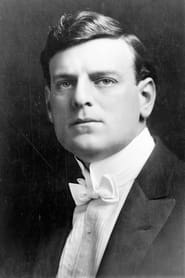
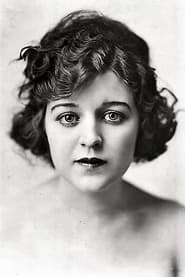
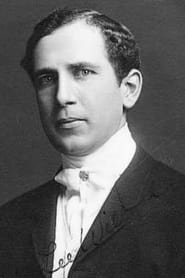
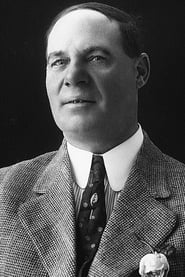
  • The exact cast ordering in surviving database records is limited, but the principal roles are attributed to Gilbert M. Anderson, Marguerite Clayton, and Lee Willard.

What Critics Said

Contemporary reviews are not readily preserved in standard modern reference sources, and no widely cited trade-paper appraisal has survived in accessible summaries. As a result, the film's original critical reception is effectively undocumented in the commonly available record. In modern scholarship, it is typically noted as a surviving or catalogued example of early Essanay output and as part of Gilbert M. Anderson's broader filmography rather than as a landmark title. Where discussed today, the film is usually appreciated for its succinct premise, moral irony, and insight into the storytelling conventions of the silent short drama. Its current critical reputation is therefore archival and historical rather than based on a strong tradition of written criticism.

What Audiences Thought

There are no reliable audience-survey records or detailed exhibition reports commonly cited for this title. Like many short films of the period, its audience reception would have been shaped by local theater programming, the reputation of the star, and the immediate effectiveness of the premise rather than by long-form box-office tracking. The film's dramatic hook and ironic reversal would likely have played well for general audiences accustomed to fast-moving silent narratives. Today, its audience appeal is mostly to silent-film enthusiasts, historians, and viewers interested in early crime melodramas or the work of Gilbert M. Anderson. Because it is obscure and likely difficult to see, modern audience response is limited by accessibility rather than by reputation alone.

Film Connections

Influenced By

  • Silent-era melodramas of domestic crisis
  • Early crime shorts built around moral irony
  • Stage melodrama traditions emphasizing the sanctity and vulnerability of the home

This Film Influenced

  • Later crime melodramas featuring sympathetic criminals
  • Domestic thrillers built around household intrusion and moral reversal

Film Restoration

The preservation status is uncertain in the readily available reference record. It is catalogued as a 1915 silent short, but no widely cited modern restoration or archival access note is consistently associated with it in standard public summaries. For database purposes, it should be treated as having an uncertain survival status unless a specific archive listing confirms extant elements. If a print survives, it is not prominently documented in commonly consulted summaries.

Themes & Topics

burglarwife alonetelephone calldrunken husbandmoral interventiondomestic melodrama