Darr Wittenmyer
Actor
- Active
- 1915-1915
Films 1
About Darr Wittenmyer
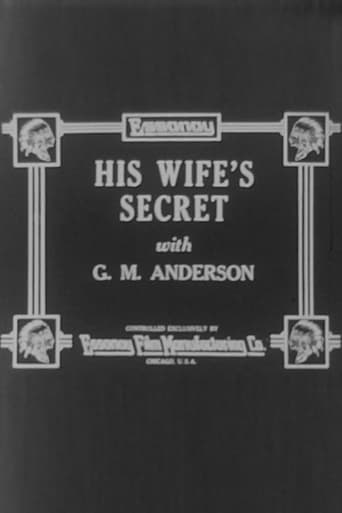
Darr Wittenmyer is a largely obscure silent-era film performer whose surviving screen record is extremely limited. He is credited as appearing in the 1915 film His Wife's Secret, which places him among the many early motion-picture actors whose careers were documented only sporadically in trade publications and surviving filmographies. Beyond that single known credit, reliable biographical information about his life, background, training, or later career is not readily available in standard film reference sources. Like many actors working in the earliest years of American cinema, he likely performed in a fast-moving production environment where screen roles were often unbilled or minimally documented, making modern reconstruction difficult. Because no dependable evidence has been located for additional films, awards, or personal details, his career must presently be understood as a brief and fragmentary presence in the silent era record. His name survives primarily through archival film listings rather than through a larger body of surviving performances. For database purposes, he should be treated as an early film actor with at least one confirmed 1915 screen appearance, but with most of his biography remaining undocumented.
More about Darr Wittenmyer
In film history
Darr Wittenmyer's cultural impact is primarily archival rather than popular: he is part of the vast early-cinema labor force whose names preserve the structure of silent-era production history. Even when performers like him are not widely remembered, their credited appearances help historians reconstruct casting patterns, studio output, and the scale of early film production in the mid-1910s. His presence in a 1915 release also underscores how many performers contributed to the silent-film era without leaving extensive personal records, making them important to film preservation and historical scholarship. In that sense, his value lies in documentary significance and as a representative figure of the anonymous or semi-anonymous actors who helped build early American cinema.
Later reputation
Darr Wittenmyer's legacy is limited but still meaningful within classic film historiography because his surviving credit confirms his participation in the silent era. For researchers and database curators, names like his are reminders that early cinema was created by many working performers whose careers were often brief, unpublicized, or lost to incomplete documentation. His surviving filmography entry contributes to the broader effort to map early film production accurately and to distinguish confirmed credits from assumptions or misidentifications. If further archival records surface, his legacy may expand from a single credit to a more complete portrait; at present, he remains an obscure but authentic part of silent film history.
Influence
No direct influence on later actors or directors can be reliably documented. However, as a participant in early silent-film production, he was part of the performance tradition that helped establish screen acting conventions before the standardized star system fully matured. His work is therefore of indirect historical interest as part of the collective foundation from which later film performance styles developed.
Off screen
No reliable biographical record has been located regarding Darr Wittenmyer's personal life. Details about marriages, family, residence, education, or later occupation are not documented in the standard sources typically used for classic cinema personnel. As a result, any assertion about his private life would be speculative and is best left unconfirmed until archival evidence emerges.
Credits
- Confirmed screen credit in the 1915 silent film His Wife's Secret
- Represents one of many early-1910s performers whose careers are preserved only in fragmentary film records
- Documented as active during the formative years of the American silent film industry
Films
- His Wife's Secret (1915)
Notes
- His currently confirmed screen credit is His Wife's Secret (1915).
- He is an example of a silent-era performer whose biographical details have largely been lost to history.
- Because his surviving record is so sparse, he may have worked in productions that are now lost or inadequately documented.
- His name appears in film history largely through archival filmographies rather than through contemporary publicity material that has survived.
- He belongs to the earliest generation of screen actors recorded during the rapid expansion of American cinema in the 1910s.
- No widely circulated photographs, interviews, or studio portraits have been reliably associated with him in standard references.
Questions
Who was Darr Wittenmyer?
Darr Wittenmyer was a silent-era film actor known from a very limited surviving record. The only confirmed credit currently associated with him is the 1915 film His Wife's Secret. Beyond that, standard references do not preserve much biographical information.
What films is Darr Wittenmyer best known for?
He is best known for His Wife's Secret (1915), his only confirmed screen credit in the available record. If he appeared in other productions, they have not been reliably documented in surviving standard sources.
When was Darr Wittenmyer born and when did he die?
At present, no reliable birth or death dates have been confirmed for Darr Wittenmyer. The historical record available to standard film databases does not currently provide documented biographical data for either event.
What awards did Darr Wittenmyer win?
No awards or formal honors are documented for Darr Wittenmyer. Given the era in which he worked and the scarcity of surviving biographical information, it is not unusual that no award record has been preserved.
What was Darr Wittenmyer's acting style?
His acting style cannot be reliably described because no confirmed surviving analysis of his performances is available. As a silent-era actor, he would have worked in the expressive visual performance tradition of the period, but there is not enough evidence to characterize his personal technique.
What is Darr Wittenmyer's legacy in film history?
His legacy is primarily archival: he is one of the many early film performers whose names survive even when their personal histories do not. His confirmed credit helps historians document the silent era more accurately and reflects the broad cast of working actors who supported early American cinema.