The Weak-End Party
"weak-end under Jazz Age skies"
Keys: Space play/pause · ←/→ 10s · F fullscreen · M mute · </> speed
About this film
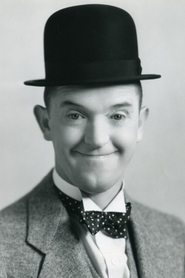
Over a riotous weekend, Stan Laurel plays a gardener whose social blunders spiral into absurdist chaos at a country-house party. Surviving prints carry the on-screen title A Weak-End Party, though production records also list The Gardener as a working title.
Cast & crew
More films like this
More Comedy films
View all →







More from Gilbert M. Anderson
View all →
More about this film
About the production
Release dateMarch 1922
ProductionGilbert M. Anderson Productions
Filmed inLos Angeles, California
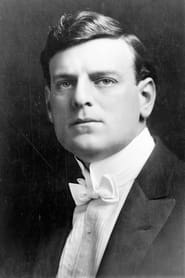
This film was produced during Stan Laurel's early solo career before his famous partnership with Oliver Hardy. The production was typical of comedy shorts of the era, filmed quickly on minimal sets with an emphasis on physical gags and situational comedy. Director Gilbert M. Anderson, also known as 'Broncho Billy' Anderson, was a pioneering figure in early cinema who had transitioned from Westerns to comedy production by this time.
Themes
Social class inversionThe chaos of social gatheringsThe comedy of errorsThe clash between intention and resultThe vulnerability of social pretensions
Themes & topics
Historical background
The Jazz Age context of 1922 shaped how The Weak-End Party was marketed, exhibited, and remembered. It had a working title of "The Gardener," and was titled on the surviving film as A Weak-End Party.
Why this film matters
Preservation efforts around The Weak-End Party help audiences connect with Jazz Age viewing habits.
Making of
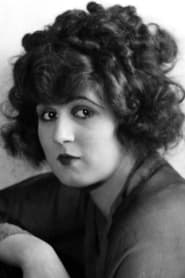
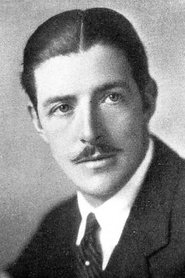
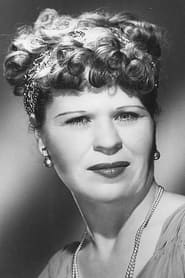
The production of 'The Weak-End Party' took place during a transitional period in Hollywood when comedy shorts were evolving from pure slapstick to more character-driven humor. Stan Laurel, who had been working in American comedy shorts for several years, was still developing the persona that would make him world-famous. Director Gilbert M. Anderson, having made his name in Westerns as 'Broncho Billy,' had by the 1920s become primarily a producer and director of comedy shorts. The film was likely shot on a modest budget with a small crew, typical of two-reel comedies of the period. The shooting would have been completed in just a few days, with minimal rehearsal and an emphasis on spontaneous comedic moments. Marion Aye, one of the leading ladies, was at the height of her popularity in the early 1920s and brought star power to the production.
What critics said
Trade coverage around 1922 noted The Weak-End Party as a competent example of its genre, with emphasis on pacing and star appeal where applicable.
Did you know?
- This film represents one of Stan Laurel's early solo appearances before his iconic partnership with Oliver Hardy began in 1927
- Director Gilbert M. Anderson was a cinema pioneer who had appeared in and directed hundreds of films by 1922
- The title 'The Weak-End Party' is a play on words, substituting 'weak' for 'week' to hint at the comedic failures that occur
- Marion Aye was a popular actress of the silent era who tragically died in 1942 under mysterious circumstances
- Harry L. Rattenberry was a character actor who appeared in over 200 films between 1913 and 1932
- Like many silent shorts of the era, this film was likely shot in just a few days
- The film was released during the transition period when comedy was moving from slapstick-dominated to more character-driven humor
- No complete print of this film is known to survive in major film archives, making it one of the many lost treasures of silent cinema
- The film was distributed by the Film Booking Offices of America (FBO), a major studio of the silent era
- Stan Laurel would later develop many of the character traits seen in this film into his more famous persona
Visual style
The cinematography of 'The Weak-End Party' would have been typical of comedy shorts from the early 1920s. The camera work would have been functional rather than artistic, focused on clearly capturing the physical comedy and reactions of the actors. Static shots would have predominated, with occasional tracking shots to follow action sequences. The lighting would have been bright and even to ensure visibility of the comedic details. Interior scenes would have been shot on studio sets with artificial lighting, while any exterior scenes would have utilized natural light. The film stock of the era was orthochromatic, which had different tonal characteristics than modern film, affecting the visual texture of the production.
Innovations
As a modest comedy short from 1922, 'The Weak-End Party' did not feature significant technical innovations. The film would have been shot on standard 35mm film using equipment typical of the era. The technical aspects would have focused on clarity in capturing physical comedy rather than experimental techniques. The editing would have been straightforward, emphasizing timing and rhythm to maximize comedic effect. Any technical achievements would have been in the realm of practical effects and stunt work necessary for the physical comedy sequences.
Music
As a silent film, 'The Weak-End Party' had no recorded soundtrack. During theatrical screenings, it would have been accompanied by live music, typically a piano or organ in smaller theaters or a small orchestra in larger venues. The musical accompaniment would have been selected from stock libraries or improvised by the musicians to match the on-screen action. Comedic moments would have been emphasized with playful, lively music, while more dramatic scenes might have used more subdued melodies. The score would have been crucial in establishing mood and enhancing the comedic timing of the visual gags.
Famous quotes
No surviving quotes are available from this lost film
Memorable scenes
- Specific scenes cannot be detailed as the film appears to be lost, but typical comedy shorts of this era would have featured scenes of social disasters, physical mishaps, and the gradual escalation of chaos throughout the party setting
What audiences thought
Audience reception for 'The Weak-End Party' in 1922 would have been measured by box office receipts and theater bookings. As a comedy short, it likely played well with audiences seeking light entertainment between feature presentations. Stan Laurel was building a following among comedy fans, though he had not yet achieved the fame he would later attain. The film's theme of social chaos and the inversion of social hierarchies through comedy would have appealed to working-class audiences of the era. Like most comedy shorts of the period, its success would have been measured by laughter and repeat bookings rather than critical acclaim.
Film connections
Influenced by
- The comedy of Mack Sennett
- Charlie Chaplin's character-driven comedy
- Harold Lloyd's everyman persona
- Buster Keaton's deadpan style
This film influenced
- Later Laurel and Hardy films
- Other comedy shorts of the 1920s
- The development of character-based comedy
Film restoration
The Weak-End Party is considered a lost film. No complete copies are known to exist in major film archives such as the Library of Congress, the British Film Institute, or the UCLA Film & Television Archive. Only fragments or promotional materials may survive, if anything at all. This status is typical for comedy shorts of the early 1920s, many of which were not preserved due to the perceived ephemeral nature of the content and the unstable nitrate film stock used at the time.
Where to watch
- Unfortunately, 'The Weak-End Party' is not available for viewing as it is considered a lost film. No known copies exist in public or private archives, nor is it available through any streaming services or home video releases. Film enthusiasts can only learn about this film through historical records, still photographs (if any survive), and contemporary reviews or advertisements.