The Train Wreckers
"Caught between ruined and girl"
Keys: Space play/pause · ←/→ 10s · F fullscreen · M mute · </> speed
About this film
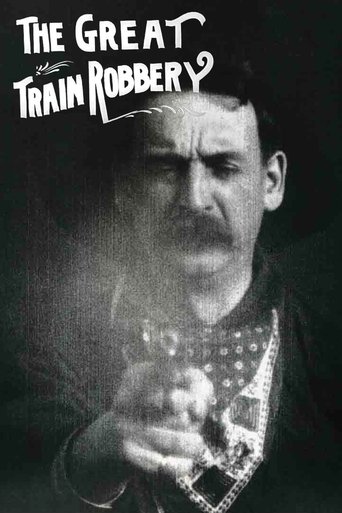
A romance between a railroad engineer and the switchman's daughter is nearly ruined by train wreckers who knock out the girl and leave her on the tracks to be run over. The engineer perches on the engine's cow catcher and rescues the girl.
Cast & crew
More films like this
More Romance films
View all →




More from Edwin S. Porter
View all →

More about this film
About the production
Release dateSeptember 1905
Box officeNot documented - box office tracking was not standard practice in 1905
ProductionEdison Manufacturing Company
Filmed inNew York, New York, Edison Studios, Bronx, New York
Filmed on location at actual railroad sites to achieve maximum realism. The production utilized real trains and tracks, which was both dangerous and innovative for the time. The rescue sequence required careful coordination between the actor on the cow catcher and the train operator, demonstrating the early mastery of complex action choreography in cinema.
Themes
Heroism and sacrificeLove versus dangerTechnological progressClass dynamics in industrial AmericaThe railroad as symbol of American expansion
Themes & topics
Historical background
The Train Wreckers (1905) emerged during the earliest years of projected motion pictures, when exhibition habits and national film industries were still taking shape.
Why this film matters
The Train Wreckers remains accessible through digital archives, giving modern viewers a direct link to 1905 screen culture.
Making of
The production of 'The Train Wreckers' exemplified Edison Studios' commitment to realistic storytelling under Edwin S. Porter's direction. The crew worked with actual railroad companies to gain access to working trains and tracks, creating unprecedented authenticity for audiences of 1905. The dangerous cow catcher sequence required extensive planning and coordination between the film crew and railroad operators. Gilbert M. Anderson performed his own stunts, a common practice in early cinema before the development of professional stunt performers. The film was shot in natural light using portable cameras, a technological advancement that allowed for greater mobility and location shooting. The production team had to work around the actual train schedules, often filming in short windows between regular rail operations. The train wreckers' sabotage scenes involved real railway equipment and carefully controlled explosions, demonstrating the early use of practical effects in American cinema.
What critics said
Retrospective notes on The Train Wreckers emphasize its value as a silent-era document rather than blockbuster reception.
Did you know?
- This film was part of Edwin S. Porter's series of railroad-themed pictures, capitalizing on public fascination with trains and railway drama
- Gilbert M. Anderson, who plays the engineer, would later become famous as 'Broncho Billy' Anderson, the first cowboy star of Western films
- The film was shot on 35mm film at approximately 16 frames per second, the standard speed for silent films of this era
- Edison Studios often used real locations and practical effects rather than studio sets, making this film unusually authentic for its time
- The cow catcher rescue sequence was considered highly dangerous and required the actor to perform his own stunts
- This film was distributed through the Edison Motion Picture Patent Company, which controlled much of early American cinema
- The original film tinting included amber tones for daytime scenes and blue tints for night sequences
- The film was advertised as 'A Thrilling Railroad Drama' in Edison's trade catalogs
- Only one print was typically made for distribution, making survival of such early films extremely rare
- The film's success led Porter to create more railroad-themed pictures throughout 1905-1906
Visual style
The cinematography, typical of Edison Studios productions in 1905, utilized stationary camera positions with occasional panning movements to follow the action. The film was shot in black and white with selective hand-tinting for dramatic effect, particularly in scenes involving fire or explosions. The railroad sequences demonstrate careful composition, using the natural lines of the tracks to create visual depth and movement. The camera work during the rescue sequence required precise timing to capture the dramatic moment while maintaining visual clarity. Natural lighting was employed for outdoor scenes, creating a realistic aesthetic that distinguished Edison productions from more theatrical European films of the era.
Innovations
The film showcased several technical innovations for its time, including the complex coordination of live action with moving trains. The cow catcher sequence demonstrated early mastery of stunt photography and action choreography. Location shooting with portable cameras represented a significant advancement over studio-bound productions. The film's use of actual railroad equipment and settings created an unprecedented level of realism for audiences. The editing techniques, while basic by modern standards, showed improvement in continuity and narrative flow compared to earlier films. The production's ability to synchronize multiple elements—actors, trains, effects—marked an important step in the development of complex cinematic storytelling.
Music
As a silent film, 'The Train Wreckers' would have been accompanied by live musical performance during exhibition. Typical accompaniment included piano or organ music, with popular songs of the era adapted to fit the on-screen action. Railroad-themed songs such as 'The Wabash Cannonball' or 'I've Been Working on the Railroad' were commonly used for films of this type. The musical score would have intensified during action sequences, particularly the rescue scene, and softened during romantic moments. Some larger nickelodeons employed small orchestras for more elaborate presentations of Edison productions.
Famous quotes
As a silent film, dialogue was conveyed through intertitles and acting rather than spoken dialogue
Memorable scenes
- The dramatic cow catcher rescue sequence where the engineer saves his beloved by positioning himself on the front of the moving train, creating one of early cinema's most action moments
What audiences thought
The film was well-received by nickelodeon audiences of 1905, who were particularly drawn to its thrilling action sequences and romantic elements. Railroad-themed films consistently proved popular with working-class audiences, many of whom had direct experience with railway life. The cow catcher rescue scene became a talking point among early cinema enthusiasts and was often mentioned in advertisements for the film. Audiences appreciated the authenticity of the railroad settings, which provided a sense of realism that was still novel in cinema of this period. The film's success in various markets demonstrated the growing appetite for narrative films with emotional stakes and heroic action, helping to establish patterns of audience preference that would shape American cinema for years to come.
Film connections
Influenced by
- The Great Train Robbery (1903)
- Life of an American Fireman (1903)
- European narrative films of the early 1900s
- Stage melodramas of the 19th century
- Actual railroad accidents and news reports of the era
This film influenced
- Later railroad-themed films by Edison Studios
- Broncho Billy Western series (featuring Gilbert M. Anderson)
- Action rescue films of the 1910s
- D.W. Griffith's railroad sequences in 'The Birth of a Nation' (1915)
Film restoration
The preservation status of 'The Train Wreckers' is uncertain, as many Edison Studios films from 1905 have been lost due to the unstable nature of early nitrate film stock. No complete verified copy is known to exist in major film archives. Some sources suggest fragments may exist in private collections or unidentified reels in European archives. The Library of Congress and the Museum of Modern Art have extensive Edison collections but have not confirmed a complete print of this specific title. Film historians continue to search for missing Edison films, hoping that 'The Train Wreckers' may yet be discovered in unidentified collections.
Where to watch
- Currently unavailable for viewing due to preservation status
- Potential availability through film archives if rediscovered
- May exist in unidentified Edison film compilations
- The Library of Congress Motion Picture Collection should be monitored for any future discoveries
- Early cinema enthusiasts should contact the Edison National Historic Site for potential research access