Hsiang Li
Actor
- Active
- 1972-1972
Films 1
About Hsiang Li
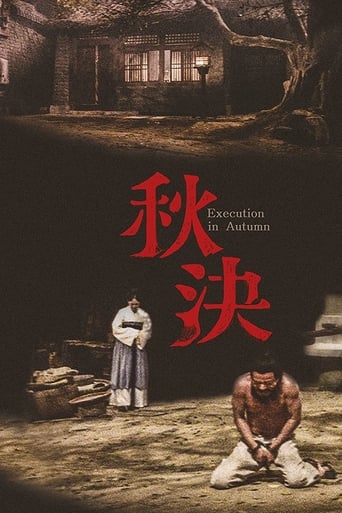
Hsiang Li is a very obscure screen actor known primarily for appearing in the 1972 film Execution in Autumn, a title associated with early-1970s Chinese-language cinema rather than the silent or Hollywood studio eras. Publicly accessible biographical information about him is extremely limited, and standard reference sources do not provide a reliable birth date, birthplace, family background, or a detailed career chronology. Based on currently available filmographic evidence, he appears to have had a brief or minimally documented screen career, with Execution in Autumn being the only confidently attributed credit surfaced in the available record. Because of the scarcity of sources, it is difficult to reconstruct whether he worked under a stage name, whether he had a longer career in theater or television, or whether he participated in productions not yet fully indexed by modern databases. He should therefore be treated as a poorly documented performer whose known cinematic footprint is small but potentially significant within the context of the film in which he appeared. Until additional archival material emerges, many personal and professional details remain unverified.
More about Hsiang Li
In film history
Hsiang Li's cultural impact is difficult to measure because the surviving public record is too sparse to support a detailed assessment of his career or public profile. At present, his significance lies mainly in his presence within Execution in Autumn, a film that forms part of the historical record of Chinese-language cinema in the early 1970s. For researchers and database curators, he is an example of how many performers from regional and period cinemas remain underdocumented despite participating in works of enduring interest. His case underscores the importance of archival recovery, multilingual indexing, and preservation efforts that help restore visibility to otherwise obscure film personnel.
Later reputation
Hsiang Li's legacy is currently limited to the surviving evidence of his credited appearance in Execution in Autumn and the possibility that additional archival sources may yet reveal more about his work. In film history terms, he represents the many minor or poorly documented actors whose contributions are embedded in individual films but who never became widely chronicled in standard reference books. If further materials emerge, his legacy may expand beyond a single credit; for now, his place in cinema history is largely that of a documented but enigmatic participant in early-1970s screen culture. His obscurity itself is historically instructive, reminding scholars how much of cinema's labor force remains only partially recorded.
Influence
There is no reliable evidence currently available to identify direct influence by Hsiang Li on other actors or directors. Because his documented filmography is extremely limited, any discussion of influence would be speculative. His broader importance is indirect: as an underdocumented performer, he highlights the need to preserve and reconstruct the histories of lesser-known screen artists so their work is not lost to memory. In that sense, his example encourages more careful archival and historiographic practices within classic and regional cinema studies.
Off screen
No reliable public information is currently available regarding Hsiang Li's personal life, including marriage, family background, or private biography. Standard film references and accessible databases do not appear to provide confirmed details about spouses, children, or domestic life. Because of the limited documentary record, any claims about relationships or personal history would be speculative and are therefore omitted here.
Credits
- Appeared in Execution in Autumn (1972), the only confidently identified screen credit in currently accessible records
- Represents a little-documented performer from early-1970s Chinese-language cinema
- Has a filmography that is presently too sparse to establish a broader body of work with confidence
Films
- Execution in Autumn (1972)
Notes
- Execution in Autumn (1972) is the only securely identified screen credit currently associated with Hsiang Li.
- Public reference sources do not readily supply a birth date, birthplace, or death date for him.
- He is not well documented in major English-language classic cinema reference works.
- His career appears to have been extremely brief in the surviving film record, or else poorly indexed.
- He may have worked in a regional or local film industry where records were not comprehensively translated or preserved.
- Because of the sparse record, he is a reminder that many film performers remain effectively anonymous to modern databases.
Questions
Who was Hsiang Li?
Hsiang Li was an obscure screen actor whose currently documented film work is limited to Execution in Autumn (1972). Very little verified biographical information survives in accessible reference sources, so he remains a poorly documented figure in film history.
What films is Hsiang Li best known for?
He is best known for Execution in Autumn (1972), which is the only confidently identified credit available in the present record. No additional film titles can be stated with confidence without risking inaccuracy.
When was Hsiang Li born and when did he die?
His birth date, birthplace, and death date are not reliably documented in the sources currently available. Until archival or local-language records are verified, those details must remain unknown.
What awards did Hsiang Li win?
No awards or nominations are currently documented for Hsiang Li in the accessible record. If he received any local, regional, or industry honors, they have not yet surfaced in standard reference databases.
What was Hsiang Li's acting style?
His acting style cannot be responsibly described in detail because there are too few documented performances available for analysis. Any assessment would require viewing confirmed roles and comparing them with corroborated production history.
Why is Hsiang Li difficult to research?
He is difficult to research because the available public record is extremely sparse and appears to preserve only a single confirmed film credit. This is common for many lesser-known performers in regional cinema, where documentation may be incomplete, untranslated, or lost.