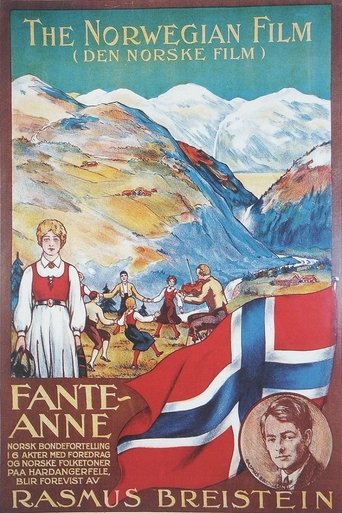
Johanne Bruhn
Actor
- Active
- 1920-1920
Films 1
About Johanne Bruhn
Johanne Bruhn is a very obscure early Norwegian screen performer whose documented film career appears to consist of a single credited appearance in the silent feature Fante-Anne (1920). Because surviving reference material on her is extremely limited, little can be stated with certainty about her broader life, training, or later career beyond that film credit. Fante-Anne itself is a notable early Norwegian production, and Bruhn's participation places her among the small number of performers associated with the country's silent-era cinema. No reliable evidence has surfaced confirming additional screen roles, theatrical work, or later public activity, which suggests that she may have been a stage or local performer whose film presence was brief. As is often the case with early Scandinavian cinema, many supporting players and even some leads left only sparse archival traces, making full biographical reconstruction difficult. Her surviving significance lies primarily in her association with one of the early landmark works of Norwegian film history rather than in a large documented body of work.
More about Johanne Bruhn
In film history
Johanne Bruhn's cultural impact is best understood in the context of early Norwegian cinema, where even a small number of surviving credits can be historically significant. Her presence in Fante-Anne links her to the formative period of national film production in Norway, when the industry was still defining its identity and building a domestic audience. While she is not known to have become a major star, performers like Bruhn contributed to the creation of a local screen culture at a time when Scandinavian cinema was developing its own artistic voice. For modern researchers and film historians, such names are valuable because they help reconstruct the cast networks and performance practices of the silent era. Her legacy is therefore archival and historical rather than celebrity-based, but it remains meaningful within the study of early Nordic film.
Later reputation
Johanne Bruhn's lasting legacy is primarily as a recorded participant in one of the early silent films of Norway. Because so little biographical information has survived, her importance rests on the preservation of her screen credit and the continued study of Fante-Anne as part of Scandinavian film history. She stands as an example of how many early cinema artists are remembered only through fragmentary evidence, yet still form part of the broader cultural record. For historians, her name helps preserve the completeness of early cast documentation and underscores the challenges of reconstructing silent-era personnel. In that sense, her legacy is one of historical presence: brief, sparse, but still essential to the archive of classic cinema.
Influence
There is no documented evidence that Johanne Bruhn directly influenced later actors or filmmakers in a traceable, personal way. Her influence is instead indirect, through her participation in early Norwegian filmmaking and the collective labor of silent-era performers who helped establish national cinema. By appearing in a significant 1920 production, she became part of the foundation on which later Norwegian screen culture was built. Her name also serves modern scholars as a reminder of the many under-documented contributors to early film history.
Off screen
No reliable biographical records currently available in standard film references provide confirmed information about Johanne Bruhn's personal life, family background, marriages, or later years. Unlike many better-documented stars of the silent era, she does not appear to have left behind an extensive press trail or a widely cited archival biography. As a result, any speculation about her private life would be unsubstantiated. Her historical footprint survives mainly through film documentation rather than personal records.
Credits
- Appeared in the silent Norwegian feature Fante-Anne (1920)
- Represents one of the documented early-screen performers in Norwegian silent cinema
- Associated with an important early national film production from the silent era
Roles
- Role in Fante-Anne (1920)
Films
- Fante-Anne (1920)
Notes
- She is associated with only one currently documented screen credit: Fante-Anne (1920).
- Her film career, as presently documented, was confined to a single year.
- She appears in the early silent era of Norwegian cinema, a period with many incomplete archival records.
- No widely available biographical profile or detailed press history is currently known.
- Her surviving significance is primarily historical and archival rather than star-based.
- She is an example of a performer whose name survives even when much of the personal record has been lost.
- Fante-Anne remains the key source for her presence in film history.
Questions
Who was Johanne Bruhn?
Johanne Bruhn was a Norwegian actor from the silent-film era, known from her credited appearance in Fante-Anne (1920). Surviving records about her life and career are extremely limited, so most of what is known comes from film documentation rather than biographical sources.
What films is Johanne Bruhn best known for?
She is best known for Fante-Anne (1920), which is the only widely documented film credit currently associated with her. No additional verified screen roles are readily available in standard reference sources.
When was Johanne Bruhn born and when did she die?
Her birth and death dates are not currently documented in the readily available historical record. Likewise, her birth place and death place have not been reliably confirmed.
What awards did Johanne Bruhn win?
No awards or formal honors are currently documented for Johanne Bruhn. This is common for many early silent-era performers whose careers were brief or only partially recorded.
What was Johanne Bruhn's acting style?
Her acting style cannot be described with confidence because there is no surviving detailed critical commentary specifically about her performances. Given the period, her work would have belonged to the expressive silent-era performance tradition, but any further description would be speculative.
Why is Johanne Bruhn important to film history?
She is important as part of the documented cast of an early Norwegian silent film, which helps historians reconstruct the personnel of the country's formative cinema years. Even performers with very small surviving filmographies contribute to the historical record of national film development.