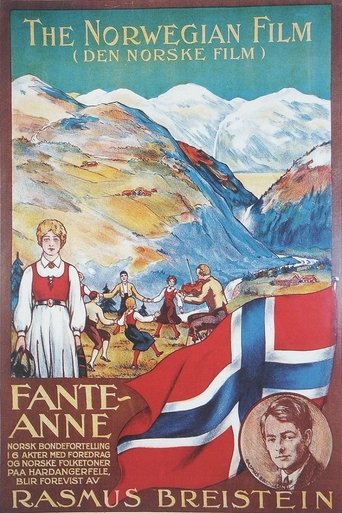
Magnus Falkberget
Actor
- Active
- 1920-1920
Films 1
About Magnus Falkberget
Magnus Falkberget is a little-documented Norwegian screen performer whose surviving film credit places him in the silent-era feature Fante-Anne (1920), one of the early landmarks of Norwegian cinema. Beyond this credited appearance, readily verifiable biographical information about his life, training, and later career is extremely scarce in standard film references and publicly accessible archival sources. He appears to have worked during the earliest phase of Norway's feature-film production, when actors often came from stage or local amateur performance backgrounds and individual screen careers were not always extensively recorded. Because of this, Falkberget is best understood as a historically significant name attached to an important early Norwegian film rather than as a widely documented star of the silent era. No reliable evidence has been found in common reference sources for a broader filmography, major awards, or a sustained studio career. His importance today lies primarily in his association with Fante-Anne and in the preservation of early Norwegian screen history, where many performers remain only partially documented. Researchers and classic-cinema enthusiasts encounter him as part of the larger effort to reconstruct the personnel of Scandinavia's silent-film period.
More about Magnus Falkberget
On screen
No detailed contemporary reviews or reliable archival descriptions of Magnus Falkberget's acting technique have been located in standard reference sources. Based on his sole known screen credit, his performance would have belonged to the silent-film tradition that relied on expressive gesture, clear physical characterization, and visual storytelling rather than spoken dialogue. Any further description of his style would be speculative, and no verified evidence survives regarding whether he favored restrained naturalism, stage-influenced expressivity, or a particular persona.
In film history
Magnus Falkberget's cultural significance is tied less to a large body of work than to his place within the fragile historical record of early Norwegian cinema. Performers like him helped populate the first generation of national feature films, contributing to the visual identity and storytelling conventions of a young film culture still finding its voice. Even when the details of their lives are obscure, such actors are important evidence of how local talent, regional stories, and emerging production practices came together in the silent era. Falkberget therefore has value to film historians as part of the reconstruction of Norway's cinematic beginnings and the broader Scandinavian silent-film landscape.
Later reputation
His legacy is archival and historical rather than star-driven. Magnus Falkberget survives in film history primarily because of his credited role in Fante-Anne (1920), which helps scholars map the cast and personnel of an important early Norwegian production. For modern viewers and researchers, he exemplifies how many silent-era performers remain partially anonymous despite contributing to foundational national films. His name continues to matter insofar as it anchors the personnel history of an early classic and reminds us how incomplete the record of silent cinema can be.
Influence
There is no documented evidence that Magnus Falkberget directly influenced later actors or filmmakers in a traceable, named way. His influence is better understood indirectly: by appearing in one of the early Norwegian features, he participated in the performance practices that helped establish local screen acting traditions. Such early contributors influenced the development of national cinema collectively, even when individual careers were not extensively recorded. For contemporary historians, his presence in the archive supports broader scholarship on silent-era casting, performance, and film preservation.
Off screen
No reliable biographical record has been found in accessible film-history sources detailing Magnus Falkberget's personal life, including marriages, family connections, or later occupations. It is possible that he was a stage performer, local actor, or nonprofessional participant in early Norwegian filmmaking, but this cannot be confirmed from the evidence currently available. Because documentation is limited, his private life remains largely unknown to modern researchers. Any claims about spouses, children, or education would be speculative and are therefore omitted.
Credits
- Appeared in the silent Norwegian feature Fante-Anne (1920), an important early work in national cinema history
- Represents one of the documented performers from Norway's early feature-film era
- Associated with the preservation and study of silent-era Scandinavian screen acting
Roles
- A role in Fante-Anne (1920)
Films
- Fante-Anne (1920)
Collaborators
- Unknown from currently available public records
Notes
- Magnus Falkberget is currently documented in standard film references primarily through a single film credit.
- His known screen work places him in the silent era, before synchronized sound became standard.
- Fante-Anne (1920) is among the early feature films in Norwegian cinema history.
- Little to no verified public information survives about his birth, death, or family background.
- He is an example of a silent-era performer whose historical importance exceeds the amount of surviving biographical data.
- Because of the scarcity of records, he is often of interest to archivists and historians rather than mainstream film audiences.
Questions
Who was Magnus Falkberget?
Magnus Falkberget was a Norwegian actor from the silent-film era, best known for appearing in Fante-Anne (1920). He is not widely documented in surviving reference sources, so much of his life and career remains obscure. His importance lies mainly in his connection to early Norwegian cinema.
What films is Magnus Falkberget best known for?
He is currently best known for Fante-Anne (1920), his only clearly documented screen credit in the available record. No additional verified filmography is readily available in standard public sources. As a result, his film reputation rests almost entirely on that early Norwegian feature.
When was Magnus Falkberget born and when did he die?
Reliable public sources currently do not provide verified birth or death dates for Magnus Falkberget. His place of birth and death, if applicable, are also not well documented in accessible film references. This lack of data is common for some early silent-era performers.
What awards did Magnus Falkberget win?
No known awards or formal honors are documented for Magnus Falkberget in the sources currently available. This does not necessarily mean he received none; rather, it reflects the limited survival of records for many early film performers. His significance is historical rather than award-based.
What was Magnus Falkberget's acting style?
There are no detailed contemporary descriptions of his technique in the available record. As a silent-era actor, his work would have relied on physical expressiveness, gesture, and visual presence rather than spoken dialogue. Beyond that, any precise description of his style would be speculative.
What is Magnus Falkberget's legacy in film history?
His legacy is as a documented participant in one of the early Norwegian silent features, helping historians reconstruct the personnel of the country's formative cinema years. Even with limited biographical information, his name remains part of the record of Fante-Anne and early Scandinavian film history. That makes him valuable to archival and preservation work.