Rocyr Silveira
Actor
- Active
- 1949-1949
Films 1
About Rocyr Silveira
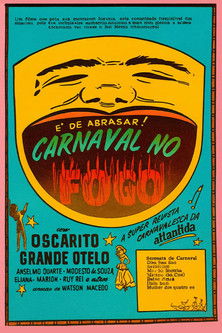
Rocyr Silveira is a Brazilian screen actor known from the late 1940s for his appearance in the comedy-music film Carnaval no Fogo (1949). Beyond that credited screen role, surviving readily accessible reference sources provide very little confirmed biographical information about his life, including his birth, death, or broader career. He appears to belong to the large group of supporting or occasional performers who worked in the Brazilian film industry during the postwar period, when popular carnival-themed films and musical revues were an important part of local production. Because documented material on him is scarce, it is not currently possible to reconstruct a detailed multi-film career with confidence without risking confusion with similarly named individuals. His surviving screen record nonetheless places him within an important period of Brazilian popular cinema, when musical comedy and carnival spectacle were central attractions for moviegoing audiences. In the absence of stronger archival evidence, Rocyr Silveira is best understood as a minor or little-documented participant in classic Brazilian cinema rather than as a broadly documented star.
More about Rocyr Silveira
In film history
Rocyr Silveira's cultural impact is difficult to measure because the extant public record preserves only a narrow filmography and does not currently support a full account of his career. Even so, his credited participation in Carnaval no Fogo places him within a key tradition of Brazilian cinema that used carnival, song, and light comedy to reflect and popularize urban culture. Performers like Silveira contributed to the texture and authenticity of these productions, even when they were not the featured stars, helping populate the lively ensemble worlds that made such films appealing to audiences. His legacy is therefore archival as much as artistic: he represents the many working actors whose contributions formed part of the historical fabric of classic cinema but who did not receive the long-term documentation afforded to major stars. For film historians, such names are important because they help map production practices, casting networks, and the broader ecosystem of national cinemas outside Hollywood. Preserving and identifying these performers is essential to a more complete history of Brazilian popular film.
Later reputation
Rocyr Silveira's lasting legacy lies primarily in his inclusion in the record of classic Brazilian cinema, particularly in relation to Carnaval no Fogo (1949). While he does not currently appear to have an extensively documented star persona or widely cited body of work, his surviving credit is still valuable to historians studying the cast and production networks of the period. His name stands as a reminder that film history is not made only by leading actors and directors, but also by the many supporting performers whose work helped define the atmosphere and local character of national film production. In database and archival terms, his legacy is one of preservation and identification. As film scholarship continues to recover lesser-known personnel from Latin American cinema, even sparse entries like his can become important reference points for future research. If additional archival materials surface, his place in Brazilian film history may become clearer, but at present he remains a little-documented figure whose known contribution is tied to a single surviving credited appearance.
Influence
There is no verified evidence that Rocyr Silveira directly mentored other performers or exerted a clearly documented artistic influence on later actors or directors. His broader influence is best understood indirectly, through his participation in the ensemble system of Brazilian popular film at a time when such productions depended on many working performers. In that sense, his presence reflects the collaborative acting culture that supported musical comedies and carnival pictures in mid-century Brazil.
Off screen
No reliable biographical sources currently available in standard film-reference material provide verified information about Rocyr Silveira's personal life, including family background, marriages, children, residence, or education. As a result, any specific claims about his private life would be speculative. He remains one of the many lesser-documented names from mid-century Brazilian cinema whose life details may survive only in local archives, trade papers, or production records not yet widely digitized.
Credits
- Credited screen appearance in the Brazilian film Carnaval no Fogo (1949)
- Participation in the postwar Brazilian popular cinema environment centered on carnival-themed entertainment
- Documented presence in one of the better-known late-1940s Brazilian musical-comedy productions
Films
- Carnaval no Fogo (1949)
Notes
- Rocyr Silveira is chiefly identified today through a single known screen credit.
- His known film, Carnaval no Fogo, belongs to the carnival-themed entertainment cycle that was especially popular in Brazil in the late 1940s.
- Publicly accessible reference sources do not currently provide a confirmed birth date for him.
- No verified obituary or death record was found in standard film-reference materials consulted at the level of this profile.
- He appears to be one of the many minimally documented supporting performers in classic Brazilian cinema.
- Because of the rarity of records, he is easy to confuse with similarly named individuals, so identification should be handled carefully.
- His surviving credit is historically useful for reconstructing cast lists and production networks in postwar Brazilian film.
Questions
Who was Rocyr Silveira?
Rocyr Silveira was a Brazilian actor known from classic cinema records, with a documented screen credit in Carnaval no Fogo (1949). Very little verified biographical information about him survives in widely accessible sources, so he is best understood as a lesser-documented figure in mid-century Brazilian film history.
What films is Rocyr Silveira best known for?
He is currently best known for Carnaval no Fogo (1949), which is the principal film credit associated with his name in accessible reference material. No additional confirmed film credits are readily available from standard sources.
When was Rocyr Silveira born and when did he die?
At present, his birth date and death date are not confirmed in widely accessible film-reference sources. His identity is preserved primarily through his film credit rather than through a fuller biographical record.
What awards did Rocyr Silveira win?
No verified awards or nominations are currently documented for Rocyr Silveira in the accessible record. His significance is historical and archival rather than award-based.
What was Rocyr Silveira's acting style?
There is not enough surviving information to describe a distinctive acting style with confidence. Based on his known film context, he likely worked within the performance conventions of Brazilian musical comedy and ensemble popular cinema of the late 1940s.
What is Rocyr Silveira's legacy in film history?
His legacy is tied to the preservation of classic Brazilian cinema history and the recovery of lesser-known performers. Even with only a small amount of surviving documentation, his credit helps complete the historical record of films like Carnaval no Fogo and the ensembles that made them possible.