Chief Akawanush
Actor
- Active
- 1930-1930
Films 1
About Chief Akawanush
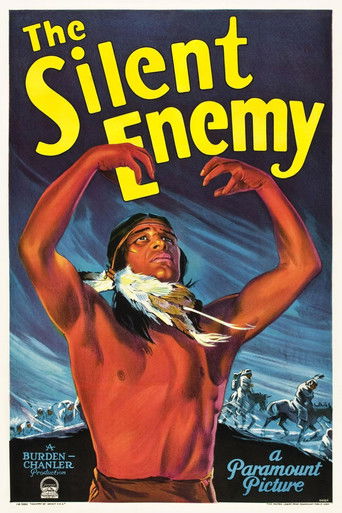
Chief Akawanush is a little-documented Native American performer who appears in the cast of the early sound film The Silent Enemy (1930), a production notable for its attempt to depict Indigenous life and survival in the pre-reservation era. Available film-history sources identify him primarily through this single screen credit, and there is no widely corroborated biographical record in mainstream reference works that firmly establishes his birth name, birth and death dates, or later career. Like several Indigenous performers of the silent and early sound periods, he seems to have worked in an era when many Native actors were credited inconsistently, sometimes by tribal or honorific names rather than by legal names used in civil records. His participation in The Silent Enemy places him within one of the more unusual and culturally significant early talkies involving Native American subject matter, and his presence would have contributed authenticity to a film that relied heavily on Indigenous performers and ceremonial imagery. Beyond that credit, surviving documentation is sparse, suggesting either a very limited film career or one that has not been well preserved in the historical record. Because of the limited evidence, any fuller biography would require archival research in studio files, trade publications, census records, or tribal historical records. He remains a minor but interesting figure in classic cinema studies because even a single surviving credit can illuminate the participation of Native talent in early Hollywood production.
More about Chief Akawanush
In film history
Chief Akawanush's cultural importance lies less in a large body of screen work than in what his credit reveals about Native representation in early American cinema. His appearance in The Silent Enemy connects him to a film that is frequently examined for its unusual production context, particularly its use of Indigenous performers and its semi-ethnographic ambitions. For historians, even a single named Native actor in a 1930 feature is significant because it demonstrates that Indigenous people were not entirely absent from early Hollywood productions, even though their contributions were often marginal, uncelebrated, or poorly documented. His inclusion in the cast also helps correct the common misconception that Native roles in early film were always played by white actors in makeup, since some productions did employ Native performers, albeit within limited and often stereotyped frameworks.
Later reputation
Chief Akawanush's legacy is archival and historical: he stands as one of the many under-recorded performers whose presence helps modern scholars reconstruct the participation of Native people in classic cinema. Because his filmography is so brief, his enduring significance comes from representation and documentation rather than star status. His credit in The Silent Enemy makes him part of the broader conversation about authenticity, cultural portrayal, and the visibility of Indigenous talent in early Hollywood. In film history, such figures are important reminders that cinema's past includes many workers whose names survive while their biographies do not, and that recovering those names is itself an act of preservation.
Influence
There is no evidence that Chief Akawanush directly mentored major later actors or held a public influence on performance style in the way major stars did. His broader influence is indirect: by participating in a culturally specific early talkie, he contributed to the presence of Native performers on screen and to the historical record used by later scholars, curators, and Indigenous media historians. In that sense, his legacy may have influenced not individual performers but the way researchers think about authenticity, casting, and Indigenous participation in classic Hollywood. His example also underscores the importance of identifying and crediting Native actors who were once overlooked or anonymized in studio-era publicity.
Off screen
No reliable public biographical information is readily available about Chief Akawanush's personal life, family background, marriages, or later years. Surviving film-reference material identifies him mainly through his screen credit rather than through extensive personal documentation. As a result, details such as residence, tribal affiliation, education, and family connections are not securely established in commonly accessible classic-cinema references. This lack of information is typical of many Indigenous performers from the early studio era, whose careers were often recorded only intermittently and without the preservation accorded to major Hollywood stars.
Credits
- Appeared in the early sound feature The Silent Enemy (1930), a rare production centered on Native American life and featuring Indigenous cast members.
- Represents one of the documented Native performers working in classic cinema during the transition from silent films to talkies.
- Associated with a film often discussed for its attempt, however imperfect, to use Native actors rather than white performers in Native roles.
- Contributes to the historical record of Indigenous participation in early Hollywood feature production.
- Serves as an example of how many Native performers remain under-credited or minimally documented in surviving studio-era sources.
Roles
- Actor in The Silent Enemy (1930)
Films
- The Silent Enemy (1930)
Notes
- Chief Akawanush is credited in the 1930 film The Silent Enemy, one of the better-known early sound films involving Native American subject matter.
- No widely verified birth name is readily available in mainstream film reference sources, so he is often known only by this screen credit.
- His documented film career currently appears to be limited to a single known credit.
- He belongs to a category of early cinema performers whose work is recognized more through archival filmographies than through extensive biographical records.
- The Silent Enemy is frequently cited by film historians for its use of Indigenous cast members, making his credit historically noteworthy even if his personal biography remains obscure.
- He is an example of how Native American performers could appear in early Hollywood productions while leaving only fragmentary records behind.
- Because his name is uncommon and specific, confusion with other performers is unlikely, but the scarcity of documentation can make research challenging.
Questions
Who was Chief Akawanush?
Chief Akawanush was an early film actor known primarily for appearing in The Silent Enemy (1930). He is a little-documented figure in classic cinema, and surviving records do not provide much information about his personal life or broader career. His importance today lies in his presence within an early talkie featuring Native American subject matter.
What films is Chief Akawanush best known for?
He is best known for The Silent Enemy (1930), which is currently the only widely documented screen credit associated with him. Because so little biographical and filmographic information survives, it is difficult to link him confidently to additional productions. For that reason, his reputation rests almost entirely on this single film appearance.
When was Chief Akawanush born and when did he die?
No reliably verified birth or death dates are readily available in standard film references. Likewise, his birth place and death place are not securely documented in the surviving public record. He remains one of the many early cinema performers whose life details have been lost or were never thoroughly recorded.
What awards did Chief Akawanush win?
There are no known awards or nominations documented for Chief Akawanush. He appears to have worked at a time when many supporting and Indigenous performers were not publicly recognized with industry honors. His significance is therefore historical rather than award-based.
What was Chief Akawanush's acting style?
No detailed contemporary descriptions of his individual acting style are readily available. Based on his appearance in an early sound production centered on Indigenous characters, his performance likely contributed to the film's effort at cultural specificity and authenticity. However, without surviving reviews focused specifically on him, any further characterization would be speculative.
What is Chief Akawanush's legacy in film history?
His legacy is that of a historically important but poorly documented Native performer whose credit helps illuminate Indigenous participation in early Hollywood. Even one surviving role can be significant because it shows that Native actors were present in the industry, though often overlooked in official records. For modern historians, he represents the importance of recovering forgotten names from classic cinema.