Mali Spotted Elk
Actor
- Active
- 1930-1930
Films 1
About Mali Spotted Elk
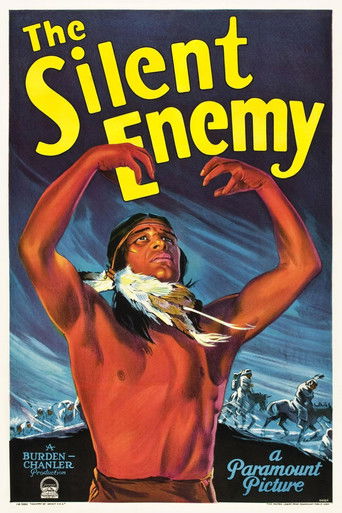
Mali Spotted Elk was a Native American performer best remembered for appearing in the 1930 film The Silent Enemy, an unusual early sound-era production focused on Indigenous characters and survival in the wilderness. Information about his life is extremely limited in surviving film records, and he appears to have had a very brief screen career documented only around 1930. His presence in The Silent Enemy is historically important because the film was marketed as a serious attempt to depict Native life and featured Native cast members in a period when Hollywood more commonly used non-Native actors in Indigenous roles. Beyond this credit, there is little reliably documented about his personal background, broader career, or later life in standard film reference sources. Because of that scarcity, he is chiefly remembered today as part of the film's Indigenous cast rather than as a widely known individual star. His surviving significance lies in the preservation of early Native representation in American cinema and the cultural value of films that employed Native performers at a time of heavy stereotyping. The historical record does not currently provide enough verified detail to reconstruct a fuller biography with confidence.
More about Mali Spotted Elk
On screen
No detailed description of Mali Spotted Elk's individual acting technique survives in the available historical record. His screen work is known primarily through The Silent Enemy, where Native cast members were employed in an outdoor, dramatized production rather than in a heavily studio-bound melodrama. Any assessment of his style must therefore be cautious, but his role in the film suggests a performance approach suited to the film's semi-documentary, naturalistic ambitions. Because no extensive body of work survives under his name, there is insufficient evidence to identify a distinctive personal style with confidence.
In film history
Mali Spotted Elk's cultural importance lies less in a long filmography than in the historical context of his work. His association with The Silent Enemy places him within a rare early Hollywood production that attempted to foreground Indigenous presence rather than simply using Native imagery as background decoration. For modern viewers and historians, such credits are valuable because they help document Native participation in early cinema and challenge the assumption that Indigenous people were absent from the industry except as fictionalized stereotypes. Even though his individual biography is obscure, his screen appearance contributes to a broader understanding of Native representation in American film history.
Later reputation
His legacy is tied to the preservation of The Silent Enemy as a notable early sound-era film featuring Native cast members. In the larger arc of film history, performers like Mali Spotted Elk remind researchers that many Indigenous actors contributed to Hollywood without receiving the long-term credit or documentation afforded to more prominent stars. His name is part of the archival record that allows historians to reconstruct the participation of Native people in early cinematic production. As scholarship on race, representation, and Indigenous media has expanded, even fragmentary figures such as he have become more significant because they illuminate underrecognized layers of film history.
Influence
There is no documented evidence that Mali Spotted Elk personally influenced later actors or directors through a sustained public career. His influence is therefore indirect and historical rather than biographical: he stands as part of the early body of Native performers whose presence made more authentic casting visible in a period of frequent misrepresentation. For contemporary scholars, that makes him relevant to studies of casting practices, Indigenous visibility, and the development of early ethnographic or semi-ethnographic cinema. His contribution is best understood as archival and representational rather than star-driven.
Off screen
There is very little verified information about Mali Spotted Elk's personal life in accessible film history references. No reliable details are presently available regarding his family, marriages, children, education, or later life. This lack of documentation is common for many Indigenous performers of the silent and early sound eras, whose contributions were often not fully recorded by studio publicity systems. As a result, his personal history remains largely unknown to modern researchers unless additional archival material is discovered.
Credits
- Appeared in the 1930 film The Silent Enemy
- Participated in one of the early Hollywood productions centered on Indigenous life and survival
- Represents an example of Native performers appearing in a mainstream film of the early sound era
Roles
- Cast member in The Silent Enemy (1930)
Films
- The Silent Enemy (1930)
Notes
- Mali Spotted Elk is mainly documented through a single known screen credit in The Silent Enemy (1930).
- He is associated with one of the earliest Hollywood productions to place Indigenous characters and wilderness survival at the center of the story.
- His name is preserved in film history despite the near-total absence of personal biographical data.
- His screen career appears to have been extremely brief, at least in surviving filmographies.
- He is part of the historical record of Native American participation in early American cinema.
- The Silent Enemy is often noted for its attempt, however imperfect, to use Native performers rather than relying entirely on non-Native casting.
- Because so little survives about him, researchers must rely heavily on film credits and archival sources rather than biographies or studio publicity.
- He remains a reminder that many early film performers, especially Indigenous ones, were not fully documented by the industry.
Questions
Who was Mali Spotted Elk?
Mali Spotted Elk was a Native American actor best known for appearing in The Silent Enemy (1930). Very little biographical information about him survives, so he is primarily known through that single credited screen appearance. His historical importance comes from his place in an early Hollywood film that featured Indigenous performers.
What films is Mali Spotted Elk best known for?
He is best known for The Silent Enemy (1930), which appears to be his only documented film credit. The film is significant for its focus on Indigenous life and for employing Native cast members. No other verified film appearances are currently associated with his name.
When was Mali Spotted Elk born and when did he die?
His birth date and death date are not currently verified in accessible film history sources. The surviving record on him is extremely limited, and standard references do not provide reliable vital statistics. As a result, both dates remain unknown.
What awards did Mali Spotted Elk win?
No awards or nominations are documented for Mali Spotted Elk in the surviving record. He appears to have had a very brief or poorly documented screen career, and there is no evidence of formal industry honors. His significance is historical rather than award-based.
What was Mali Spotted Elk's acting style?
There is not enough surviving evidence to define a distinct personal acting style for him. His work in The Silent Enemy suggests a performance within an outdoor, naturalistic production that aimed for realism in its depiction of Indigenous life. Beyond that film, there is no body of work large enough to allow a confident style assessment.
What is Mali Spotted Elk's legacy in film history?
His legacy lies in representing Native participation in early Hollywood, especially in a film that attempted to center Indigenous characters. Even though his biography is obscure, his credit helps historians track the presence of Native performers in the silent and early sound eras. He is remembered as part of the broader effort to recover overlooked Indigenous contributors to classic cinema.
Did Mali Spotted Elk work with any famous collaborators?
No frequent collaborators can be verified from the available record. His known association is with the cast of The Silent Enemy, but the historical sources currently accessible do not document repeated partnerships with directors, actors, or studios. That lack of information reflects the fragmentary nature of early film records for many Indigenous performers.