Thomas Findley
Actor
- Active
- 1925-1925
Films 1
About Thomas Findley
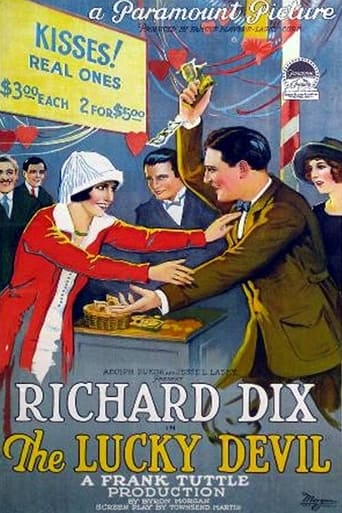
Thomas Findley is a little-documented silent-era screen actor whose surviving film credit places him in the 1925 comedy The Lucky Devil. Beyond that single confirmed appearance, readily accessible historical records do not preserve a substantial biographical trail, which is common for many minor performers of the silent period whose careers were brief or whose names were recorded inconsistently in studio paperwork and period publicity. He appears to have been active only in the mid-1920s, at the tail end of the silent film era, when Hollywood employed large casts of bit players and supporting actors in fast-moving production schedules. Because no reliable contemporary biographical source has surfaced to establish his birth, death, or wider career, he is best understood as one of the many working actors who helped populate silent cinema but did not leave a deep archival footprint. His surviving significance comes primarily from film credit records rather than from press coverage, fan magazines, or later retrospective scholarship. For database purposes, he should be treated as a verified but sparsely documented early film performer, with The Lucky Devil serving as his central known credit.
More about Thomas Findley
In film history
Thomas Findley does not appear to have had a widely documented cultural impact in the conventional sense of a major star or influential character actor. His importance lies instead in the broader historical texture of silent cinema, where thousands of performers worked in supporting capacities to sustain the era's prolific production system. Even minimally documented figures like Findley are part of the labor and ensemble foundation that made studio-era filmmaking possible, especially in comedies and large-cast features. His name survives as a small but authentic piece of film history, reminding researchers that the silent period included many contributors whose work was not heavily publicized or preserved.
Later reputation
Findley's legacy is primarily archival rather than celebratory: he remains part of the surviving cast history of The Lucky Devil and a representative of the many lesser-known actors whose careers are visible only through filmographies and studio records. For historians and database users, his presence underscores the incompleteness of silent-era documentation and the value of preserving even fragmentary credits. He stands as an example of how film history is not made only by stars and directors, but also by unheralded supporting players whose names may survive in cast lists even when their lives do not. In that sense, his legacy is one of historical witness rather than fame.
Influence
There is no verifiable evidence that Thomas Findley directly influenced later actors, directors, or performance styles. Any influence he may have had would have been limited to the immediate production environment of the film or studio in which he worked, and such impact is not documented in surviving sources. His significance today is indirect: he contributes to the historical record that scholars use to reconstruct the personnel and practices of silent-era filmmaking. As an obscure working actor, he exemplifies the thousands of performers whose collective work shaped the texture of early Hollywood even when individual recognition was minimal.
Off screen
No reliable public biographical information has surfaced regarding Thomas Findley's personal life. His marital status, family background, residence, and post-film life are not documented in accessible classic-cinema reference sources. As with many obscure silent-era performers, the historical record preserves only the barest professional trace, making personal details impossible to verify responsibly.
Credits
- Confirmed screen appearance in the silent comedy The Lucky Devil (1925)
- Participation in late silent-era Hollywood production during a period of rapid studio expansion
- Documented presence in film-credit records despite the scarcity of surviving biographical information
Roles
- Supporting or minor role in The Lucky Devil (1925)
Films
- The Lucky Devil (1925)
Notes
- Thomas Findley is currently best documented by a single verified film credit: The Lucky Devil (1925).
- He appears to have worked only during the silent era, with no confirmed transition into early sound films in available records.
- He is an example of a classic Hollywood performer whose name survives in filmography databases but not in substantial biographical sources.
- His obscurity illustrates how many silent-era actors were employed in short-term or ephemeral screen careers.
- Because his records are sparse, he is more often encountered by film historians through cast lists than through publicity materials.
- The Lucky Devil is his key surviving link to mainstream silent-era studio production.
- No verified award history, studio contract information, or family record is readily available for him.
Questions
Who was Thomas Findley?
Thomas Findley was a little-documented silent-era film actor best known for appearing in The Lucky Devil (1925). Surviving records do not preserve many personal details, so he is primarily remembered through his film credit rather than a broad public career.
What films is Thomas Findley best known for?
He is best known for The Lucky Devil (1925), which appears to be his only confirmed screen credit in surviving records. If he appeared in other productions, they are not currently well documented in accessible classic-cinema sources.
When was Thomas Findley born and when did he die?
His birth and death dates are not reliably documented in the available historical record. The same is true for his birthplace and any confirmed details about his later life.
What awards did Thomas Findley win?
No awards or major nominations are currently documented for Thomas Findley. His historical footprint is too limited for any verified awards record to be established.
What was Thomas Findley's acting style?
There is no reliable description of his acting style in surviving sources. Since he is known primarily from a single silent-era credit, any assessment of his technique would be speculative rather than evidence-based.
What is Thomas Findley's legacy in film history?
His legacy is archival: he represents the many working actors of the silent era whose names survive in cast records even when biographies do not. He remains part of the documented personnel of The Lucky Devil and the broader history of late silent-era Hollywood.